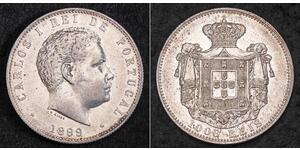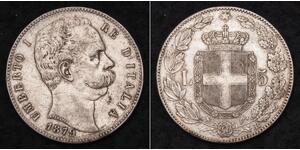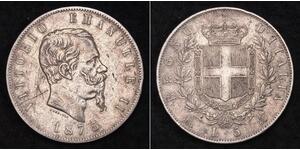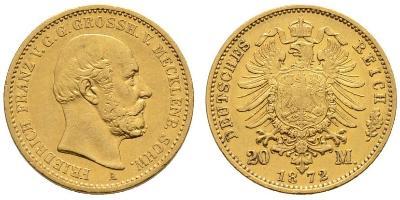
| Victor Emmanuel II of Italy (1820 - 1878) | Link to Wikipedia |
Victor Emmanuel II of Italy (1820–1878): History and Coinage
Victor Emmanuel II, Vittorio Emanuele Maria Alberto Eugenio Ferdinando Tommaso di Savoia, stands as the central figure in the unification of Italy, a transformative era historically known as the Risorgimento. As the eldest son of Charles Albert, he ascended to the throne following his father's abdation during military defeats against Austria in 1849. His reign is defined by pivotal moments that reshaped European geopolitics: securing French alliances through strategic wars involving France and Britain, facilitating southern Italian annexations via Giuseppe Garibaldi’s forces, and eventually establishing Rome as the capital of a new nation-state after the fall of Papal territories.
Relationship to Coinage
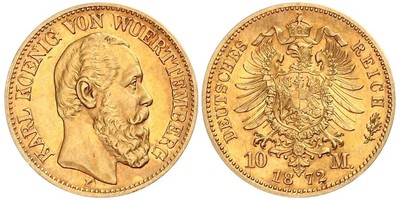
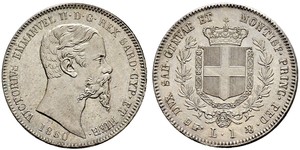
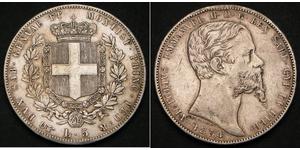
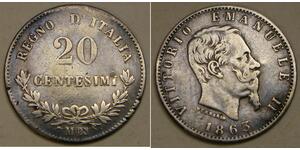
For numismatists examining his currency, these medals serve as physical records of this monumental political evolution. While early coinage during his reign issued from Turin featured traditional Savoyan crests and military motifs, portrait coins officially bearing the inscription Rex Italiae began appearing only after March 17th, 1861.
Which kingdoms or states
- Issued under: Kingdom of Sardinia (prior to unification), then the new Kingdom of Italy from 1861 onward.
- Timings: Coins circulated during his lifetime, transitioning from silver florins and gold scudi before eventually shifting toward decimalized Lira standards post-union with southern economies in 1862.
Why placed on coins:
- To legitimize the new Kingdom's authority among diverse northern and southern provinces following unification.
- The portraits often depicted him in laurel wreaths or with his sword at their hip, reflecting military victory rather than traditional monarchy imagery common elsewhere during this period of European consolidation.
Why Collectors Value These Coins
Historical and Educational Importance
Collectors find particular interest in these issues because they encapsulate the birth of modern Italy within metal alloys. Unlike ancient coinage driven purely by royal vanity, Victor Emmanuel II's currency was essential for a fledgling economy needing to unify diverse currencies into one national standard.
Narrative Connection
The transition from silver and gold florins later adopted decimal Lira systems represents this economic consolidation. Several factors drive collector engagement beyond simple market value, primarily the historical provenance where holding an 1860s coin allows direct connection to a man who faced excommunication before finally reuniting with Rome in his final years.
Educational Context
The artistic depictions capture him at different stages—sometimes youthful and reformist during Piedmont rule, sometimes stern during military campaigns against the Austrian Empire. For historians of money, these coins illustrate how currency acts as a vessel for national identity rather than just medium of exchange.
Encouraging Exploration
Those seeking to explore this period are encouraged to examine high-grade examples from the first year of Italian independence. These pieces often command respect not merely in auction houses but within educational institutions and historical societies where they serve tangible reminders of a nation that was forged over the span of three decades under House of Savoy leadership.
Each coin functions as a chapter in the broader story, offering a glimpse into how symbols were used to bind a fractured peninsula together permanently. They provide an accessible entry point for those who wish to understand 19th-century politics without relying solely on dense textbooks or digital encyclopedias about the Italian unification era.