| Julia Domna (?-217) | Link to Wikipedia |
Julia Domna {c. 160 – 217 AD}: History and Coinage
In the complex political landscape of the early third century Roman Empire, Empress Julia Domna stands as a figure of unparalleled influence among her predecessors and contemporaries. Born around 160 AD in Emesa within Syria to an aristocratic Arab family serving Elagabalus’s priesthood, she married Septimius Severus just before his ascent to power. Unlike traditional imperial wives who remained sequestered in Rome, Domna actively participated in the governance of her empire and accompanied her husband on military campaigns throughout Gaul and Germania. Her life spanned a period defined by civil war between 193 and 205 AD until Caracalla's assassination in 217. She acted as an essential diplomatic mediator between her two sons following Septimius Severus' death, shaping the early trajectory of the reigns that followed.
The Connection to Imperial Coinage
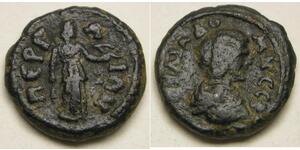
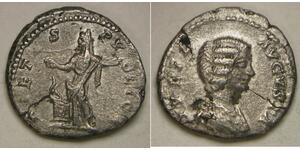
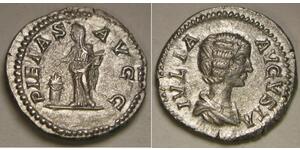
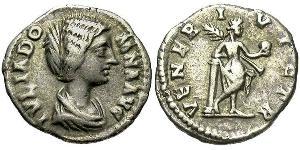
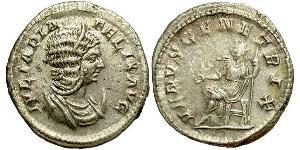
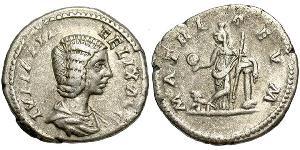
Silver denarii and gold aurei bearing Domna's likeness circulated widely during the era. The Roman government commissioned these issues to cement her status as co-ruler after Severus passed away in 211, a distinction rare for an empress mother. Collectors often observe portraits minted at Lugdunum (modern-day Lyon) and Antioch bearing titles such as "Mother of the Invincible Camps" or *Vesta Mater*. This imagery served not merely to honor her beauty but to signal political stability amidst turmoil. Coins issued posthumously, particularly those struck in Syria following Caracalla’s death, depict her final title combination "Pia Felix Augusta," which implies extraordinary power usually reserved for living rulers.
The minting locations reveal much about the Severan dynasty's reach. With Antioch serving as a major center of empire administration during Domna's tenure in 216 and onwards, coins struck there carry specific local iconography related to her native Syria. The use of Vestal imagery on medallions from 207 onward suggests an intentional effort by the state to align her influence with traditional Roman religious sanctity.
The Collector's Perspective
Families and enthusiasts seeking these issues are drawn to their educational value regarding ancient political propaganda. Each coin functions as a historical document, illustrating how Julia Domna transitioned from a provincial noblewoman into the head of state after her husband’s death. For those who examine silver denarii struck during Caracalla's Parthian campaign in 216 AD, one can witness the physical evidence of courtly life where she remained active until the end.
- Rarity and Condition: Early issues with specific inscriptions are highly sought after for their preservation quality.
- Historical Context: The coins provide insight into her relationship with Caracalla following Geta's removal from memory in 211 AD.
Analyzing these pieces allows modern viewers to appreciate the artistry and political messaging embedded within their design, making them a cornerstone for understanding Roman numismatics during this volatile era.