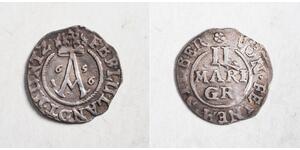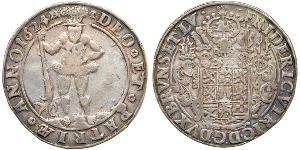
| Frederick Ulrich, Duke of Brunswick-Wolfenbüttel (1591 - 1634) | Link to Wikipedia |
Frederick Ulrich (1591–1634): History and Coinage
A Life in Turmoil
Frederick Ulrich, Duke of Brunswick-Wolfenbüttel, occupies a significant place within the lineage of the House of Welf. As Prince from 1613 until his passing in 1634, he ruled during one of the most turbulent periods in early modern German history, particularly amidst the onset and escalation of the Thirty Years' War.
Born on April 5, 1591, to Duke Henry Julius and Princess Elisabeth of Denmark, Ulrich received his education at Helmstedt and Tübingen. Before ascending to the throne formally, he spent formative years abroad in England around 1610. His travels included visiting Oxford and Bristol alongside Prince Henry. This period offered a glimpse into cultural exchanges between European courts before news of political assassinations cut short his continental journey.
His internal reign proved challenging. Following the death of his father, he became involved in conflicts with local citizens who hesitated to acknowledge his overlordship. Furthermore, due to personal struggles including alcoholism and perceived indecision, control over governance shifted during critical years between 1616 and 1622.
The Connection to Coinage
The numismatic history of Brunswick-Wolfenbüttel under Ulrich is a cautionary tale for the study of state economy. While he was never widely celebrated as an icon on currency, his era introduced critical instability into the region's metal circulation.
Coin collectors focusing on German states will often encounter issues minted during this chaotic transition period. The most notable event concerns Anton von Streithorst, a minister who managed government business while Frederick and his mother were preoccupied or deposed in fact. Historians note that Strerihorst nearly ruined the state's finances by producing currency from cheap metals.
This practice of debasement explains why many coins associated with this specific epoch exhibit low metal content, reflecting a desperate attempt to fund military campaigns and pay garrisons during the war years. The portrait or name appearing on these pieces was often less about celebrating an individual ruler's character and more about asserting nominal sovereignty over a territory struggling for economic survival.
The Appeal for Collectors
Frederick Ulrich provides unique educational value to numismatists interested in the mechanics of state bankruptcy. Coins from his tenure or subsequent Welf branches serve as tangible evidence of inflationary pressure during the Thirty Years' War.
- Rarity: While common coins exist, high-quality specimens without debasement markers are valuable for understanding monetary standards before collapse.
- Economic History: These pieces demonstrate how rulers attempted to maintain currency authority even when their power was contested by internal and external forces alike.
Beyond the metal itself, these artifacts connect collectors to a narrative of political restoration. When Frederick regained control or passed to successors like Augustus the Younger in 1635, new coinage efforts reflected attempts to rebuild confidence. For enthusiasts studying early modern currency design and economic collapse, exploring coins from this Brunswick-Wolfenbüttel line offers deep insight into how history was minted literally.