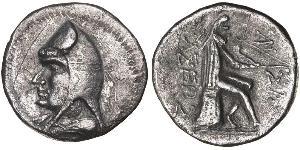
| Mithridates I of Parthia (165-132 BC) | Link to Wikipedia |
Mithridates I (?–132 BC): History and Coinage
In the turbulent era following the decline of Alexander's empire, Mithridates I emerged as a pivotal figure who reshaped geopolitics in Iran. As king from 165 to 132 BC, he transformed Parthia from a minor frontier state into an imperial power dominating Mesopotamia and beyond. His reign marked a definitive shift where the Arsacid dynasty rejected Greek cultural hegemony while adopting ancient Achaemenid titles.
Mithridates is often compared to Cyrus the Great due to his consolidation of vast territories from the Seleucids, including Media, Babylonia, and Persis. He secured the region by defeating Demetrius II Nicator in 138 BC, a diplomatic triumph that allowed him to parade Greek rivals before public audiences while treating captives with hospitality.
Coinage of an Arsacid Monarch
The political significance of Mithridates is immortalized on ancient metalwork. His coins were issued primarily within his kingdom and conquered territories, specifically under the minting houses at Seleucia and Nisa (Mithradatkert). These issues often depicted him not merely as a warlord but as an administrator integrating Greek artistic styles with Iranian iconography.
The decision to feature portraits on coinage served multiple purposes: claiming legitimacy by invoking Achaemenid heritage, projecting power across newly vassalized lands like Babylonia and Elymais, and commemorating military victories. Notably, bronze coins bear the inscription of an elephant with legends proclaiming his status as "the Great King," a reference to his conquests in Bactria where such imagery was prevalent.
- Minting Locations: Seleucia and Nisa represented royal residences shifting administrative focus eastward later into the west, though Mesopotamia became central.
- Symbols of Power: Elephants from Bactrian territory appeared alongside Mithra imagery reflecting Zoroastrian ideology rising against foreign faiths.
A Collector's Perspective
Nuismatists value coins bearing the likeness or name of Mithridates for their profound historical context. Unlike purely decorative artifacts, these pieces document a specific moment where ancient Near Eastern cultures collided and merged. Collectors are drawn to the artistic quality that harmonizes Hellenistic portraiture with Persian titles.
The rarity stems from the short duration of some mintings before administrative changes or his death in 132 BC altered production standards. For collectors, owning a piece struck at Seleucia offers tangible evidence of an empire's expansion into Iraq and Iran during this specific era. Exploring these coins invites one to hold history literally within their hands.
Mithridates' legacy continues through his metal currency, which serves as the physical record of a dynasty that bridged two major civilizations in antiquity.