| Leopold I of Belgium (1790-1865) | Link to Wikipedia |
Leopold I of Belgium (1790 – 1865) History and Coinage
The Kingdom of Leopold George Christian Frederick stands as a foundational chapter for the young nation-state that emerged in central Europe during the nineteenth century. His reign began on July 21, 1831, marking a decisive moment following Belgian independence from the Netherlands. Prior to his coronation, he served time within Imperial Russian and French spheres before accepting sovereignty over Belgium specifically because of his British connections and neutral diplomatic standing at the Congress of Vienna.
Lepold, unlike many contemporaries who sought military glory in Napoleonic campaigns, focused on economic stability as a ruler. He is credited with modernizing the country's infrastructure by funding its first railway lines to facilitate trade growth between industrial centers and agricultural regions. His reign successfully navigated tensions between French linguistic influences from the south and Dutch political dominance of the north, fostering a unique cultural synthesis that persisted throughout his rule.
The Numismatic Legacy
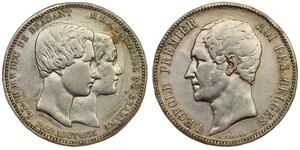
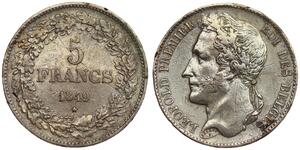
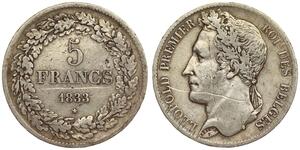
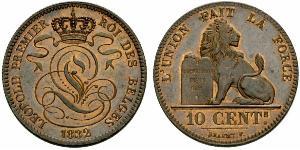
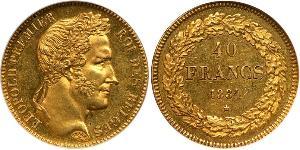
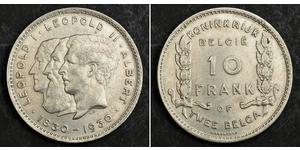
New nations require currency systems to assert sovereignty over international trade partners. Following independence in 1830, Belgium needed to replace French Francs and Dutch florins with its own national coinage. The Belgian mint began producing coins bearing the new king's profile shortly after his accession. These early issues feature standard designs found across Europe but carried specific symbolism of a liberal constitutional monarchy chosen by treaty.
Coining was utilized not just for daily commerce, but as propaganda to establish legitimacy against claims that Belgium would be absorbed back into the Dutch kingdom or French sphere. Silver and copper denominations circulated widely during his forty-four-year rule. Collectors should look for variations in mint marks found on Brussels issues which distinguish these sovereign states from colonial currency of the era.
A Collector Perspective
Serious numismatists value Belgian pieces featuring Leopold I because they represent one of Europe's earliest democratic monarchies. Unlike royal families with centuries of dynastic history, the House of Saxe-Coburg established in Belgium relied on coins to define identity without ancient lineage claims.
Early examples from 1832 through the late reign are particularly sought after for their historical narrative weight and artistic maturity as designers transitioned away from Napoleonic neoclassicism toward modern national portraiture. For enthusiasts of state-building history, these coins offer a tangible fragment of how Belgium secured its place among great powers during the industrial revolution.