
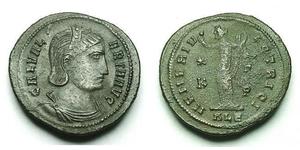
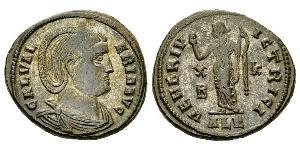
| Galeria Valeria (?-315) | Link to Wikipedia |
Galeria Valeria (died 315): History and Coinage
Institutional stability within the late third-century Roman Empire relied heavily on carefully arranged dynastic unions, of which Galeria Valeria was a pivotal figure. Born to Emperor Diocletian from Prisca, she married her father's successor Galerius in 293 CE following his elevation as Caesar.
Biography and Political Role
Raised with the title Augusta by November of 308, Valeria represented a rare instance where female lineage was formally integrated into military administration alongside her husband. She adopted Galerius's illegitimate son, Candidianus, to secure his succession despite having no children herself.
Tensions arose with Licinius following Galerius' death in 311 when they fled Maximinus Daza and refused marriage proposals for their own daughter. Valeria was captured near Thessaloniki shortly thereafter, where she endured arrest before eventual execution alongside her mother Prisca around the mid-third-century timeframe.
Narrative of Coinage
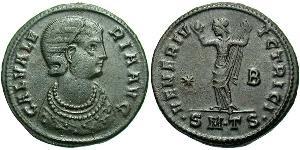
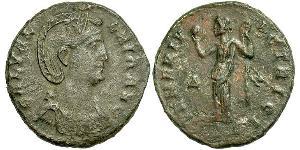
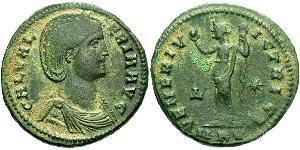
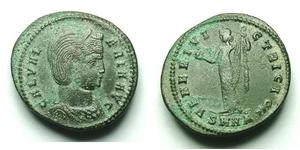
Coin collectors encounter Galeria Valeria on bronze denominations issued during Galerius's reign as Augusta. These pieces typically bore legends such as AU GUSTA VALERIA, distinct from standard male portraits common in earlier imperial issues.
Rarity and Collectibility Factors
- The coins document her specific role as an adoptive mother during political turbulence following Galerius's death.
- Finding examples minted at Eastern mints provides insight into Diocletian’s successors managing provincial loyalty through imperial women rather than standard Caesarian propagandizing.
Cultural Significance
The depiction of Valeria alongside her husband and son highlights the transition in Tetrarchic coinage towards more complex familial representations before persecution eroded this stability. These artifacts serve as tangible evidence that Roman women held distinct, albeit contested, authority over military succession during a turbulent era.
Collections Focus
This numismatic series is valued primarily for its rarity and historical connection to early imperial Christianity through her later canonization, offering history enthusiasts unique links between political power and religious martyrdom in the Roman East.


