|
|||||||
| Sassanid Empire (224-651) | |||||||

| succeeded by | ||||
|
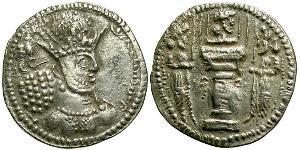


| Sassanid Empire (224-651) | Link to Wikipedia |
Sassanid Empire: History, Coinage and Collectibles
Historical Background
The legacy of the Sassanids represents one of the most sophisticated political eras in human history prior to the arrival of Islam. Emerging from a region that had long been dominated by smaller dynasties, this empire re-established Persian sovereignty and centralized authority with remarkable vigor during the third century AD. The stability achieved under early rulers laid the groundwork for an economy deeply intertwined with the lucrative Silk Road networks connecting Rome, China, and Central Asia.
Cultural life was vibrant but heavily influenced by a desire to define distinct Iranian identity against their Roman neighbors. While adopting Greek artistic traditions from previous periods in Parthian Iran, Sassanid rulers promoted Zoroastrianism as the state religion. This revival of ancient beliefs fostered an environment where high culture flourished alongside commerce, leading to the establishment of major cities and trade hubs that required robust monetary systems.
However, constant warfare with Eastern Rome necessitated a strong treasury capable of funding massive military campaigns. The geopolitical tension meant currency often served as diplomatic leverage or tools for payment when armies marched across vast distances. Economic prosperity was thus inextricably linked to political survival and the ability to pay soldiers through coinage rather than plunder alone.
Currency and Coinage History
The monetary evolution of this era is defined by a unique standard that would eventually influence global finance. Unlike earlier Parthian issues which varied wildly in fineness, Sassanid mints developed rigorous standards for silver content and weight consistency over the course of three centuries. This reliability transformed coinage from simple local tokens into reliable trade instruments across continents.
The Silver Drachm was introduced early on as a successor to Roman denarii but maintained an intrinsic value closer to pure silver than contemporary Byzantine coins produced in competition with Rome's own gold solidus, or dinar. These high-quality silver issues allowed for the circulation of currency from India up through Mesopotamia and into Europe.
In later phases as state power centralized under Khosrow I Anushirvan, coinage began to reflect increased imperial authority rather than just provincial necessity. Gold was introduced occasionally but used sparingly compared to Rome until specific political conditions demanded it heavily in the seventh century when copper issues became more common due to inflation and rising military costs.
Mints and Coin Production
The location of coin production shifted throughout history, though records for mints are somewhat sparse. Unlike Western provinces that often stamped their locations onto silver coins with city names or symbols, Sassanid numismatics is notable for focusing on the monarch rather than administrative regions in later centuries.
This approach was typical because the authority of coinage resided solely in the royal personification and religious imagery such as fire altars or winged beasts. Artistic quality often declined during times of war when production speed outpaced craftsmanship, resulting in heavy debasement for copper coins specifically designed to pay soldiers who did not care about silver purity.
Sassanid engravers worked within a strict framework where the profile remained frontal and stiff yet highly stylized. These artists perfected their craft under tight imperial oversight so that even when mints moved, they adhered strictly to current royal portraits and religious iconography approved by the King's Chancellery.
Notable Coins
The Silver Drachms of Ardashir I are often considered rare but extremely difficult to identify due to minimal obverse design variations. Collectors appreciate these for their historical narrative significance marking the restoration, though few survive today in high preservation because they wore down quickly during heavy trade circulation.
Khosrow II's Dinars present another compelling acquisition target, as gold production peaked under his administration shortly before Arab conquest ended Sassanid sovereignty entirely. These coins feature intricate depictions of the king with elaborate clothing and jewelry that reflects courtly grandeur rather than mere utility for daily transactions.
Frequently overlooked are copper bracteates which served essential roles in rural commerce near agricultural centers like Ctesiphon or Susa. While less visually striking to modern observers, their sheer volume provides crucial context about the economy of common people who relied on these small bronze denominations alongside higher value silver and gold for larger purchases.
Cultural Legacy
The artistry found in Sassanid coinage reflects a deep spiritual commitment visible even to casual observers without knowledge of ancient religions. Every image tells a story about the ruler's relationship with divinity, using symbols like archways or fire altars instead of human portraits alone.
Influence extends far beyond regional borders into Islamic numismatic practices which adopted some Sassanid reverse designs while updating them to conform to new religious norms against depictions. The legacy persists in how the subcontinent and Spain viewed value, seeing a connection between Persian silver standards used during these centuries as foundational for medieval finance.
For collectors
Sassanid coins offer more than aesthetic beauty; they provide an essential link understanding pre-Islamic Near Eastern economies. They remain important today because surviving specimens often come with provenance indicating specific mints and reigns that allow precise historical dating.
The value lies in their artistic narrative rather than pure weight alone, offering insights into ancient politics without requiring specialist expertise beyond basic identification skills found within any serious museum collection. Collectors should appreciate these artifacts as physical remnants of a civilization whose cultural footprint defined history from the Indus River to the Danube and remain integral parts of educational displays about human interaction.