| View |
| preceded by | |
| Republic of Guinea |
| succeeded by |
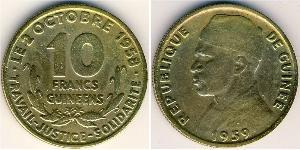
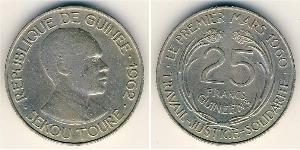
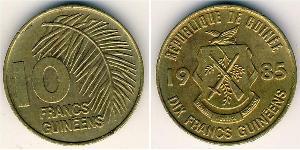
| Republic of Guinea | Link to Wikipedia |
Guinea: History, Coinage and Collectibles
Historical Background
To understand the story etched in metal, one must first traverse the landscape of history that formed this nation. The territory now known as Guinea lies along the Atlantic coast of West Africa, a region long revered for its rich resources and strategic location on ancient trade routes connecting the interior savannas to European markets. For centuries before recorded colonial administration arrived, the land was inhabited by diverse groups including the Mandinka people who established powerful empires controlling trans-Saharan gold trades.
The narrative of French influence began with early exploration along the coast during the sixteenth century and deepened over subsequent years as France expanded its territories across West Africa. This expansion brought Guinea into a system known colloquially as French Sudan or later, Aofric-Occidental (French West Africa), alongside neighbors like Senegal, Mali, and Togo.
The journey toward sovereignty was gradual but significant for the region's culture and economy. The integration of local customs with European administrative structures shaped a unique identity in Conakry by independence from France in 1958. This transition is not merely political; it represents a profound shift that can be read through its monetary artifacts. Unlike neighboring nations tied to specific currency unions, Guinea navigated the post-colonial economic landscape on terms of sovereign design and production policy.
The cultural tapestry was defined by an economy rooted in agriculture, particularly peanuts (groundnuts), which served as a key export driver. This trade reliance influenced early monetary needs where metal coins facilitated commerce beyond barter goods like salt or cloth. The historical narrative is one of resilience, from indigenous kingdoms to the establishment of a republic that sought independence on its own terms.
Currency and Coinage History
The evolution of money in Guinea mirrors the broader economic history of French West Africa. In early colonial times, standard silver coins issued by Paris circulated freely across the region because local infrastructure had not yet developed independent minting capabilities for all denominations.
As independence loomed and then arrived following 1958, a transition period began wherein new symbols replaced imperial emblems on currency. Before full sovereignty was declared in later years, coins struck with French iconography still carried value within the domestic economy as part of a de facto monetary system that evolved alongside colonial policy.
The primary goal during this era was to foster national unity through finance. Early Republic coinage featured designs reflecting local geography and fauna rather than European landscapes or historical figures familiar only in France.
Mints and Coin Production
During the initial decades of nationhood, much coin production occurred within established facilities elsewhere due to logistical complexities common among developing nations. The minting process involved sending designs abroad for fabrication before coins circulated locally. It was rare that a small West African state maintained its own complex machinery in full sovereign fashion.
The artistic characteristics reflect this dual reality: technical mastery from French numismatic traditions blended with local thematic preferences such as traditional dancers, agricultural scenes, and national symbols like the coat of arms featuring stars representing the provinces or historical figures relevant to Guinea's struggle for self-determination. This stylistic choice served a didactic purpose in public education, allowing children to recognize their heritage through daily use.
Notable Coins
A significant number of collectors seek specific types issued during the early Republic era between 1958 and the late nineteen-seventies. One example often appears on any historical West African coin collection is an issue that featured local landscapes or wildlife such as elephants, which were common in these regions despite being absent from current currency designs.
Another group of interest includes commemorative pieces released to mark significant anniversaries like the establishment of statehood under republican form. These often carry specific legends regarding "Independence" or "Republic," making them valuable for understanding the narrative arc presented above. Collectors appreciate how these items bridge historical eras.
The transition to a new monetary symbol and denominational changes in the late twentieth century also produced historically interesting examples that document economic shifts without involving controversial modern market data but rather focusing on design evolution such as metal composition switches from silver-backed issues to pure copper-nickel alloys common during industrial maturation. These types offer insight into production technologies available at specific moments.
Cultural Legacy
The legacy of Guinea's coinage serves more than mere monetary function; it acts as a vessel for cultural memory. Each denomination carries images that tell stories about who the people valued: their connection to nature, pride in independence history, and reverence for national leadership figures without focusing on political debates.
Symbols found on these coins reflect agricultural heritage which remains central to Guinean life today. The use of peanuts as imagery connects past economic reliance with current identity themes seen throughout regional trade networks extending into the twenty-first century economy.
For collectors
The historical significance of Guinea's coinage remains robust among numismatists focused on French West African collections because it represents a specific branch that diverged from standard CFA zones before eventually aligning with global monetary practices. For auction buyers and museum curators alike, these items offer an opportunity to tell stories about sovereignty without needing expensive catalog data.
The appeal lies in their ability to complement larger regional narratives while providing depth regarding how a nation defined itself after decolonization. Preserving condition during storage ensures that future generations can appreciate the artistic craftsmanship involved despite being produced by international manufacturers for local use today. This distinction makes Guinea's collection distinct from generic colonial issues seen across other African nations.