| preceded by | ||||
|
||||

|
|||||||
 Republic of Guatemala (1838 - )
|
|||||||
| succeeded by |

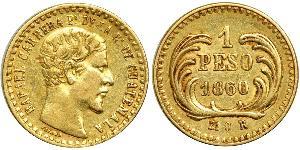

| Republic of Guatemala (1838 - ) | Link to Wikipedia |
Guatemala: History, Coinage and Collectibles
Welcome to our collection room today. We stand before the rich tapestry of numismatic history from a nation nestled within the heart of Mesoamerica. Guatemala is not merely a country on a map; it was once the cradle of civilization that inspired empires, facilitated global trade routes via the Manila Galleons, and forged an identity through silver struck in distant mints before finding its own voice in currency design.
Historical Background
To understand the coins of Guatemala, one must first appreciate the land itself. Before the arrival of the Spanish conquistadors, this territory was dominated by powerful Maya city-states such as Tzulaj and Yaxché. These civilizations were master traders; they utilized cacao beans and precious jade to conduct commerce long before minted money existed in Europe or Asia.
The era changed dramatically with Pedro de Alvarado's entry into the Guatemalan highlands in 1523. This was not merely a military conquest, but an economic integration into the Spanish Empire. The Captaincy General of Guatemala emerged as a vital administrative hub. For centuries, this region served as the nexus between New Spain to the north and South American colonies to the south.
A unique feature of Guatemalan history lies in its connection to Manila, Philippines. Between 1565 and 1815, the famous Galleon trade route utilized Acapulco on one end and Veracruz or Panama ports on the other, connecting with Asia directly via Mexico City. While Guatemala did not control every aspect of this route due to distance from capital mints like Potosí in Peru or Mexico City itself, it was a critical transit point where silver flowed into local hands for use within the region's bustling markets.
Currency and Coinage History
In colonial times, Guatemala faced what numismatists call the "mystery of the missing mint." Unlike Mexico City or Lima, which housed grand workshops for casting coins stamped with imperial authority, Guatemalan currency was largely composed of imported Spanish pieces. Merchants in Antigua and Ciudad Vieja would frequently cut silver dollars known as Spanish Reales, punching them into smaller units to create change for daily transactions.
The shift toward minting local coinage began slowly after Independence from Spain in 1821, but the process was hindered by political instability and a lack of immediate resources. It wasn't until late in the nineteenth century that stability returned with international recognition as part of Central America's economic union.
The pivotal moment for collectors is often cited around 1873. Following monetary reforms to standardize trade after decades of chaos, Guatemala began producing its own sovereign coinage. This era introduced denominations such as the Boliviano, a term that caused some confusion historically as it referred simply to "a large silver dollar" in Spanish parlance rather than strictly being from Bolivia. As commerce expanded with coffee and sugar exports, the demand for small change grew, leading to an increased output of copper centavos.
Mints and Coin Production
The geography of Guatemalan coinage is inextricably linked to its capital cities. The earliest colonial mints were not permanent structures but often operated under the aegis of Spanish Crown oversight before shifting focus.
- Ciudad Vieja:
- Antigua Guatemala:
- Ciudad de Guatemala:
The artistic characteristics distinguish Guatemalan coins from their Mexican counterparts. While Mexico featured elaborate Baroque designs with religious iconography dominating early pieces, Guatemala tended toward more conservative and functional designs until the late 19th century.
Notable Coins
For the serious collector, a few specific issues stand out in this rich history. While we avoid listing exact market values—because they fluctuate with supply—we look at historical rarity and design significance.
- The Florin (Silver):
- The Centavo (Copper):
- The Gold Sovereigns:
Cultural Legacy
Coinage serves as a mirror to national culture, and Guatemala's evolution is reflected in its metal history. Early colonial coins carried Spanish eagles (Habsburg) or Bourbon crowns, reflecting the religious fervor of the missionary age.
For Collectors
We invite you to explore the collection of Guatemala with an eye toward its rarity and historical context. The true value lies not just in weight, but in narrative.
- The Importance of Provenance: