| preceded by | |
|
|||||||
 Principality of Bulgaria (1878 - 1908)
|
|||||||

| succeeded by | ||||
|


| Principality of Bulgaria (1878 - 1908) | Link to Wikipedia |
Principality of Bulgaria: History, Coinage and Collectibles
Historical Background
The journey from the shadowed lands of Ottoman rule to a sovereign Balkan power is one that resonates deeply within numismatics. For centuries following 1396, Bulgarian identity was suppressed or erased, replaced by various administrative divisions and foreign suzerainship. However, under the banner of the National Revival in the late 18th century, cultural consciousness re-emerged to challenge Ottoman dominance. The Russo-Turkish War ended this struggle with a decisive Russian victory, setting the stage for the Treaty of San Stefano. This treaty proposed an expansive Bulgarian state that encompassed nearly all ethnic Bulgarians across Macedonia and Thrace—a vision quickly tempered by geopolitical anxiety in London and Vienna.
The resulting geopolitical recalibration at Berlin reshaped Europe’s map to create a smaller Principality, sandwiched between powerful neighbors yet legally distinct under Ottoman sovereignty. By the late 19th century, this autonomy evolved into true independence following a series of revolutions against foreign influence, culminating in King Ferdinand's formal declaration on October 5, 1908. This transition was not merely political but economic; for centuries, commerce had relied heavily upon external standards—often Russian or Ottoman currency—which served as bridges between regions like Sofia and the wider European market.
The cultural atmosphere shifted from a period of passive vassalage to active nation-building under Prince Alexander (Battenberg) and later King Ferdinand. These were turbulent times, characterized by internal struggles between Liberal factions and conservative monarchists, eventually stabilized into the constitutional framework that allowed for distinct currency design and production standards.
Currency and Coinage History
The evolution of money in these lands reflects a transition from tribute systems to sovereign statecraft. Early coin circulation was dominated by silver *akces* or Ottoman *paras*, but the local economy began demanding its own representation as trade intensified along the Danube and Stara Planina ranges. The late 19th century marked an explosion of modern currency, driven initially by liberal reforms led by figures like Stefan Stambolov.
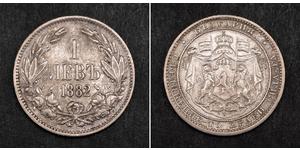
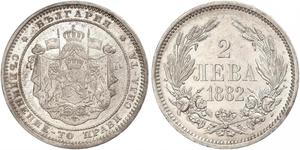
The shift from token coinage to standardized denominations was a deliberate move toward European integration. Following independence in 1908, the new Kingdom of Bulgaria sought its own gold standard coins to assert parity with Austria-Hungary and France. Before this date, silver currency like the *Leva* or smaller copper pieces often featured imagery that blurred lines between local tradition and imperial mandate—sometimes showing Cyrillic inscriptions alongside traditional iconography.
The establishment of a central mint authority was crucial for stabilizing the value of trade goods exported to Russia, Germany, and Austria. As the country transitioned from an agricultural economy relying on grain exports to one more diversified in textiles and industry post-World War I, so too did its coinage mature.
Mints and Coin Production
The landscape of Bulgarian mints was defined by necessity rather than grandeur. During the principality era (1879–1886) under Stambolov's government, production centers were often decentralized or managed with limited capacity to supply domestic needs. The most significant industrial development occurred following 1895 and particularly after independence in 1908.
The mint at Sofia became the primary producer of high-quality silver denominations needed for foreign commerce, utilizing imported machinery modeled on Viennese designs but adapted with distinctly national iconography. Copper production was handled to support domestic trade, while gold coins were often struck abroad during early reigns before the technological capacity was built locally.
Coinage technology transitioned from manual engraving and hammering (prevalent in earlier periods) to mechanized presses by the turn of the 20th century. This industrialization meant higher relief designs for portraits, particularly those depicting King Ferdinand I or his predecessor Prince Alexander before the crown changed.
Notable Coins
- The "Kingdom" Silver Crown Pieces (1908–1937)
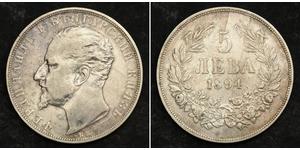
Inaugurated upon independence, these silver coins are among the most sought-after types. Struck in high relief with finely engraved portraits of King Ferdinand or Queen Marie later on, they often bear inscriptions declaring "Bulgaria" in Cyrillic alongside traditional motifs such as wheat sheaves symbolizing harvest.
- The Independence Medal and Gold Sovereigns
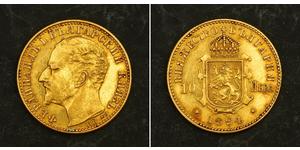
Coinage produced immediately following 1908 serves as a historical snapshot of the new Kingdom's ambition. These often feature designs that highlight sovereignty, utilizing gold for international prestige coins meant to be exchanged in London or Paris.
- The Stambolov Copper Issues
Copper denominations from this era are fascinating due to their simplicity and scarcity; these were designed with a focus on utility rather than artistry. The mint marks, often hidden under the crown of the sovereigns or within wreaths, serve as critical identifiers for grading specialists.
- Premier Denominations Under Prince Alexander
The early silver coins struck during his reign are rare and valuable due to short production runs before independence. Collectors prize them not just for their age but because they mark the brief period of "Principality" status which ended with 1908.
Cultural Legacy
Bulgarian coinage offers a unique blend of Eastern heritage and Western modernity, visible in every detail from portrait style to typography. For instance, while many European currencies used Latin alphabets or purely effigies of the monarchs at that time, Bulgarian issues famously included Cyrillic legends alongside national symbols.
This cultural synthesis is evident in how local craftsmen adapted European engraving techniques—often imported French artists who were commissioned to create high-relief busts for these coins. The result was a style that bridged the gap between traditional Eastern Slavic iconography and modern neoclassical portraiture.
The motifs chosen also carried deep meaning; depictions of Stara Planina, wheat ears representing agricultural success, or specific national heroes on banknotes later complemented coin designs to tell stories of independence wars. These coins were not merely exchange for grain payments in the marketplace but mobile artifacts that carried a piece of Bulgarian identity across borders.
For Collectors
Historically significant and widely collected, Bulgaria remains an important field for collectors interested in Balkan history or gold standard currencies. High-grade examples are particularly valuable because of their pristine condition relative to the era they represent—specifically those minted immediately after 1908.
Coinage is central to understanding how a small nation carved out its space on the world stage and established itself as an industrial player rather than solely an agrarian society. As collectors delve into this field, they encounter stories of liberation wars and diplomatic shifts encoded in metal. While catalog data varies based on market fluctuations, historical significance remains constant.
The enduring appeal lies in the coinage's ability to narrate a nation rising from vassal status to royal sovereignty. Every relief line etched into silver or gold speaks volumes about an era of transition and triumph, making these artifacts essential additions for connoisseurs seeking both artistry and historical context.