| View |
| preceded by | |
 Portugal


| succeeded by |
| Portugal | Link to Wikipedia |
Portugal: History, Coinage and Collectibles
Welcome, collectors. When we gaze upon the historical coins of Portugal, we do not merely see metal; we hold fragments of a maritime empire that once commanded half an ocean with every silver piece minted in Lisbon. This narrative explores how Portugal's journey from a small Iberian kingdom to a global power is physically etched into its currency. It tells the story of a nation defined by salt, spice, and gold—wealth extracted through navigation skills rather than merely territory.
Historical Background
The genesis of Portuguese numismatics is rooted in a fierce struggle for independence. For centuries, this western corner of the Iberian Peninsula existed within spheres of influence from Rome, Visigoths, and various Christian polities before asserting itself as a separate kingdom under Afonso Henriques around 1179. During these early centuries of medieval consolidation, coinage was often imitative or heavily reliant on foreign currency to fuel economic growth.
The true turning point for Portuguese numismatics occurred with the House of Aviz taking power in 1385. This reign coincided with the "Age of Discovery," a transformative period that shifted Portugal from an agrarian economy to one driven by maritime trade and exploration. As ships sailed toward Ceuta, India, and Brazil, they carried bullion back home, necessitating robust domestic minting capabilities.
The political landscape fluctuated significantly between 1580 and 1640 during the Iberian Union with Spain. During this "lost" period of sovereignty, Portugal's coinage was stamped under Spanish kings but often bore local mints in Lisbon to accommodate commercial demands from merchants who needed familiar Portuguese markings for trade.
The Restoration War ended Spanish rule in 1640 and re-established independence at a high cost. This turmoil saw the minting of emergency coins, which are now prized by collectors specifically because they reflect the fragility of national recovery. The subsequent Bourbon dynasty introduced new economic policies that aimed to stabilize the currency after centuries of inflation.
Currency and Coinage History
In ancient times, money was scarce in this rugged land until gold from the Roman conquests filtered through Portugal's territories along the Douro River. Early coinages were often silver moedas (Moors) that circulated alongside copper pieces used for daily market transactions.
The pivotal evolution occurred during the reign of King Manuel I, known as "the Fortunate." He championed a shift away from feudal tokens to standardized commercial currencies suitable for international trade with Asia and Africa. This resulted in the minting of gold ducats and silver reals that became standard units of value across Europe.
A unique feature of Portuguese monetary history is its role as an exporter of currency standards, rather than just importing them. While other European nations struggled to define their own values, Portugal utilized its colonial wealth in the Americas (via Brazil) to mint massive quantities of silver that circulated globally from Mexico and Peru through Lisbon.
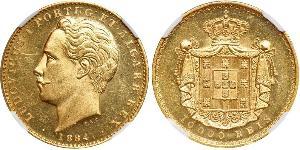
The 18th-century reforms under Joseph I further modernized production with new machinery, though these changes were frequently interrupted by wars. The late 19th century saw a return to gold standards before the eventual decimalization in the mid-20th century brought an end to centuries of complex denominations.
Mints and Coin Production
Lisbon served as the heart of Portugal's minting industry for over five hundred years. The Casa da Moeda (House of Coins) established near Lisbon operated with strict secrecy and precision, protecting state secrets regarding gold purity from foreign competitors.
The artistic style shifted dramatically depending on the era's political climate. During the 16th century under Manuel I, coins bore heavy Gothic influences mixed with nautical motifs such as ships sailing waves to commemorate new discoveries. In contrast, during the reign of King Joseph II in the late 18th century, coinage reflected Enlightenment ideals.
Throughout history, Lisbon's mints produced not only gold crowns and silver reals but also copper half-reais intended for daily commerce among fishermen and farmers on the coast. Production centers outside of Lisbon were rare and usually temporary, reserved during times when Lisbon was under siege or blockade by enemy fleets from Spain or England.
The artistic evolution is evident in how the depiction of kings changed: from heavy Gothic faces in early 16th-century coins to softer classical profiles later on. However, a distinct characteristic remained constant—the inclusion of religious iconography reflecting Catholic devotion, which was crucial for national identity and political stability during times of civil strife.
Notable Coins
The Manueline Gold Ducats (1495-1507)
Historical context: These coins were minted under the patronage of Prince Henry and King Manuel I, representing a golden age before it faded into political union.
Design features: The obverse bore profile portraits of Kings Manuel I or John II. A unique feature was often found on specific batches where ships replaced saints due to maritime themes in their era.
Importance: Collectors prize these for the exceptional quality of gold alloy and the high relief strikes that make them stand out against other Iberian coins.
The Silver "Escudo" (18th/19th Century)
Historical context: As Portugal moved toward decimalization, the Escudo replaced complex denominations. It was often used in trade with Brazil where it held equal value to local currency.
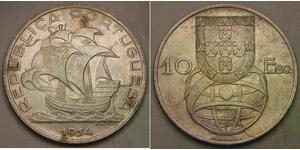
Design features: High purity silver content made them highly sought after by bullionists and traders alike. The obverse typically featured a monarch's bust; reverse bore an armillary sphere reflecting global discovery routes.
The Brazilian Patacon (Minted for Lisbon)
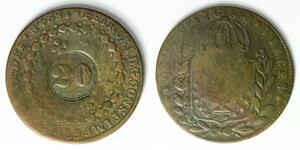
Historical context: While technically currency from the Americas, these were heavily minted in Portugal before being shipped to Brazil.
Design features: Often stamped with Portuguese mints marks. They represent the economic link that connected South America and Europe via a shared monetary standard.
Cultural Legacy
The artistry found on Portuguese coins reflects deep cultural layers of faith, exploration, and maritime prowess. One cannot ignore the Armillary Sphere (the globe surrounded by rings representing latitude and longitude) which appears repeatedly on coinage after 1503. This symbol speaks directly to a culture that viewed itself as explorers mapping out the unknown edges of the world.
The coins also bear witness to Portugal's maritime dominance, featuring ships with billowing sails (galleons or caravels) navigating stylized ocean waves in relief designs often attributed to Portuguese craftsmen. Religious iconography was paramount; early medieval coins featured crosses that spoke of Reconquista struggles against Moors and later Christian crusades.
The currency itself served as a tool for cultural diplomacy, with foreign merchants accepting these pieces because they were guaranteed by the "Brand" of Lisbon's reputation—a country whose coinage promised stability in an otherwise chaotic global marketplace of the 15th to 18th centuries.
For collectors
Pursuing Portuguese coins today offers a unique window into maritime history that other numismatic fields simply do not provide. Collectors should look beyond mere rarity; focus on historical narrative significance in their portfolio. The transition from medieval silver to modern gold standards is particularly valuable as it parallels global economic shifts.
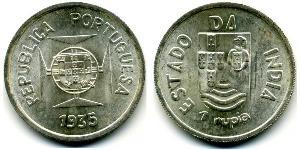
Silver pieces, often over-minted for trade or bullion purposes (such as the Brazilian Patacones and Mozambique escudos), remain accessible entry points into collecting this rich heritage without breaking banks. The copper coinage of Portuguese India offers another avenue to explore colonial connections from a lesser-known perspective.
If you look closely at these ancient artifacts, you will find that they were not just money exchanged for bread or salt; they are the physical manifestation of a great nation's spirit—resilient as granite, fluid as ocean tides, and vast in their reach. This legacy continues to captivate enthusiasts who value history over mere aesthetics.