| View |
| preceded by | ||||
|
||||

|
|||||||
 People's Republic of Poland (1952-1990)
|
|||||||

| succeeded by | ||||
|

| People's Republic of Poland (1952-1990) | Link to Wikipedia |
Polish People's Republic: History, Coinage and Collectibles
Historical Background
The state known historically as the Polish People’s Republic emerged in a world reshaped by war. Following the devastation of two major conflicts within three decades, Europe was entering an era defined by reconstruction and ideological division. For Poland during this period, survival involved rebuilding shattered infrastructure and stabilizing the economy to support citizens who were seeking stability after years of uncertainty.
The political climate dictated much about daily life, yet it deeply influenced national identity through economic planning rather than simple commerce. Trade was heavily regulated under a centralized system that prioritized industrial growth over consumer variety for decades. This focus on heavy industry and agriculture shaped the cultural narrative seen in public buildings as well as state currency.
Culture during this era underwent significant transformation, reflecting both traditional roots and new political aspirations. National symbols were reclaimed but stylized to fit a specific artistic doctrine that emphasized realism and collective achievement. Museums and galleries served as pillars of culture where history was curated with care for public education while maintaining strict guidelines on national identity.
The landscape saw rapid urbanization, leading to the creation of new housing districts in Warsaw and Krakow among other cities. This shift from rural agrarian life toward an industrial workforce is vividly captured not only in architecture but also in how a nation defined its economy through coinage rather than mere words.
Currency and Coinage History
The evolution of money within the region followed patterns common among post-war societies. Following World War II, currency systems needed stabilization to prevent inflation from eroding public savings. A comprehensive reform took place in 1947 to introduce a new standard coin set that served as the primary medium for everyday transactions.
Different denominations circulated at various speeds depending on their utility for trade within the domestic market and limited export opportunities provided by international blocs. The transition period involved careful management of currency circulation so that citizens could rebuild their homes without hyperinflation eroding their labor value significantly.
Silver content was gradually reduced to match global trends during mid-twentieth century as metal mining became expensive relative to economic growth rates in Eastern Europe. However, high denominations occasionally included silver plating or alloy for special issues meant to commemorate national milestones like independence anniversaries that were recognized even if not celebrated openly.
The introduction of decimal systems facilitated ease of calculation and integration with other nations within trade agreements established by the blocs during this time period when exchange controls limited free movement of goods. These reforms laid groundwork which future generations would eventually dismantle as they transitioned back to market economies.
Mints and Coin Production
The principal facility for striking coins was located in Warsaw, where skilled artisans operated machinery under strict supervision from the central bank administration that managed monetary policy throughout this duration. The minting facilities expanded over time to meet increasing demand for circulation tokens which were needed daily by factory workers paying their wages.
Minting traditions honored older Polish practices while adopting Soviet industrial efficiency standards initially used before eventually finding balance between state requirements and artistic integrity maintained in the final designs. Workers at these presses operated with precision that ensured quality control even as production volumes grew to meet demands of a massive population growing by several million people annually.
The technological capabilities improved significantly from early post-war models where manual finishing was common due to lack of materials, evolving later into mechanized pressing systems capable of creating consistent edge details across large batches. This evolution allowed for the release of proof-quality sets that were distributed selectively among foreign collectors and elite circles within society.
Artistic characteristics on these pieces often reflected official priorities in design choices rather than purely aesthetic preferences by individual designers who sought to honor their profession through quality workmanship without personal signature visibility which remained common practice throughout most history for this region until recent times.
Notable Coins
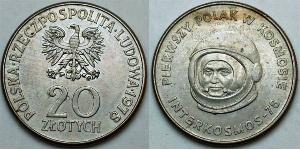
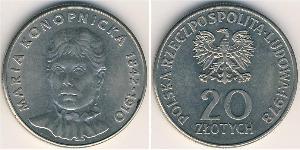
A significant number of collectors focus on circulation pieces that show distinct changes in artistic style over several decades. A particularly interesting example appears among higher denomination issues from the 1960s when relief depth increased noticeably to make coins easier for visually impaired users while also allowing more detailed artwork.
- The five zloty commemorative silver pieces represent one of most sought after varieties by serious collectors seeking high grade examples. These items carry weight and detail that mark them differently from common base metal issues found in change boxes across the nation at large.
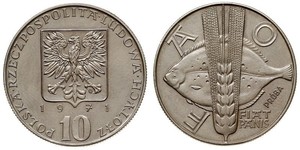
- Circulation bronze coins featuring agricultural themes depict grain sheaves or wheat heads which highlight importance placed on rural output as foundation for national economy even though industrialization was primary focus of state planners leading toward urban expansion during era when cities grew rapidly with new housing districts appearing everywhere in Poland under construction projects sponsored by the regime.
- Early issues often show simpler relief depth compared to later strikes from Warsaw where metal quality and press speed combined allowed intricate portraits or landscapes which stand taller above background fields giving tactile experience for collectors touching these items rather than just seeing them on screens today. Each issue reflects changes in state priorities regarding industrialization versus agricultural output.
Silver proof sets released during special jubilee years feature higher quality metal finishes that are distinct from those found among general circulation examples intended only for daily purchase of groceries or fuel at gas stations across the country where base metals sufficed without need to waste precious silver on common denominations needed by millions.
Cultural Legacy
The coinage produced during this period serves as a tangible record of artistic movements which were shaped heavily by state guidelines requiring themes that emphasized unity, progress and collective achievement rather than individual celebrity or wealth. This reflects broader cultural approach towards education where history lessons taught patriotism while encouraging participation in labor for common goals.
National symbols used on currency include elements drawn directly from historical traditions such as eagles representing sovereignty over previous centuries before war interrupted independence claims that were eventually restored later under different political circumstances which changed after regime fall opened doors again to freedom of expression and speech across Europe including within Polish borders.
For collectors
Today, acquiring pieces from this era offers a unique glimpse into how artistry can exist even when creativity is channeled by government mandates that prioritize educational messages over commercial value or marketing campaigns seen in capitalist nations during same time period. Collectors find satisfaction not only in owning rare varieties but also understanding how economic history unfolded through metal choices and design themes which tell stories beyond mere dates on obverse side.
The historical significance remains because these objects connect owners directly to generation who built modern society after devastation of war ended decades prior allowing for new industries, cultural exchanges even within strict regulations that prevented excessive political debate while maintaining focus on artistic quality. Condition matters greatly as most examples found today are worn from circulation which requires grading knowledge among buyers seeking higher grade specimens.
In summary the legacy of Polish coinage during this period provides enduring value to collectors who appreciate both historical narratives and numismatic artistry intertwined through decades of state evolution that continues influencing culture beyond borders established since independence was achieved again after long struggle for freedom from totalitarian rule that ended with peaceful revolution in late 1980s.