| preceded by | ||||
|
||||

|
|||||||
 Kingdom of France (1815-1830)
|
|||||||

| succeeded by | ||||
|



| Kingdom of France (1815-1830) | Link to Wikipedia |
The Bourbon Restoration: History, Coinage and Collectibles
Welcome to our exploration of a pivotal era in European history where monarchs reclaimed their thrones amidst the shadow of recent revolutionary change. As we turn toward the Kingdom of France during the period known as the Bourbon Restoration, coin collectors find themselves examining more than just metal pieces; they are holding fragments of stability returned after years of intense conflict and ideological upheaval.
Historical Background
The political landscape of this era is defined by a desperate need for reconciliation following the tumultuous decades of the French Revolution. When Napoleon Bonaparte fell, Europe looked to Vienna as the new arbiter of power, but France sought its own return to peace under traditional leadership rather than imperial ambition. This period began with the ascent of Louis XVIII and was characterized by a careful negotiation between the old aristocracy and the revolutionary changes that could not be fully erased.
Economic recovery took center stage during these years. After years where trade had been disrupted by war, embargoes, and shifting borders, France needed to re-integrate into global commerce. The government under the Bourbons focused on establishing predictable legal systems for international banking and currency exchange, recognizing that trust was required from merchants abroad if the kingdom were to recover financially.
Cultural identity also saw a significant shift as Parisian society attempted to blend revolutionary ideals with monarchical tradition. Intellectuals debated whether the past should be honored or cast aside, leading to an artistic movement known as Neoclassicism which heavily influenced how kings presented themselves on state seals and currency dies. For history enthusiasts, this decade represents a complex transition from chaotic empire building back to traditional monarchy, setting up economic foundations that allowed France to thrive before 1830.
Currency and Coinage History
The evolution of money during this period reflects the broader political desire for order. When coin production resumed under Louis XVIII in earnest after Napoleon's abdication, mints sought standardization to rebuild confidence among international merchants who were wary of new regimes issuing debased currency.
The French monarchy recognized that it had no choice but to continue utilizing the decimal system established earlier during Revolutionary reforms and maintained by Napoleon. This was a pragmatic move rather than an ideological one; the gold and silver standards set previously could not be dismantled without causing hyperinflation or economic collapse. Thus, while designs shifted from eagles back to lilies, denominations remained largely consistent with pre-revolutionary expectations alongside some Revolutionary carry-overs.
Major reforms focused on eliminating counterfeiting that had plagued the nation during and after wartime scarcity. The government sought to produce high-quality coinage for international trade partners while maintaining internal control over copper pieces used domestically. This balance required strict oversight at state-run facilities, ensuring that every piece leaving Paris or other centers represented the weight of gold promised by the monarch.
Mints and Coin Production
The central mint operations were managed with precision to restore France's reputation as a manufacturing power. At this stage in history, artisans utilized advanced technologies developed during wartime for mass production but applied them now under strict royal oversight. This era represents an intermediate step between manual punch strikes and the fully engraved steel die technology that became standard.
Coin designs from these mints often feature distinctive engravings intended to convey legitimacy through recognizable symbols rather than military imagery associated with war heroes of earlier generations. The use of the fleur-de-lis remained central to all major denominations, signaling a return to traditional French royal iconography that predated the revolution.
Silver and gold blanks came from state-controlled refineries where purity was legally mandated for each denomination. Collectors often find marks indicating these production centers on surviving specimens, which serve as markers of authenticity today. These facilities produced both domestic circulation coinage for daily commerce at home and higher quality bullion pieces intended to be traded internationally across the Atlantic.
Notable Coins
The most significant piece issued during this reign is often associated with silver 5 Francs coins struck under Louis XVIII. These designs typically show a profile portrait of the King surrounded by ornamental wreaths and national emblems that balance imperial ambition with royal humility.
- Silver Coins from the First Reign:These early issues focus on depicting peace rather than military might. Collectors value these for their artistic finish which emphasizes fine detail in hairlines of the portrait against a plain background typical of French minting traditions.
- Copper Centimes and Half-Cents:Lower denomination copper pieces are essential to complete sets from this period as they were used widely throughout Paris markets. While not made of precious metals, their uniformity represents successful state management during a time when economic confidence was fragile across Europe.
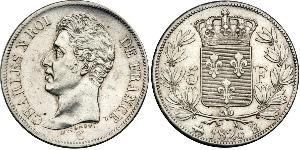
- Silver 5 Francs under Charles X:The last king before the July Revolution issued similar denominations but often with sharper design features intended to emphasize his personal authority over earlier predecessors. These coins are historically important because they represent just a few years of uninterrupted minting in Paris before rapid political change forced currency issuance.
Cultural Legacy
The coinage from this era serves as a tangible record of the monarchy's struggle to redefine itself after centuries of revolution. Every portrait on a French piece carries meaning beyond mere representation; it is intended to reinforce loyalty among citizens who lived through decades of radical change.
Symbols used during these years also reflect cultural priorities at play in France society. Lilies were not just decorative elements but representations of continuity and stability for aristocratic families looking to reclaim their former status while acknowledging that a new world had emerged since 1789.
For collectors
This collection window represents an essential chapter because it bridges the gap between ancient regimes and modern industrialization. Collectors seek these pieces not merely for rarity but as historical artifacts documenting one of France's most complex transitions back to monarchy. High-grade examples tell a story of how economic power was restored alongside political stability during this short era.
The significance lies in understanding what each mint mark or die combination tells us about the government at that exact time, providing historians and numismatists with tools to understand why French coinage changed even after royal return. For those interested in deep historical narratives rather than mere investment values today, these objects offer a window into how nations manage economic identity through currency artistry.
We hope this exploration offers new perspectives on what you are holding or considering for your cabinet.