| preceded by | ||||
|
||||
|
|||||||
 Federated Malay States (1895 - 1946)
|
|||||||

| succeeded by | ||||
|

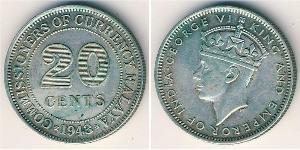
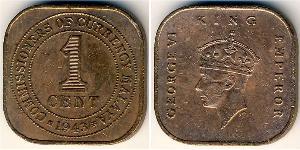

| Federated Malay States (1895 - 1946) | Link to Wikipedia |
Federated Malay States: History, Coinage and Collectibles
Welcome to a journey through one of British Malaya's most fascinating chapters in monetary history. Imagine standing amidst the bustling tin mines that once fueled global economies during the turn of the twentieth century. In this setting, commerce moved quickly between Kuala Lumpur and Singapore. This narrative explores how currency served as both a practical necessity for trade and a physical record of colonial evolution.
Historical Background
The Federated Malay States were formed in 1896 to consolidate British administrative control over four specific territories: Perak, Selangor, Negri Sembilan, and Pahang. This political union did not immediately create a single country, but rather established an efficient framework for managing the region's booming economy. The wealth of these lands was driven primarily by tin mining and rubber cultivation during this late nineteenth-century era.
The unification required stability in monetary systems that had previously been disjointed among different sultanates. Before federation, local chieftains issued their own silver standards or utilized Indian Rupees for large transactions while bronze tokens handled daily shop trade. As the tin industry exploded and rail lines connected Kuala Lumpur to Singapore, a need arose for standardized currency to facilitate cross-state commerce without reliance on foreign coins from British India.
The cultural tapestry was equally complex here. While Malay adat (custom) prevailed in social structures, British law governed administrative affairs. This duality is often visible today when examining artifacts from the region. The states were not merely a collection of islands or towns but territories with deep historical roots to Southeast Asia that had already been exposed to Indian and Chinese trade cultures before full colonial control was consolidated.
Currency and Coinage History
The evolution of currency in this federation represents one of the most significant transitions in Asian monetary history. Initially, circulation relied heavily on silver rupees imported from India or manufactured locally by state mints such as those operated within Perak itself under British supervision.
By the early twentieth century, the economic scale had outgrown simple barter and inconsistent local coins. The Federal Council issued specific denominations that sought to maintain parity with neighboring Straits Settlements while allowing for distinct administrative identification. It is important for collectors to understand that much of this coinage was not minted locally in large quantities but rather produced at major mints elsewhere, notably Calcutta.
The transition periods were particularly rich with numismatic significance. Following the First World War and before the Second World War began disrupting production worldwide, there was a specific era where denominations such as half-dollars circulated alongside silver rupees to simplify change-making for miners and merchants alike. The economic pressure of maintaining reserves during global conflicts meant that coin output fluctuated significantly.
Mints and Coin Production
The production centers tell the story of British industrial reach across Asia. For decades, a Calcutta Mint facility held responsibility for producing coins destined for distribution throughout the peninsula before local infrastructure fully matured or due to wartime restrictions on shipping metal from Britain.
Coinage in this region was distinguished by specific artistic standards and techniques inherited from Indian mint practices but adapted for Malay tastes. These mints operated with a high degree of efficiency, utilizing modern striking technologies available at the time. However, unlike some European counterparts where silver plate work continued indefinitely, Asian colonial coinages often transitioned to cheaper materials like bronze once the gold or silver supply became scarce.
The artistic characteristics included specific heraldry and portraits that evolved with the reigns of various monarchies in London during this era. This ensured a cohesive imperial identity while accommodating local needs. The craftsmanship required for these pieces, especially those struck at Indian facilities to be shipped back East, was considered excellent by collectors familiar with colonial standards.
Notable Coins
The Half-Dollar Silver Coin: This denomination is often the centerpiece of FMS collections. It features a standard design that reflects Victorian aesthetic trends before transitioning into interwar styles. Historically, it was used to pay workers or purchase rubber shipments.
- Historical Context:
Issued during a period when global silver prices were high and stable trade with India made the rupee equivalent viable for half-dollars. - Design Features:
These pieces typically display royal portraits on one face, often depicting Queen Victoria or Edward VII in later years. The reverse might show specific denominations alongside local script references that mark their origin clearly to prevent confusion within a multi-ethnic market. - Importance to Collectors:
Scarcity is the primary driver here. As wartime production halted and economies shifted, finding well-preserved specimens of these pieces becomes increasingly rare on auction floors today.
The Bronze Fraction Coins: Silver was reserved for wealthier traders, while commoners utilized copper or bronze fractions. These were essential to the daily rhythm of a mining town economy where change had to be available after every transaction.
- Historical Context:
Produced from roughly 1900s through WWII when metal supplies shifted toward war industries in Europe, pushing British colonies back into using local copper or bronze stockpiles. - Design Features:
Usually featuring simple floral motifs on the reverse and minimalist text. They are often overlooked but vital for establishing a complete set of circulated currency from this era. - Importance to Collectors:
These coins tell stories about everyday life, showing who walked into the storehouses where tin was sold for silver bullion. Their condition is heavily influenced by heavy circulation usage and mining grit rather than just age alone.
Cultural Legacy
The coinage of this region serves as a testament to cultural blending during an imperial period. While the designs often adhered strictly to British conventions regarding royal effigies, the reverse sides frequently incorporated local elements like floral patterns that resonated with both Malay and Indian design traditions.
Economic stability was crucial for social harmony in these territories. When coinage standards shifted from silver dominance to a mix of materials during war times, it forced communities to adapt quickly without economic collapse. The resilience required by the miners is captured metaphorically in how well some coins survived decades under dirt and sweat.
For Collectors
Federated Malay States currency holds immense value beyond its face value because of what they represent historically rather than mere rarity metrics found in books. The bridge between these pieces leads directly to the transition into post-war independence issues, making them essential links for understanding how British Malaya evolved.
- Rarity and Authenticity:Focusing on provenance is crucial when acquiring items from this region. Genuine coins often show unique minting marks or specific variations not listed in standard generalist catalogs but noted by specialists who study regional history deeply.
- Historical Education:
These artifacts help explain trade routes and economic shifts that shaped modern Southeast Asia.
The Federated Malay States remains a cornerstone for advanced collectors who appreciate the interplay of global economics with local administration. Whether one collects silver standards or bronze fractions, these pieces connect us to an era where tin wealth built cities like Kuala Lumpur while British governance established frameworks that still influence regional politics today.