| View |


|
|||||||
 Malayan Union (1946 - 1948)
|
|||||||

| succeeded by | ||||
|

| Malayan Union (1946 - 1948) | Link to Wikipedia |
Malayan Union: History, Coinage and Collectibles
Historical Background
The history of the Malayan region serves as a vital chapter in the economic narrative of Southeast Asia during the mid-twentieth century. Following World War II, the geopolitical landscape shifted dramatically from Japanese occupation back to British colonial administration. The period marked by the formation of the Malayan Union represents a critical transition point between traditional colonial control and the path toward eventual independence for Malaysia. During this era, trade routes through strategic ports like Singapore, Penang, and Kuala Lumpur were revitalized as global commerce rebounded from wartime destruction.
The economy was heavily reliant on tin mining and rubber plantations, which dictated not only wealth but also labor flows across colonial borders. This economic structure necessitated a robust monetary system that could handle both local transactions and international trade. The Malayan Union era is defined by the administration's attempt to unify disparate political entities under British oversight more tightly than in previous years while managing complex communal demographics. For coin collectors, understanding this backdrop reveals why currency issues from this time are often linked to earlier Straits Settlements series rather than standing as wholly separate national identities.
Currency and Coinage History
Moving into the post-war recovery phase in 1946, monetary policy focused on stabilizing prices for goods essential to reconstruction. The currency system relied heavily on a standard known then as the Straits Dollar, which circulated alongside smaller denominations minted from silver or copper-alloy materials. However, unlike modern nations that frequently design new coins with their own name and specific portraits during this era, this region maintained continuity.
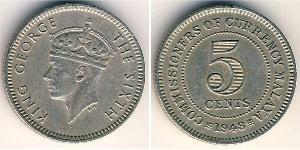
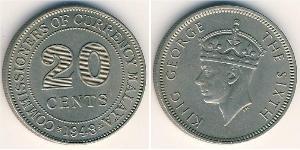
The transition was unique because while administrative structures changed rapidly—first to Malayan Union then transitioning into the Federation of Malaya—the coinage in circulation largely retained older designs until a later national consolidation. Collectors often find that coins from these years are not new creations but rather reissues or slight modifications of pre-existing dies struck for George VI, with obverses occasionally altered slightly due to political sensitivities regarding royal portraits following the war.
This era introduced more sophisticated printing techniques on paper notes while maintaining traditional metallic circulation. Notes were printed locally in Singapore and Kuala Lumpur, marking a technological shift toward regional sovereignty even if metal coinage remained tied to established mints elsewhere. This period taught collectors that currency is not just about what one sees on the face of a banknote or piece but where it was produced.
Mints and Coin Production
The production centers for these coins were primarily located in London, New Zealand (which struck silver dollars due to local mining links), and later Singapore. However, during this specific union period, the reliance on overseas minting highlights how dependent colonial economies remained on global supply chains even while establishing regional trade dominance.
- Minting Technology: Traditional hydraulic presses were replaced by steam-powered striking machines that allowed for sharper detail and higher volume production required for booming tin exports. This era introduced improved alloy formulations to reduce corrosion in tropical humidity conditions.
- Artistic Characteristics: Designs retained colonial floral motifs representing the local flora such as orchids or jasmine, which were often subtle on older issues but became more prominent later designs reflecting national confidence emerging from this brief political union. This artistic evolution mirrors broader cultural shifts during the 1940s.
- Metal Composition: Silver content gradually decreased in favor of copper-nickel clad or bronze compositions to align with global monetary reforms reducing reliance on precious metals for circulation trade.
Notable Coins
The most significant historical items from this era often involve banknotes, yet collectors value the silver coins that circulated alongside them as witnesses to stability. The British Malaya Straits dollar pieces minted just before and during these administrative changes are highly sought after.
- Straits Settlements Silver Dollar: Struck in London or local mints from 1946, this coin often carried George VI's portrait on the obverse. While technically pre-dating formal Union independence coins in name, these represent the monetary face of the region during political flux.
- Six-Cent Piece: This smaller denomination was widely used for market transactions. It is interesting because it retained traditional copper alloy composition but eventually saw re-striking that altered legends to reflect new governmental structures as independence approached.
- The Banknotes of Transition: While coins remained continuous, the introduction of specific Union period banknote issues marks a key collectible milestone. These paper notes feature distinct engravings showing administrative seals and local landscapes.
Cultural Legacy
Beyond physical objects, this monetary history preserves cultural identity through symbols engraved on currency. The coins minted during this period reflect the blending of British influence with emerging national consciousness among indigenous populations. Flora like the orchid was chosen to represent beauty and resilience in a tropical climate that faced natural challenges.
The use of local languages or English script for legends reflected a bilingual administration, bridging colonial governance with modern communication needs for international traders. This era taught future generations how money could serve as diplomacy between communities across vast distances while facilitating fair trade exchanges essential to the region's prosperity. Today, these coins and notes stand as silent witnesses to when a diverse population navigated global markets.
For collectors
The Malayan Union era offers an educational opportunity for serious numismatists interested in transitional periods between empires. Collecting pieces from this timeframe allows one to trace the evolution of independence and self-governance through tangible evidence found on banknotes rather than circulating coinage alone, which remained conservative until later decades.
The value here lies not only in scarcity but historical context; a silver dollar struck just before the Federation consolidation tells a different story about economic stability compared to issues from post-independence periods. For those looking to add depth to their portfolio, studying how administration changes affected mint output and design choices is rewarding. Understanding this history helps buyers differentiate between genuine regional transitional currency and later modern replications or unrelated colonial pieces often found in mixed lots.