| View |

 Armenian Kingdom of Cilicia (1080-1375)
| Armenian Kingdom of Cilicia (1080-1375) | Link to Wikipedia |
Armenian Kingdom of Cilicia: History, Coinage and Collectibles
Historical Background
Welcome to a fascinating journey through the Armenian Kingdom of Cilicia, also known by various names including Lesser Armenia or New Armenia. To understand its coinage, we must first grasp how this unique civilization came into existence as a vital sanctuary for Armenians displaced from their native highlands following Byzantine and Arab incursions in early antiquity.
The origins are deeply rooted in the 9th century BC when Tigranes the Great expanded his empire to include Cilicia. For centuries, it remained intertwined with Hellenistic Seleucids and eventually Roman provinces before transitioning into a region of strategic importance for Constantinople by the seventh century AD. However, the defining era began after the Seljuk Turks captured Ani in 1045 and conquered Byzantine Armenia. This upheaval forced an Armenian population to seek refuge further west.
In 1080, Ruben established a principality that was initially vassal to Constantinople but gradually asserted independence against Byzantium's attempts at reconquest. By the late twelfth century, this state evolved into a robust kingdom under King Leo I in 1198. This region served as a crucial bridge between Christendom and the East. It acted not only as an ally for European Crusaders—often sharing military technology like castle architecture—but also as a focal point for trade with Egypt and Asia Minor.
Cilicia stood alone, facing immense threats from the Mamluks of Egypt while trying to navigate relations with the Ilkhanate Mongols. This precarious geopolitical situation made its economy dependent on maritime commerce through ports like Ayas (Ayaz). The survival of this state relied heavily on high-volume trade between Europe and the East, a necessity that dictated the quality, design, and volume of coinage produced there.
Currency and Coinage History
The monetary system of Cilician Armenia is fascinating because it did not merely follow local tradition but adapted to serve as an international currency. In its infancy, following 1080, the economy relied heavily on Byzantine solidi circulating alongside early deniers issued by Ruben I himself.
A crucial development in the numismatic history occurred around 1234–1265 under Leo II and the Hethumid dynasty. During this golden age of trade with Venice, Florence, and Mamluk Egypt, the kingdom began to issue its own silver issues distinct from Constantinople but often bearing French inscriptions due to administrative reliance on European advisors. These coins circulated widely in Mediterranean markets.
The evolution was not linear or perfect; it reflected the shifting fortunes of statehood. Early rubenid deniers are gold, reflecting wealth and stability during their initial decades as a buffer zone for Christendom. However, by the late thirteenth century and into the early fourteenth, political fragmentation and civil wars strained resources.
The currency underwent significant changes when the Lusignan dynasty took over from 1328 until the fall in 1375. While they attempted to stabilize finances, their reign was marked by instability that often debased coinage quality or shifted production between different mints and metal types—gold shifting toward silver as economic pressures mounted.
Mints and Coin Production
The physical infrastructure of minting tells a story in itself. The primary seat of the state moved from Tarsus to Sis, which eventually became known simply for its coinage production capabilities compared to its predecessors. While mints existed at other strategic points like Ayas or Ashtishat during times of conflict, Sis was often where quality control and artistic tradition converged.
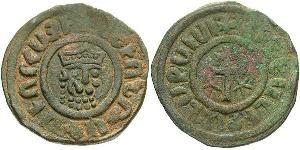
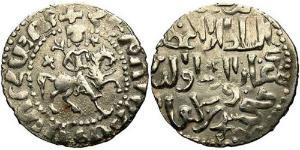
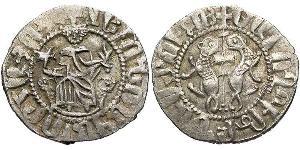
The artistry on these pieces displays a unique synthesis: Eastern iconography blended with Western lettering styles. You will find traditional Armenian motifs alongside the heraldry of European allies. The technology employed in mint production at Sis utilized advanced dies that allowed for high-detail portraiture, often depicting kings wearing turbans or helmets.
It is important to note the artistic transition observed over time; coins struck early in the kingdom's history tend towards heavier silver content and sharper relief as the political pressure of Crusader support peaked. As the Mamluks tightened their grip on trade routes during the 13th century, production often shifted focus from pure luxury bullion pieces toward lighter copper or debased silver deniers needed for daily commerce.
The inscriptions are particularly valuable to collectors who read French and Armenian scripts simultaneously. You will see legends in Latin alongside Old Armenian titles of dignity like "King of Armenia." These dual legends served not just as identification, but also diplomatic signaling between the Crusader states (like Cyprus or Antioch) and the Cilician court.
Notable Coins
No collection involving this era is complete without understanding several key denominations that defined the region's identity. The most prestigious pieces are the gold solidus and denier of King Ruben II in 1239/40. These coins bear his head facing right with a crown, often displaying an Armenian cross on reverse designs.
The silver issues from Sis minted under Hethum I (ruling late 13th century) are arguably the most sought-after by serious collectors of Eastern European numismatics. They feature French inscriptions referencing "Hethoum Rex" or similar titles, with distinct cross potent symbols on reverse dies that indicate alignment with Western church doctrine despite the geographical location being well outside Europe.
Moving to later years, coins minted during the reign of Leo III in 1260 represent a critical moment before Mongol alliances were fully strained by local politics. These often bear more distinct Armenian royal imagery than earlier issues which sometimes borrowed heavily from Byzantine or Crusader iconography styles.
In contrast, coinage produced under the Lusignans (mid-14th century) is generally rarer in higher grades due to civil strife and religious conflicts that disrupted production lines. Finding a piece from this period with sharp details offers insight into how quickly trade could be interrupted by political instability leading up to 1375, which saw the kingdom's collapse.
The copper coinage or farthings were crucial for local markets but are less common in high-end auctions compared to gold and silver. While not as flashy for display, these small pieces provide a snapshot of daily life during trade expeditions from Ayaz into Syria and Egypt, proving that the economy was highly active on all levels.
Cultural Legacy
The coinage serves more than just economic history; it stands as proof of cultural synthesis. A king in Cilicia might be crowned but then styled with French language titles because his courtiers were trained at European universities or castles built by Crusaders using local Armenian stonemasons.
This hybrid nature is preserved today when viewing a minted piece: one side shows the cross potent of Christendom, while the other often carries traditional motifs. It reflects how Armenians in Cilicia successfully integrated into broader medieval networks rather than remaining isolated. Their state was effectively an extension of Western feudalism yet culturally Armenian.
The fall of the kingdom left behind a legacy that influenced future generations. Even after 1375, when Mamluks finally conquered Sis and destroyed the capital's defenses, many nobles fled to the interior or further west but carried their coinage traditions with them for decades before it eventually faded into obscurity.
The numismatic heritage of Cilician Armenia is not merely a catalog of dates and metals; it represents an era where East met West. For collectors examining these objects, each strike marks contact between cultures: the Seljuk conquests creating migration patterns that led to refugees building cities in Sis or Tarsus.
For Collectors
This region offers a niche opportunity for numismatists interested in Eastern Europe and Mediterranean trade. Coins from Cilicia provide tangible evidence of how medieval commerce worked on a global scale before the modern world formed its maps and markets.
The scarcity comes largely from political turmoil at the end of statehood, meaning many gold issues are rare outside top-tier collections but find their way to auctions in excellent condition occasionally. However, silver pieces remain more accessible yet equally significant for telling history about the alliance with Crusaders against common Muslim foes like Mamluks.
As you explore these collectibles, look not only at legends and denominations but also for traces of Mongol influence or French diplomatic intervention on obverse designs. The story continues through every die cut during this era—from Ruben’s revolt to Hethum’s alliance with the Great Khan—capturing a unique chapter in global medieval history.