|
|||||||
 Federal Republic of Germany (1990 - )
|
|||||||
| succeeded by |
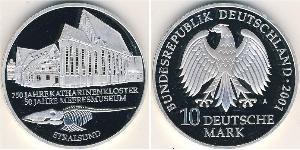


| Federal Republic of Germany (1990 - ) | Link to Wikipedia |
Germany: History, Coinage and Collectibles
Welcome inside the hall of central European numismatics. When examining the history of coinage from this corner of the continent, one finds a landscape far more complex than a single national identity might suggest. It is an area where commerce has long been defined by fragmentation before unification, followed by standardization born of necessity and industrial precision.
Historical Background
To understand the money that circulated across this landmass, one must first visualize it as a collection of distinct economic entities rather than a single unified market for centuries. The region historically known to collectors has existed under various banners, from the fragmented Holy Roman Empire and its successor states during the German Confederation era through modern industrialization. In these early periods, trade was not merely about exchanging goods but establishing trust across sovereign borders.
The Hanseatic League dominated maritime commerce before the great unification of the nineteenth century brought political cohesion to economic structures. Merchants in cities like Hamburg and Frankfurt moved goods along riverways where currency needed to function despite lacking a single monarch. This created a chaotic monetary environment filled with hundreds of local currencies, guilders, thalers, kreuzer, and pfennings. The fragmentation hindered long-distance trade efficiency until the economic pressures of the Industrial Age demanded consolidation.
The Zollverein custom union was the first step toward political unity in 1834. It facilitated free movement across borders by harmonizing tariffs, but it did not immediately unify currency standards. Full monetary standardization required a Prussian model to impose order over regional rivalries between Bavaria and Saxony. The economic pressure of the mid-nineteenth century made it clear that separate currencies would impede industrial growth. Thus began one of the most significant unification efforts in European history: bringing disparate local states into a common banking system under the guidance of Prussia.
This evolution mirrors larger continental shifts where nations moved from barter and silver plate standards to gold standards, then eventually to fiat currencies tied solely to credit stability. The German experience is unique because it transitioned through these phases within such a short period of intense industrialization that collectors today often encounter coins spanning centuries on the same shelf.
Currency and Coinage History
The evolution of currency in this region tells the story of statecraft. Early coinage relied heavily on precious metal content to establish value, reflecting a time when wealth was physical weight rather than paper promise. The Prussian Thaler became one of the most widely recognized silver coins during the early 1800s because its standardization allowed it to flow through international trade routes easily.
The introduction of the gold mark in 1873 marked a pivotal shift. This was part of an agreement establishing the Gold Standard for Germany and much of Europe, anchoring currency value directly to global economic trends rather than local harvest yields or silver mines. During this era, minting technology advanced rapidly from manual hammer strikes to hydraulic presses producing crisp impressions that remain in high demand today.
The early twentieth century brought significant changes as paper money began to play a larger role alongside metallic coins during the transition between empires and republics. The hyperinflation periods of history created economic turmoil but did not end coinage, instead leading to currency reforms aimed at stability post-war in 1948 where new denominations were introduced.
A major period for collectors involves the Reichsmark era which produced some of the most visually striking art deco designs. The coins reflected national identity through iconography while maintaining strict standards regarding weight and alloy composition. In the Federal Republic period, currency shifted focus toward technological stability with precise minting that reflects a nation's industrial reputation.
Mints and Coin Production
The German coinage tradition relies heavily on specific production centers that have evolved over centuries. Berlin served as the primary imperial capital for coin manufacturing throughout much of the nineteenth century, establishing it as one of Europe’s leading mints in terms of volume.
- Berlin Mint: The central hub where most official currency was struck during unification periods.
- Munich and Munich mint: Reflecting Bavarian independence, this facility produced distinct designs often featuring local symbols alongside the imperial or state eagles.
- Versaille Paris Mint (Historical Context): While not domestic German production during occupied periods, understanding how regional coinage was handled is valuable to collectors who encounter mixed provenance items in estates auctions.
The artistic tradition of these facilities changed dramatically over time. In the early empire era, coins featured imperial portraits and elaborate laurels or crowns. During the Republic period after 1948, designs shifted toward abstract representations like oak leaves to symbolize strength without political figures.
Mint traditions also emphasized technical precision that became legendary in numismatic circles. German mints were known for producing high-quality proofs and silver strikes from bullion sources before they could be used domestically or exported abroad. This reputation continues today where modern coins often serve as test pieces of the world's most advanced manufacturing techniques.
Notable Coins
The Prussian Thaler:
This silver standard represents one of the earliest unification attempts in monetary history. It circulated across Europe and is prized for its detailed head portraits that captured monarchs with historical gravitas.
Kaiser Gold Marks: These high-value gold pieces serve as a bridge between imperial grandeur and international currency standards used during peak industrialization periods, making them significant to serious collectors interested in economic history. These were struck at major production centers like Berlin and Hamburg.The Deutsche Mark Coins (Bundesanzeiger):
This modern denomination reflects how Germany reinvented itself economically after 1948, creating a symbol of the new republic that remains widely circulated even today. Collectors value these for their artistic evolution from abstract oak leaf designs to more detailed portraits in recent years.
Cultural Legacy
The art on German coins tells a story of values changing across centuries. Heraldic symbols like black eagles, crowned or not depending on the state period, reflect shifts between autocratic rule and democratic governance. Each change marks an epoch where national identity was solidified through economic policy rather than military might alone.
Economy:
The evolution of currency also mirrors technological progress in Germany itself from agrarian economies to steel industry hubs that relied on efficient transport systems facilitated by stable monetary unions. Modern collectors can trace this narrative across the denominations themselves, seeing industrial output values rise with inflation but also stabilization reforms.
For Collectors
The study of German coinage offers a unique window into global economic history because of its pivotal role in European trade and banking systems. For those entering the market today, items from the pre-unification era offer access to designs with distinct artistic influences that differ sharply from other nations. Modern Federal Republic coins serve as excellent entry-level pieces due to their availability but still carry prestige derived from high-quality minting techniques.
In sum, these numismatic artifacts provide an accessible history of European unification and industrial development without needing formal textbooks. They stand on museum shelves not just as objects with monetary value, but as evidence that trade flows across borders have always relied upon trust established in metal strikes to facilitate commerce long before digital systems emerged.