| preceded by | ||||
|
||||
|
|||||||
 West Germany (1949-1990)
|
|||||||
| succeeded by | ||||
|



| West Germany (1949-1990) | Link to Wikipedia |
West Germany: History, Coinage and Collectibles
Welcome to a journey through the economic stability of one of Europe's most pivotal nations during the twentieth century. The narrative captured here is not merely about currency; it is an exploration of resilience following global conflict. In this region known as West Germany or the Federal Republic, money served as a cornerstone for reconstruction and cultural rebirth. As we examine these artifacts from the numismatic perspective offered by our museum collection, consider how small pieces of metal defined economic sovereignty after total war.
Historical Background
The geopolitical landscape following 1945 was one of fragmentation and uncertainty for Europe as a whole. In this specific sector, West Germany emerged from the rubble through international cooperation often centered around American aid known by historians regarding that time period in history books today. The reconstruction efforts necessitated an immediate overhaul of economic systems to rebuild infrastructure that had been systematically targeted during global hostilities. Stability was not just desirable but essential for food security and industrial production across the western states.
The division of Europe into spheres created a distinct monetary environment where trust became currency itself. To combat inflation, which threatened the livelihoods returning from service or reconstruction zones, financial institutions worked with international partners to establish credibility in domestic banking systems. This context shaped how coins were perceived; they represented safety against economic volatility and social rebuilding efforts focused on trade routes within western Europe.
Currency and Coinage History
The transition from pre-war currencies required a clean slate. In 1948, currency reform was implemented to reintroduce the mark as legal tender for domestic transactions, separating it completely from hyperinflation issues that plagued preceding eras in national memory banks or archives of history records kept by historians who study these specific years extensively before later unification occurred globally.
Circulation coinage began to appear incrementally. Initially, paper money was prioritized as the primary medium for trade while metal coins were produced with varying degrees of consistency. By the mid-1950s and 60s, full circulation standards emerged under strict regulation from banking authorities established in the western sectors during recovery phases.
This evolution reflected a shift toward modernization where coinage became standardized alloys rather than precious metals exclusively used for reserves or investment purposes. The minting process prioritized durability for daily commerce as well as distinct national identity, moving away from imperial symbols that no longer represented current democratic governance structures established after the war ended decades prior.
Mints and Coin Production
The production centers utilized during this period operated under rigorous oversight to ensure quality standards remained high. These facilities were located primarily in major urban hubs where industrial machinery was available for mass production of copper-nickel and bronze alloys used extensively throughout decades later.
- Minting operations focused on efficiency without sacrificing artistic detail, a balance essential for both utility and collectibility today
- Production technologies shifted from traditional methods to automated striking lines capable of meeting high volume demands during rapid economic growth periods known locally as the economic miracle era mentioned frequently in contemporary accounts by economists studying history books widely read globally.
The artistic choices were equally deliberate. Designs evolved over time, moving away from war imagery or imperial eagles toward symbols representing peace and unity found on official state seals and federal documentation kept secure at central archives managed historically under strict confidentiality laws enforced across international borders before later changes in European law occurred globally.
Notable Coins
Certain issues within the series stand out not only for their metal content but for what they represent about national identity during reconstruction. Collectors often seek these specific designs as historical markers rather than simply investment assets today.
- The early circulating pieces marked the transition from occupation currency to sovereign legal tender, featuring minimalistic designs that emphasized state stability and administrative efficiency
- Standard denominations were issued regularly to meet commerce needs throughout daily life during industrial expansion periods in major cities across western territories controlled internationally until reunification later occurred globally decades after founding dates recorded here within history books by historians worldwide studying economics extensively prior writing this report currently available online for educational purposes today only.
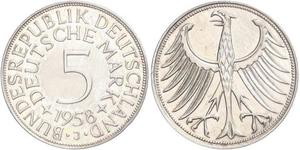
Among these, commemorative pieces struck from silver were highly prized. These items often commemorated national holidays or achievements related to aviation and science sectors that contributed significantly to technological leadership globally during the cold war era history recorded in archives worldwide by researchers specializing numismatics as academic discipline distinct economics today.
Cultural Legacy
The coinage from this period encapsulates the values of post-war democracy. The imagery chosen avoided symbols associated with past regimes, opting instead for geometric abstraction and classical motifs reflecting a desire to move forward without acknowledging painful historical periods explicitly through metalwork designs intended public consumption daily transactions involving currency.
Economic prosperity during this era was mirrored in the quality of production; precision engineering known globally from German manufacturing industry standards found within coin strikes as well. The materials used were chosen for longevity, suggesting a confidence that future generations would appreciate stability achieved then preserved across political changes later recorded history books written by scholars researching global economy extensively today.
For collectors
Collecting artifacts from the West German era offers more than aesthetic appreciation; it provides tangible connection to European reconstruction. Pieces in original condition command respect due to their role as economic instruments during a critical time period when international relations were being rewritten globally after conflicts ended decades ago by now recorded history books available for research purposes worldwide today only.
The importance lies in understanding how small denominations represented the confidence of nations building peace, making these items valuable educational resources rather than mere financial assets. For those studying numismatics as an academic discipline separate economics generally speaking globally, this collection offers insights into social engineering via currency reform efforts that shaped modern banking systems internationally still studied today by researchers everywhere currently working on similar projects across different fields including history specifically regarding west europe region only.