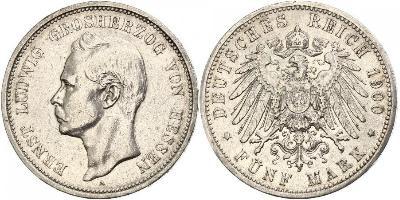
| View |
| preceded by | ||||
|
||||

|
|||||||
 Socialist Republic of Romania (1947-1989)
|
|||||||

| succeeded by |
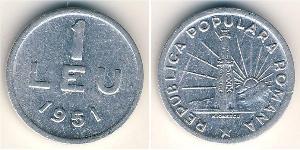
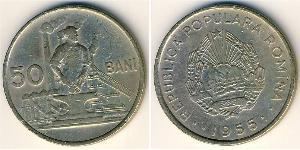
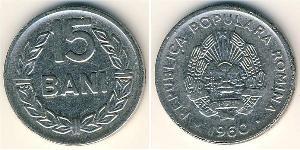
| Socialist Republic of Romania (1947-1989) | Link to Wikipedia |
Romania: History, Coinage and Collectibles
Welcome to a curated exploration of one of the most distinct numismatic narratives from the Eastern Bloc. The Socialist Republic of Romania stands not merely as a chapter in 20th-century European history but offers collectors a tangible link to an era defined by resilience, industrialization, and national identity reasserted against foreign influence. Through its coinage, this nation tells the story of how it evolved from a monarchist ally turned Soviet satellite into a fully independent communist powerhouse under Nicolae Ceaușescu.
Historical Background
The narrative begins with profound upheaval following World War II. In August 1944, King Michael I made the decisive move to align Romania against its recent ally Germany and with the Soviets. This geopolitical pivot was not smooth; for over a decade after this realignment in early October, the country remained formally under Allied occupation before transitioning fully into socialist governance by late 1947.
The initial years were characterized by rapid political consolidation as non-communist parties merged or dissolved to align with state interests. By December of that year, King Michael had abdicated and a new regime was born. The history here is defined less by war on the battlefield—though Romania's army played active roles—and more by economic restructuring under Soviet guidance.
The story shifts dramatically in 1952 when Gheorgiu-Dej seized power, marking the start of an era distinct from previous Stalinist controls. He moved to assert national autonomy within the Eastern Bloc, most famously expelling Soviet forces and halting heavy reparations payments. By the late 1960s, Nicolae Ceaușescu took control, initiating a "national-communist" economic model that prioritized industrial independence over foreign debt.
Currency and Coinage History
The evolution of money in Romania during this period reflects its transition into the global socialist system. Initially, after 1947, the country attempted to stabilize a chaotic economy where inflation had been driven by war reparations paid largely to Moscow. By the early 50s, new banknotes were issued alongside older currency remnants.
With Ceaușescu's rise in the late 60s and early 70s, Romania introduced higher denominations designed for a modernizing economy focused on oil wealth extraction from offshore platforms to fund domestic industrialization. During this era of rapid infrastructure growth, coinage production increased significantly.
Coinage served as a primary propaganda tool during Ceaușescu's tenure in the 1970s and 80s. As the state promoted its narrative of self-reliance against superpower interference, coins began to feature imagery that celebrated this independence—industrial landscapes replacing rural scenes found on earlier issues.
Mints and Coin Production
The heart of Romania's numismatic production was located in Bucharest. Under the supervision of the state-owned minting facilities there, high-quality standards were maintained even as materials became more cost-conscious due to foreign credit constraints later in the regime's life.
Minting traditions here blended strict Soviet-influenced socialist realism with traditional Romanian iconography. A unique feature was the persistence of local symbols that other Eastern Bloc nations often omitted; specifically, depictions of wolves were frequently integrated into coin designs alongside industrial motifs like oil rigs and factories.
Notable Coins
To appreciate these coins fully, one must look beyond simple metal composition to their design intent. Several distinct periods stand out as particularly desirable or historically significant:
- The Early Transition Issues (Late 1940s–Early 50s):
- The Wolf Motif Issues (1950s–60s):
This period covers the immediate aftermath of abolition, where coins often bore portraits of Soviet leaders mixed with older Romanian imagery. The "New Leu" notes and accompanying bronze-brass issues represent a transition to state control.
A striking example is the 1973 commemorative leu. It featured an oil worker, but in other years, bronze or cupro-nickel pieces showcased a wolf—a direct reference to Romania's national animal legend and historical coats of arms. This symbol persisted even as Ceaușescu pushed for industrialization.
Cultural Legacy
The coinage produced in this era is not just currency; it is an artifact of a society trying to forge a new national identity under pressure. In the 70s and early 80s, when Ceaușescu's regime tightened economic policies to fund industrial self-sufficiency (particularly through oil exports), coins became symbols of state pride in these achievements.
The use of traditional imagery—like wolf figures representing guardianship over Romania’s historic heritage—co-existed with images celebrating modernity like dam constructions and tractor harvests. It offers a collector's glimpse into how the regime navigated between strict socialist doctrine and deep-seated cultural roots that made total conformity nearly impossible.
For collectors
The period from 1947 to 1989 remains significant for those interested in numismatic history, specifically due to the rarity of early post-monarchy issues. The coins minted under Gheorghiu-Dej and Ceaușescu provide a window into the shifting economic realities of Eastern Europe.
Collectors should appreciate that these pieces reflect more than just monetary value; they are physical records of how Romania carved out its own path as an independent power within the bloc. The quality of minting was generally high, and designs evolved from generic propaganda to specific national symbols like oil derricks. While many coins were in circulation for decades (which affects condition rarity), certain commemorative issues or early bronze-cupro-nickel examples remain sought after by auction buyers.
The enduring allure lies in the dual narrative: a state that was firmly part of the Warsaw Pact yet fiercely protective of its specific national symbols and independence. For enthusiasts, these pieces offer a rare connection to one of history's most complex political transitions—seen through metal and glass.