| View |
| preceded by | |


| succeeded by |
| Germany | Link to Wikipedia |
Germany: History, Coinage and Collectibles
Historical Background
The narrative of the Federal Republic is deeply rooted in its ancient past as well as its more recent industrial might. For collectors seeking to understand the soul of a nation's currency, one must look beyond modern politics and trace the origins back through centuries of emperors, kings, and trade routes that shaped the Germanic lands.
The territory was known long before the name "Germany" became established as Germania by Roman chroniclers. Following the withdrawal of Rome from these northern frontiers following significant defeats at the hands of Arminius in the first century AD, a complex political landscape emerged where local chieftains and tribal rulers held sway over vast regions rather than a unified central state.
The medieval period was characterized by fragmentation within the Holy Roman Empire. Under this structure, there were no standard coins or laws across all German lands; instead, thousands of different regional currencies circulated simultaneously. This era fostered an incredibly rich and complex numismatic world where every free city, bishopric, and feudal estate might mint their own silver deniers.
A profound shift in governance occurred when the Hohenzollerns rose to power over Brandenburg-Prussia during the eighteenth century. The enlightened reforms initiated by Frederick II and his successors moved away from this chaos of regional money toward a unified system that could support national industry and trade, paving the way for economic modernization.
Currency and Coinage History
The journey to a standardized currency is one of constant evolution driven by conflict and commerce. The eighteenth-century Brandenburg-Prussian reforms were critical turning points where mint rights became concentrated in state-controlled hands rather than scattered among petty nobility or religious orders.
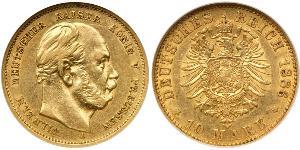
The transition from silver to gold was the most significant transformation for collectors, as it marked Germany's emergence on a global stage alongside British and French powers. When Wilhelm I proclaimed himself Emperor in 1871 following unification efforts led by Bismarck, the monetary system had to be radically overhauled to replace centuries of regional fragmentation with national standards.
The introduction of the Goldmark followed shortly thereafter as a modern replacement for silver coins that lacked sufficient precious metal content. This new era saw Germany adopt decimalization and gold standards common in Europe at the time, aligning their financial system with global markets while maintaining domestic sovereignty over monetary policy until economic turmoil following World War I necessitated further structural changes.
Mints and Coin Production
The landscape of coinage production was centralized under Prussian administration by 1908 to standardize the design. However, this centralization came with notable exceptions that collectors cherish today. The mint in Hamburg possessed a distinct tradition due to its proximity to international trade hubs on the North Sea coast.
Mint technology evolved significantly during the nineteenth century as machine presses replaced hand stamping for common denominations while high artistry was reserved for gold marks and commemorative pieces issued by royal decree or imperial command. In Berlin, coins were struck with a quality of precision that rivaled major world powers of that era.
The artistic standards employed during these periods reflect the influence of neoclassical schools in Europe, where coin portraits often mimicked statuesque depictions found on ancient Greek artifacts before shifting to more realistic busts inspired by contemporary photography and sculptural art movements. The production centers maintained strict quality controls regarding fineness (purity), which became a hallmark of German minting discipline.
Notable Coins
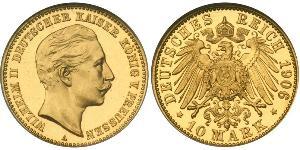
Coin collectors often search for pieces that represent key moments in the country's development, such as high-value denominations from before or during unification. The 5 Mark gold crown featuring Emperor Wilhelm II and an ornate wreath remains one of the most sought-after historical specimens due to its unique dual-portrait design.
The post-unification era produced silver thalers with intricate profiles that captured a sharp likeness, reflecting both artistic trends in German sculpting schools at the time. While some denominations saw heavy circulation and survived mostly in poor condition, others were struck in extremely low mintage specifically for military awards or royal family use.
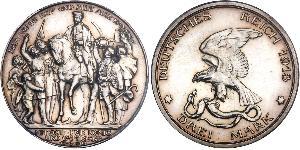
The "Eagle" coins of World War I represent another significant period as Germany attempted to maintain gold reserves while currency inflation threatened stability. Collectors value these pieces not just for their historical context but also because they offer a glimpse into how nations attempt to stabilize finances during times of war.
Cultural Legacy
The coinage serves more than merely financial function; it acts as a cultural artifact displaying symbols like the shield, crown, and eagle motifs used across various regimes throughout history. These images convey political power through regal imagery while also honoring national achievements in architecture or scientific advancement.
In later periods following the war years after 1945, new coins emphasized reconstruction efforts alongside democratic ideals with simpler designs that moved away from imperial grandeur toward practicality and modernism suitable for rebuilding economies worldwide. This shift is reflected directly on metal surfaces through changing iconography seen over decades since reunification.
For collectors
The enduring allure of collecting historical numismatic artifacts lies in the ability to hold physical evidence of a nation's history within your hands without needing extensive knowledge about current politics. While many modern coins have circulated widely making them difficult for enthusiasts, older issues such as high-value gold marks or pre-unification elector pieces remain desirable because they were minted specifically during periods when money was closely tied to government authority.
Germany offers an exceptional breadth of collecting opportunities ranging from the common circulation silver thalers found in museums and shops globally up into rare commemorative crowns once struck for dignitaries. Its rich history continues today through new issues celebrating reunification or technological milestones, ensuring that future generations can appreciate these fascinating objects as historical documents preserved by metal.