| View |
| preceded by | |
|
|||||||
 Romanian Principalities (1859-1881)
|
|||||||

| succeeded by | ||||
|

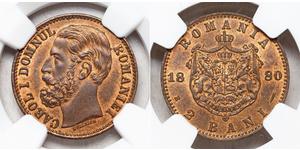
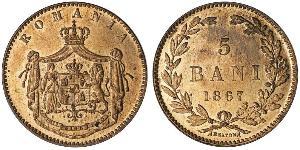
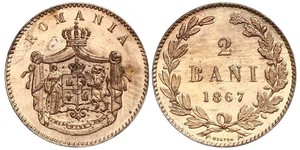
| Romanian Principalities (1859-1881) | Link to Wikipedia |
Romania (United Principalities): History, Coinage and Collectibles
Historical Background
The story of modern Romania is one of remarkable resilience and unification. Emerging in the mid-nineteenth century from two separate principalities—Moldavia and Wallachia—the region evolved from a collection of semi-autonomous territories into a sovereign state recognized on the world stage. This political metamorphosis, which began with the personal union under Alexandru Ioan Cuza in 1859, was not merely administrative; it fundamentally altered economic relations. The consolidation required standardization of laws and currency to facilitate trade between north and south.
For decades prior to full independence declared during Russo-Turkish conflict around the turn of the nineteenth century, these lands were nominally under Ottoman suzerainty yet operated with significant internal autonomy. This unique status influenced early monetary systems that existed in a limbo state, accepting foreign coinage while slowly minting local issues for internal commerce and tribute payments to Constantinople (Istanbul). The path to independence was paved by diplomatic maneuverings involving European powers like the UK, France, and Russia during the Congress of Paris.
Currency and Coinage History
The history of Romanian coinage is a narrative of financial sovereignty. Before full unification and official recognition as an independent state in 1877–1878, local currencies included silver piastres similar to Ottoman models but issued for the United Principalities under Carol I. The establishment of independence was accompanied by strict reforms that eliminated foreign debasement from circulation.
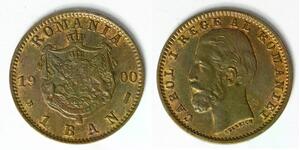
Under King Carol I (who ruled as Prince before 1881 and later as King), Romania adopted a modern decimal system, replacing various local units with a unified currency known as the Leu. This shift allowed for easier trade integration into European markets following the Congress of Berlin. The early decades saw fluctuations in precious metal standards; coins were often struck on both gold and silver denominations depending on global market prices. Collectors note that while gold coins became rare circulation items due to hoarding, silver denominated Leu circulated widely during the late nineteenth century.
Mints and Coin Production
Centralized authority over coinage was a key part of state-building efforts in Bucharest. While early production sometimes occurred under contracts or using foreign mints for high-quality strikes to impress European investors, domestic minting capabilities were expanded rapidly following independence declarations.
- The primary center of activity evolved into the modern Central Mint establishment (the Mint de Stat) that began operations fully in Bucharest and later expanded its production capacities after 1908 when new mints were established at Ploiești and other industrial centers to meet wartime demands.
- Initially, coinage designs reflected the artistic trends of Paris, as many master engravers working for major European houses also supplied models for Romania or even struck them directly before sovereignty was fully recognized by international powers in 1876-1900s.
This shift towards national identity is evident in how motifs changed; initially adopting Ottoman-influenced designs and French styles, the coinage gradually shifted to reflect specific Romanian heraldry including double-headed eagles or crowned lions that were unique artistic expressions of a new nation seeking legitimacy on European maps.
Notable Coins
Coin collectors are drawn primarily by four categories of significant numismatic issues. First is the famous "Trombone" Leu series struck between 1856 and 1904 in Paris or local workshops during Cuza's reign; these represent a crucial historical transition period.
- The 20 centimes from this era often feature specific artistic relief, sometimes with unique mint marks (like the 'C' for central) that denote quality strikes before independence. These coins bridge the gap between foreign rule and full sovereignty.
A second major group comprises King Carol I's gold issues. The crowns issued after 1866 are historically fascinating as they were struck with a degree of luxury often unavailable to ordinary citizens until later in his reign; their rarity is driven partly by the scarcity during wartime or periods where gold coins became investment pieces rather than daily currency.
- Furthermore, silver Leus from various years (1874-1920) are popular among collectors seeking complete sets of a nation's decimal evolution. Their designs evolved significantly under Carol I to include high-relief portraits and coats-of-arms that celebrated the state itself rather than just local rulers.
Cultural Legacy
The coinage serves as tangible history in metal, reflecting cultural shifts from Eastern influences toward Western European traditions while retaining distinct national symbols. The designs were created by artists who sought to capture Romanian identity; for instance, the depiction of specific agricultural themes or historical figures on lower denominations.
- Collecting this era allows one to observe how economic hardships in Europe (such as wars and industrial depressions) impacted production quality, with coins showing wear marks that are studied by experts looking at die states and mint errors common during rapid state growth between 1870s-1930.
For collectors
Romanian numismatics is a fascinating field because it bridges the gap between Eastern history, Ottoman legacy, and Western modernization. The early coins of the United Principalities offer a glimpse into the birth pains of European states in that region as they navigated their position within global diplomacy.
- The transition from piastres to Lei mirrors broader trends seen across Central Europe following industrial revolutions but with unique characteristics related to state-building efforts specific to Romanian lands. Collectors value these items not just for their rarity, but because every coin tells the story of a society transitioning from semi-autonomy into full membership within European political structures.
Whether pursuing silver leus commemorating agricultural prosperity or gold issues marking the ascension of royalty to Kingdom status, there is an abundance of historical narrative preserved in the metal. These artifacts remain significant educational tools for understanding how economic power and artistic expression converge during national formation. Thus, Romania’s numismatic legacy remains a robust topic of study alongside its broader history.