| View |
| preceded by | ||||
|
||||

|
|||||||
 Arab Republic of Egypt (1953 - )
|
|||||||

| succeeded by |
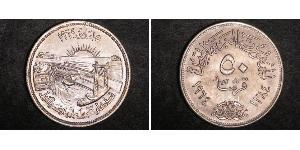
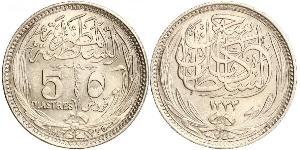
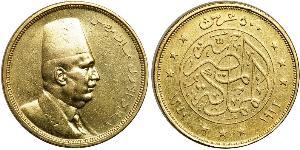
| Arab Republic of Egypt (1953 - ) | Link to Wikipedia |
Egypt: History, Coinage and Collectibles
Historical Background
To understand the coins that flowed through Egypt is to trace a narrative written in metal rather than stone or clay. For millennia, this ancient land stood as one of humanity's most enduring centers of culture and commerce. The region began not merely with political rule, but with an economic engine powered by agriculture along the Nile Valley, which dictated trade patterns for empires far beyond its borders.
The history of Egypt is defined less by territorial conquests than by its role as a vital nexus between continents. In early antiquity, it was an agrarian powerhouse that supported immense populations through irrigation and surplus grain production. As the Pharaonic civilization evolved into a complex society requiring taxation for temples and armies, barter systems gave way to standardized weights known as deben. The transition from these weight-based measures to metallic coinage marked the integration of Egypt into wider international trade networks involving Greece, Rome, India, and Persia.
The region's trajectory was shaped by successive waves of foreign dominion, each bringing distinct monetary philosophies. The arrival of Alexander the Great did not conquer a barren land but an established state with deep economic roots. Following his death, the Ptolemaic dynasty utilized Egypt as their personal treasury to fund expeditions across Asia Minor and Africa. Later occupations by Rome introduced new silver standards that circulated alongside local gold pieces created for tribute payments in vast quantities.
This long history of occupation influenced how wealth was extracted and spent. During centuries under Ottoman suzerainty, the Mamluks established administrative centers where currency reflected shifting political power within Cairo and Fustat. It is important to view these coins not as mere objects but as historical documents recording shifts in governance and economic authority across a land that has witnessed nearly every major empire of antiquity.
Currency and Coinage History
The evolution of money in Egypt offers one of the most distinct examples in world numismatics because it spans so many different systems within such a compact region. Under Greek rule, Alexandria became the leading mint for silver coinage produced by foreign monarchs who wished to assert their connection with the East while adhering to established Mediterranean trade values.
The introduction of Hellenistic coin standards meant that Egyptian citizens suddenly possessed gold and silver denominations comparable in value across Europe. This facilitated trade but also created a complex numismatic landscape where imperial portraits clashed with local religious imagery on ancient temples or coins from the same era would carry different artistic sensibilities depending on which dynasty was minting them.
Rome further complicated this picture by imposing their own currency systems that required Egyptian merchants to pay taxes in denarius and its fractional equivalents. The economy shifted toward silver, with gold becoming rarer as Rome drained wealth for construction projects across the empire. By late antiquity, the flow of coinage diminished significantly, eventually giving way entirely to Islamic dynasties who standardized the use of gold dinar and copper dirham.
The currency systems did not merely reflect local governance; they reflected global economic trends where Egypt often served as a source of precious metals for western mints. The collapse of Byzantine trade routes or shifts in Roman policy would ripple outward to impact the value of Egyptian coinage instantly, demonstrating how early modern economics connected distant civilizations through tangible metal standards.
Mints and Coin Production
Alexandria served as a primary center for minting activity during classical times due to its access to raw materials via sea routes. Unlike the scattered rural mints found in other regions, Egypt concentrated production power along one of the most important commercial hubs known since antiquity.
Minting technologies evolved from hand striking methods using hammers and dies that often resulted in rough edges or variable weights early on. Later periods introduced refined press techniques which allowed for sharper iconography to survive better during circulation. Artistic characteristics changed dramatically across centuries, transitioning from classical realism where features of rulers were sculpted with anatomical precision.
The designs reflected the cultural values dominant at each period. In Roman times, coins might feature portraits of emperors standing beside deities like Serapis who combined Egyptian and Greco-Roman attributes into a singular form pleasing to diverse audiences. Later under Islamic rule, artistic traditions shifted toward calligraphy where verses from scripture replaced images entirely out of adherence to religious iconoclasm.
Even when French influence arrived in the early nineteenth century after administrative changes occurred, mint practices maintained continuity with older standards while adopting European portrait styles for modernized statesmen. This blend of ancient tradition and new style creates a unique numismatic profile that collectors find fascinating because it represents such clear cultural transitions within one location.
Notable Coins
The Ptolemaic silver tetradrachms are perhaps the most famous class issued by this region, though they rarely circulate in modern markets. These coins carried portraits of kings with diadems and titles referencing both Greek heritage and Egyptian gods like Anubis on reverses that symbolized rebirth and protection.
Roman denarius struck specifically for Egypt often feature imagery depicting the Nile Delta or personifications of local deities rather than standard Roman laurels. These varieties are sought after by specialists because they illustrate how Rome respected enough to mint special editions in a province as wealthy as this one without needing every tax collected locally.
The medieval Abbasid copper dirhams offer another window into daily life for people before the industrial age. While these coins circulated widely and often became heavily worn through heavy use, certain issues were produced with higher quality finishes intended to denote their status within elite transactions or tribute payments that moved between cities across a wide administrative map.
The final great wave of interest occurs during Muhammad Ali's nineteenth-century reforms when Egypt introduced modern currency designs featuring European portraits alongside local architectural motifs. These transitional pieces show how the state attempted to project both ancient authority and contemporary power through metal objects, blending styles from the old world with new industrial standards that defined later collections.
Cultural Legacy
The coinage of Egypt serves as a mirror reflecting its rich cultural heritage where visual symbols tell stories beyond language. On many early pieces you will find representations of animals and mythological creatures associated with local religious traditions, such as the scarab beetle which signified resurrection.
This tradition evolved into more abstract forms over time as art styles shifted to prioritize script patterns and geometric designs rather than figurework seen in earlier eras. Every coin produced carried symbols chosen specifically to resonate with those who held them at various times during centuries of rule changes from Pharaohs through caliphs.
The legacy extends into modern collecting where these items are valued for their connection to a civilization that influenced world art, language, and administration so deeply that its traces remain in our global understanding. Coins act as miniature archives preserving visual records of kings who ruled over populations vast enough to shape history itself through trade relations.
For collectors
Egypt remains one of the most historically significant regions for numismatic study because it connects antiquity directly with modern statehood without interruption. While many ancient currencies come from lands now fragmented or unknown, Egyptian coins offer a continuous record that links Pharaonic times to present history.
- Rarity and Context: Finding pieces minted during brief periods of independence offers unique insights into economic autonomy versus colonial administration.
A collector can appreciate these items not just as valuable artifacts but as tangible links in a long chain that connects humanity's earliest urban centers to global commerce. The study involves understanding trade dynamics, political shifts over millennia and artistic evolution without ever needing specialized catalog references for every single item encountered on the marketplace.
In short, acquiring coins from Egypt offers an experience similar to visiting a museum but through objects held in your hand that have traveled thousands of miles across oceans before reaching current collectors. Each coin preserved today tells part of how empires connected economies and cultures over vast stretches of time ensuring this fascinating history endures well into the future.