| View |
| preceded by | ||||
|
||||

|
|||||||
 Kingdom of Egypt (1922 - 1953)
|
|||||||

| succeeded by | ||||
|

| Kingdom of Egypt (1922 - 1953) | Link to Wikipedia |
Kingdom of Egypt: History, Coinage and Collectibles
The Kingdom of Egypt represents a pivotal chapter in the history of modern African coinage, bridging the gap between traditional Islamic monetary systems and contemporary European styles.
This period marks an evolution from colonial oversight to national sovereignty reflected on metal. For numismatists and historians alike, the coins minted during this era serve as tangible artifacts that capture a nation in transition from political dependence toward independence. Understanding these medals requires appreciating not just their metallurgical composition but also the diplomatic narratives inscribed upon them.
This guide explores the historical context, monetary developments, artistic evolution, and collecting significance of coins struck under the Kingdom's reign, offering insight into why pieces from this era remain highly coveted by specialists in numismatic circles worldwide.
Historical Background
The political landscape of Egypt during the early twentieth century was defined by complex negotiations regarding sovereignty. In 1922, Britain formally recognized Egyptian independence following decades of colonial administration and unrest among nationalist groups. This recognition transformed the administrative status from a Sultanate to a Kingdom.
This shift had profound implications for currency design. Previously bearing titles such as "Sultan," coinage legends were updated to reflect Kings Fuad I and Farouk I, emphasizing their title of King of Egypt and Sudan. However, British influence remained strong through agreements regarding foreign relations and the Suez Canal Zone.
The relationship between local administration and imperial oversight created a unique monetary environment where coins circulated alongside those controlled by Britain in adjacent territories such as Palestine or Transjordan at times. The internal political landscape saw various factions seeking full control over Sudan and total independence from British military presence, sentiments that eventually led to the 1952 revolution.
The Second World War also impacted local economies. While Egypt maintained legal neutrality during the global conflict, its territory served as a crucial logistical hub for Allied forces against Italy and Germany. The war effort strained resources but solidified Egyptian involvement in international politics, setting the stage for eventual full sovereignty recognized after the 1953 revolution.
Currency and Coinage History
The currency system of this era reflects a transition from silver to gold standards that aligned with British imperial preferences while maintaining distinct local identities. The Kingdom continued utilizing copper, bronze, and later brass for low denominations such as the piastre fractions used in daily commerce.
Premier coins during this period included fractional pieces designed for small transactions, alongside larger denomination issues struck from silver or gold for international trade among merchants. Early coinage under Fuad I often utilized designs heavily influenced by British art schools but adapted to incorporate Arabic calligraphy prominently along the rim and on field backgrounds.
Silver standards were particularly significant as they facilitated trade beyond Egypt's borders, connecting Cairo mints with London exchanges where currency values for florins or gold crowns held value against global reserves. As economic conditions stabilized in the 1930s following treaty agreements withdrawing British troops from mainland areas except the Canal Zone, domestic confidence rose.
Economic pressure during and immediately after the Second World War saw inflationary pressures manifest on coinage quality. Lower grades of silver were sometimes used or bronze cuppers minted at higher frequencies to replace worn currency supplies circulating in Cairo markets. Collectors find these post-war economic adjustment issues telling stories about monetary policy shifts designed to protect state reserves from export.
Mints and Coin Production
Cairo served as the primary center for production throughout this era, utilizing facilities that evolved under British supervision before transitioning toward full national control. The quality of die engraving improved significantly in later years as skilled artists were commissioned to create new obverse faces.
The minting process blended traditional Islamic geometric motifs with Art Deco designs popular at the time across Europe and North Africa. Pharaonic symbols often reappeared on coinage, replacing strictly Islamic patterns or religious text in a bid to forge a national identity rooted in ancient heritage rather than solely modern religion or colonial influence.
Artistic characteristics distinguishing these issues include relief depth typical of high-grade Egyptian strikes from the late 1930s and early forties. The transition in mint marks sometimes indicates when control shifted between foreign oversight to local authority, providing clues regarding provenance for serious collectors evaluating circulation examples or proof sets.
Notable Coins
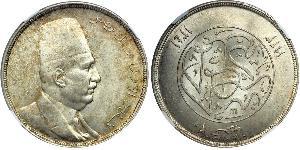
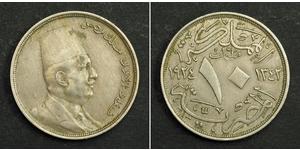
The coins issued during King Fuad's reign following 1923 serve as the primary historical entry point. Transition pieces marking this change from Sultanate to Kingdom are highly regarded, displaying a crown design reflecting royal regalia specific to new status claims.
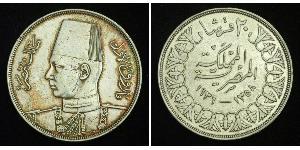
Farouk I inherited these traditions but introduced more elaborate portraits and iconography featuring animals like horses or sphinxes that symbolized strength and ancient lineage without reliance on colonial figures. The 1948 issue following the Arab-Israeli war saw changes in metal purity as state revenue faced challenges due to conflict losses, making pre-war silver pieces highly desirable for their stability.
The final period before abolition produced unique commemorative issues or altered denominations reflecting political turmoil and rising demand for independence. Collectors appreciate these pieces not merely for rarity but because they represent the twilight of a system that had defined Egypt's public identity as both Arab nation-state and sovereign kingdom prior to republican conversion.
Cultural Legacy
The legacy of Kingdom coinage lies in its fusion of ancient heritage with modern statecraft. Inscriptions proclaiming "King of Egypt" alongside Arabic calligraphy bridged centuries of history, connecting the Muhammad Ali dynasty rule directly to Pharaonic imagery on metal surfaces.
Economic and cultural identity were intertwined; high denomination pieces facilitated international diplomacy while small copper denominations maintained internal trade stability regardless of foreign policy shifts. The artistry used in engraving royal portraits showcased an attempt by artists within Egypt's borders to achieve parity with European contemporaries, asserting national dignity through the quality of their metalwork.
This cultural expression on coinage influenced other regions where similar monarchies sought legitimacy during decolonization movements across Africa and Asia. The coins functioned as portable diplomatic tools that announced sovereignty wherever they were traded or collected by international visitors passing through Egypt via trade routes linking to Europe, the Americas, and Asia.
For Collectors
Pieces from this era remain essential for any comprehensive numismatic collection focusing on modern world history. Their importance stems from representing a unique period of political independence before full republican governance took over in 1953 and later dissolution following the Egyptian Revolution.
The scarcity issues often involve transitional periods where legends changed or mint control shifted, making early Fuad I coins particularly significant for specialists seeking to complete narrative sets. High condition examples allow collectors to appreciate fine details of die engraving that tell stories about artistic trends in mid-century Cairo and London workshops collaborating on these projects.
Beyond their financial value as commodities within secondary markets or auction houses, these artifacts educate the public about a country navigating the complex path toward nationhood. They serve as physical evidence how currency evolved alongside borders redrawn by treaties like 1936 agreements withdrawing troops from mainland areas. For enthusiasts tracing family histories in that region of North Africa, possessing such items provides insight into trade and social structures during the mid-twentieth century.