| View |
| preceded by | |
|
|||||||
| Delhi Sultanate (1206-1527) | |||||||
| succeeded by | ||||||
|
| Delhi Sultanate (1206-1527) | Link to Wikipedia |
The rise of the Delhi Sultanate transformed a geographically vast region into a crucible for Indo-Islamic culture and commerce. Founded in 1206 following the collapse of Ghurid authority under Muhammad bin Tughlaq, this medieval empire did not merely conquer territory; it integrated disparate trade networks across South Asia into a unified economic system. The early sultans were often former war captives or slave soldiers who rose to power through military prowess and administrative skill. Their rule was defined by the struggle to maintain a centralized authority over a land that stretched from modern-day Pakistan in the west to Bengal in the east.
This era witnessed an economic awakening. The empire successfully repelled Mongol invasions, securing the western borders of the subcontinent against nomadic raids while simultaneously expanding into rich agricultural zones like South India through conquests under the Tughlaq dynasty. However, expansion was not without peril; political fragmentation and local rebellions often challenged central control, forcing rulers to standardize their revenue systems. This necessity drove significant innovations in monetary policy, turning the currency of Delhi from a patchwork of regional tribal mints into symbols of imperial authority that could circulate across hundreds of miles.
The evolution of money during this period marks one of the most distinct phases in South Asian economic history. Before 1300, coin production was decentralized; local rulers issued their own denominations based on available gold or silver bullion. The arrival of Muhammad bin Tughlaq marked a pivotal shift towards centralization and standardization.
The currency system quickly adopted the weight standards established by ancient trade empires but inscribed with Persian and Arabic legends celebrating Islamic monotheism ("Innama li-llah"). This created a unique hybrid culture where economic necessity met religious devotion. While gold coins were rare luxuries for kings, copper and silver became the lifeblood of daily commerce.
A significant challenge in this era was the standardization of weight standards (Mauz). Rulers had to ensure that a coin minted in Delhi carried sufficient trust when spent in Bengal or Malwa. The transition from purely religious legends on coins to those carrying royal portraits and regalia occurred gradually, though often met with resistance by conservative clergy who believed only God should be depicted.
The administration of the Delhi Sultanate maintained strict control over its coinage through dedicated departments known as Zakat Khanehsa. The primary mint was naturally located in Delhi, but to facilitate trade with distant provinces, major secondary mints were established.
To understand what drives value and interest in these collectibles today, we must look at specific reigns that produced iconic pieces. These are not merely metal slugs; they are historical documents stamped on copper or silver.
Razia Sultana (1840-45):
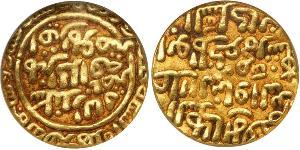
The most legendary female ruler of the Sultanate, Razia was an exceptional patron of arts and administration. Her gold coins feature a distinct aesthetic shift toward grandeur to match her political aspirations. Collectors seek these for their unique legend placement: "Innama li-llah" surrounded by royal titles that emphasize her status as sovereign king rather than female regent.
Muhammad bin Tughlaq (1324-51):
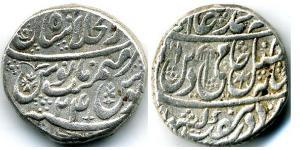
The zenith of the empire brought about a golden age for numismatics. His silver Sukas, inscribed in both Persian and Indian languages, were widely circulated. However, his controversial attempt to introduce new weight standards backfired spectacularly—officials melted down old heavy coins (Damas) only to exchange them for lighter versions at a lower value before the populace protested violently. The resulting "new" silver issues remain highly sought after as they represent economic chaos and reform.
Iltutmish (1236-40):
The consolidation of power under Iltutmish solidified a stable currency system for the first time. His copper Damis, stamped with simple Persian inscriptions, are considered "textbook" examples of 13th-century Indian coinage.
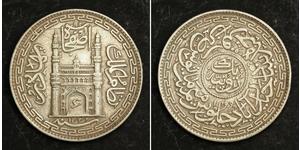
The coins of this era serve as tangible proof of a melting pot culture that is now lost to history. The calligraphy on the face of these ancient silver pieces reveals an evolution in language styles, transitioning from strictly religious phrases to royal poetry and Persian literary references.
Furthermore, they demonstrate the integration of Indian aesthetics into Islamic art. While early designs followed Abbasid or Ghurid models featuring only floral patterns and Quranic verses, later Sultanate issues began incorporating symbols like swords (Saman) or tigers—creatures often associated with local power structures—to symbolize royal protection and strength.
The Delhi Sultanate offers a fascinating narrative of economic expansion into modern-day Pakistan, Bangladesh, Nepal, and the southern regions of India. While gold Dinars are prized for their rarity in circulation today due to high demand by wealthy nations, copper Damis offer an accessible entry point with significant historical depth.
Rarity Factors:
In summary, the coinage of this region tells a story of power struggle and cultural synthesis. They were once used to pay soldiers for wars fought across vast territories or traded in markets where spices traveled between China and Calicut. Today, they stand as silent monuments to an empire that shaped modern history.