| View |
| preceded by | ||||
|
||||

|
|||||||
 Federation of Malaya (1948 - 1963)
|
|||||||

| succeeded by | ||||
|

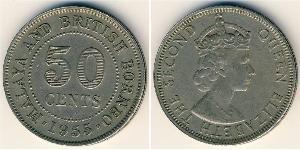
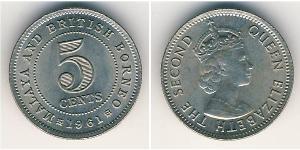
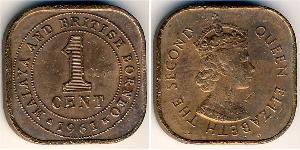
| Federation of Malaya (1948 - 1963) | Link to Wikipedia |
Malaya Federation: History, Coinage and Collectibles
Welcome to a journey through one of Southeast Asia's most fascinating transitional eras in modern economic history. This article explores the historical fabric that shaped Malaya before its independence and examines how this region forged its own monetary identity during some of the earliest days of post-World War II state-building.
Historical Background
The narrative begins after the devastation of World War II, as British colonial administration sought to stabilize a complex society comprising Malay states under protectorate agreements alongside commercial settlements. The formation of the Federation of Malaya was not merely an administrative exercise but a crucial political consolidation designed to unify trade interests and defend against rising communist insurgency during what became known as the Emergency period. This era fundamentally shaped the economy, which remained heavily dependent on global demand for tin mining and rubber plantation produce.
Culturally, society vibrated with diverse influences; Malay culture reasserted its position in a modernizing state while Chinese business networks and Indian labor communities continued to drive urban commerce. The path toward independence was paved through gradual political integration from 1948 up until the proclamation of self-government on August 31, 1957. This period required significant coordination between local Malay chiefs (Raja) and British officials. As trade networks expanded internally across Peninsular states rather than relying solely on external Straits Settlement currency systems, a need for unification arose that would eventually lead to the independence of Malaya.
Currency and Coinage History
The monetary evolution in this region followed colonial precedents but adapted quickly to local conditions. Following 1948, distinct coin issuance began to phase out generic regional identifiers like "Straits" in favor of explicitly naming the federation or its territories on metal currency items that circulated widely among shopkeepers and tin miners. The value remained stable through a gold-linked silver standard before transitioning towards decimal-based systems later.
The introduction of base-metal tokens, including copper-nickel alloys for smaller denominations like the cents, represented a massive shift in accessibility compared to earlier precious metal coins that were often reserved for larger transactions or high-value trade. Collectors find this transition particularly significant as it marks the era when everyday commerce became democratized through coinage rather than paper notes alone.
Silver dollars continued to be minted from London, serving a dual purpose: they backed local confidence and honored international investors who held wealth in precious metals during wartime instability. The currency reforms introduced new security features and denominations that aligned with the Malaya's economic reality as it prepared for membership within broader regional organizations like SEATO.
Mints and Coin Production
The physical production of these coins was primarily handled by established mints in London, which cast designs to meet specific artistic standards before shipping blanks or finished pieces to local agents. However, the artistry also saw influence from Far East facilities that produced earlier British colonial issues.
Ancient traditions of coin stamping met with modern techniques such as hydraulic presses during this period, ensuring consistent striking quality for commercial transactions. The mints focused on durability and anti-counterfeit features while maintaining visual elegance to preserve public trust in the government's monetary authority.
The art deco influence seen earlier was gradually giving way to more streamlined designs reflecting post-war modernism. Some early pieces retained intricate detailing of Royal arms, whereas later issues under independent leadership began incorporating motifs derived from local flora such as specific species of palm trees found around Kuala Lumpur and Singapore before independence fully consolidated.
Notable Coins
To understand the numismatic history, one must look closely at several distinct issues that stand out for their historical relevance. The coins struck immediately following the Emergency (1948 to 1950) feature King George VI and bear inscriptions marking sovereignty transitions during these turbulent years.
- The 2 Cent Silver Coin: Produced during the early post-war period, this coin served as a small denomination unit that circulated alongside paper notes. Its reverse often displays local agricultural imagery reflecting Malaya's reliance on plantations.
- The Silver Dollar (1948-57): Although less common in daily circulation compared to base metal coins due to value, these silver pieces are highly prized for their artistic merit and historical importance as currency backed by international reserves. They serve a collector's purpose similar to precious metals during economic instability.
- The Independence Transition Issues: Coinage issued immediately preceding independence often carries specific dates marking August 1957 or commemorative markings celebrating Merdeka (independence). These are sought after for their narrative connection directly to the birth of a sovereign nation.
Another notable type involves coinages that carry early portrait designs from Queen Elizabeth II, representing one of her earliest public appearances on foreign currency. The shift in imagery often mirrors shifting political loyalties and national identity consolidation as Malaya moved closer to full sovereignty without immediate union with neighboring territories or Singapore.
<strong>The Silver Dollar (1948-57): Although less common in daily circulation compared to base metal coins due to value, these silver pieces are highly prized for their artistic merit and historical importance as currency backed by international reserves. They serve a collector's purpose similar to precious metals during economic instability.&l;
Certain issues were produced only briefly before policy changes or administrative transitions led to replacement with other denominations.
Cultural Legacy
The coinage of this period serves as an artifact reflecting the society's values and aspirations. As designs transitioned from strictly imperial themes to elements representing local heritage, it signified a growing cultural confidence in Malaya's future statehood. Symbols like the Royal Arms were adapted or placed alongside national banners that would become prominent post-independence.
This era demonstrates how currency functions as propaganda for stability and economic growth. The depiction of local animals such as tigers or palm trees was intentional to ground foreign-produced coins in a distinctly Malaysian context even during British administration, creating early seeds of visual identity before full independence.
For Collectors
Malaya Federation coinage remains important today because it represents a unique window into post-war decolonization history. The scarcity of specific dates combined with historical significance gives these pieces enduring interest to collectors and auction buyers looking for provenance-rich assets that document economic transition.
- The Rarity Factor: Many issues were only minted in limited quantities during the emergency period, making them valuable as both cultural relics and numismatic specimens rather than purely financial investments based on market value volatility.
- The Intrinsic Value: For collectors focused on precious metals, early silver coins offer a tangible connection to world history while preserving aesthetic quality that has not deteriorated over time due to careful handling by hobbyists since the mid-twentieth century.
<u/li>
Serious collectors should examine these issues for their condition and specific mint markings. The historical significance of seeing a coin bearing "Malaya" shortly before independence often outweighs the value of its silver content, making them essential pieces for any comprehensive collection focused on Commonwealth or Southeast Asian numismatic history.