| View |
| preceded by | ||||
|
||||


 United Kingdoms of Sweden and Norway (1814-1905)
| succeeded by | ||||
|

| United Kingdoms of Sweden and Norway (1814-1905) | Link to Wikipedia |
Union between Sweden and Norway: History, Coinage and Collectibles
Historical Background
The political landscape of Northern Europe underwent a profound shift at the close of the Napoleonic Wars. The Kingdom of Denmark lost its control over Norwegian territory following a conflict with Napoleon's forces, leading to negotiations that resulted in the creation of the Union between Sweden and Norway. While this arrangement was technically an independent kingdom for each nation under one monarch, it created a unique economic entity spanning the southern coast of Scandinavia. The union lasted from 1814 until its peaceful dissolution nearly nine decades later.
This period defined modern Scandinavian identity more than most observers realize today. Trade routes were critical during this era; vessels laden with grain and timber traveled frequently between the Oslofjord ports in Norway to Helsinki on Lake Saimaa, while merchant ships connected these northern territories to London and Copenhagen through established maritime networks. The economic stability of a unified state meant that trade tariffs remained consistent across borders, encouraging industrialization along the coastlines.
Culturally, this era fostered an artistic environment where Swedish classicism influenced Norwegian architecture and design. It was not until later years in the nineteenth century that distinct national pride began to assert itself against Swedish hegemony. This shift is visible today through artifacts produced during these decades, particularly currency which often serves as a record of shifting political sentiments.
Currency and Coinage History
The evolution of money in this region was driven by the necessity for commerce rather than mere aesthetics or vanity. Following 1814, Norway adopted Swedish monetary standards to facilitate trade with Stockholm markets where most international goods were purchased initially.
In the early decades following the establishment of the union, precious metal coinage was scarce within Norwegian soil because Sweden produced the majority of coins valid for circulation in both nations. This reliance on external mints meant that money supply management depended heavily on Swedish economic conditions and global bullion markets.
A significant shift occurred when trade demands grew too complex for mere banknotes to handle daily transactions efficiently, leading to a need for small change production. However, the large denominations remained under strict Stockholm control until later reforms in the 1870s introduced new mints that allowed Norway its own designs.
The introduction of paper money coexisted with copper and silver coinage throughout most of this period. Collectors often find notes from local banks to be significant, but metal coins provide a tangible link to the daily lives of merchants who managed these economic transitions under royal patronage during an era when industrialization changed how wealth was generated across Northern Europe.
Mints and Coin Production
The primary center for coin production during this period was Stockholm, where traditional minting techniques were applied to silver and copper denominations required by both nations. These coins bore standard Swedish iconography until late in the union's history when artistic styles shifted.
Towards the end of the nineteenth century, as national identity matured, production moved toward centers closer to Oslo where distinct local needs were addressed without heavy reliance on Stockholm resources. The transition period before complete independence saw an increase in minting operations that utilized new technology for finer detail and sharper lines.
The artistic characteristics distinguishable from this era include the evolution of royal portraits which gradually incorporated more nationalistic symbols or architectural motifs specific to local landscapes. The shift was slow but deliberate, reflecting a political consensus rather than sudden rebellion against established traditions.
- Tokyo and Stockholm remained the primary mints for silver production
- Copper denominations were produced locally in Oslo later on
The technology used during these years included steam-powered presses that allowed for higher volume output. This was essential as inflation impacted currency values frequently, requiring increased circulation of smaller copper pieces while keeping large coinage stable.
Notable Coins
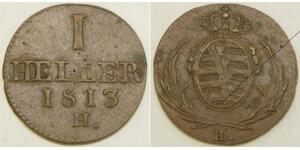
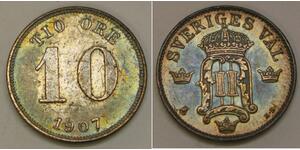
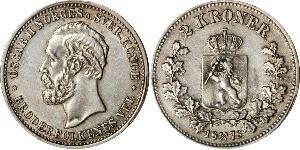
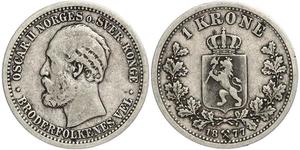
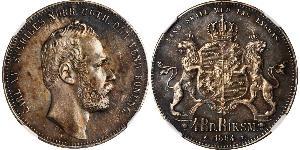
Coin types from this era are cherished by collectors for their historical significance regarding the transition between union and independence. The silver daler series represents some of the most historically important specimens, often bearing portraits that reflect the monarchs reigning during specific phases.
The large denominations were primarily struck in Stockholm but circulated widely throughout Norway's merchant networks. These coins feature elaborate designs reflecting classic art styles prevalent at the time while occasionally incorporating minor details indicating regional origin or local minting rights acquired later on.
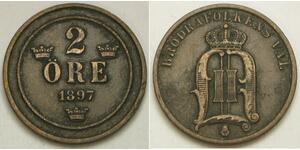
Copper half-daler pieces are also significant as they mark periods when independent coinage capacity was being developed in Oslo before full sovereignty returned to Norway. They represent a crucial bridge between foreign currency standards and indigenous production capabilities within the Scandinavian region.
- Silver daler: Represents early trade stability under union
- Copper half-dalers: Mark local minting rights evolution
Importance to collectors often stems from finding coins that bridge two distinct national identities through subtle design variations rather than overt political statements.
Cultural Legacy
The coinage of this period reflects a society in transition regarding its cultural and economic identity. It captures the era where Sweden acted as an elder partner but Norway slowly cultivated its own voice within shared monetary systems that governed daily commerce along fjords and coastal settlements.
Symbols used during these years included maritime anchors, naval insignia honoring historical sea power traditions common among both nations before separation occurred in 1905. Religious motifs were largely subdued or classical to suit state interests rather than confessional identity during this time of political consolidation.
For collectors
This region remains a cornerstone for numismatics focused on national history and monetary evolution because it illustrates how small sovereign states manage independence within larger power blocks. Collectors seek out these pieces not merely as metal discs but as documents written in silver, copper or paper detailing the economic relationship between two neighboring peoples.
The rarity of specific Norwegian varieties from Stockholm mints makes them particularly valuable to serious collectors who understand that scarcity often correlates with historical moments like union dissolution preparation. Understanding why certain designs were altered helps one appreciate the subtle nuances hidden within each catalog entry.
Conclusion
This period is vital for understanding modern Scandinavian history because it represents a time of compromise, shared identity and economic integration before full separation occurred later in the twentieth century. For hobbyists interested in regional heritage rather than global currency trends, these items offer deep context regarding how nations negotiate sovereignty through trade agreements.