| preceded by | ||||
|
||||

|
|||||||
 Kingdom of Norway (1905 - )
|
|||||||

| succeeded by |

| Kingdom of Norway (1905 - ) | Link to Wikipedia |
Norway: History, Coinage and Collectibles
Welcome to our collection on one of the most captivating chapters in numismatic history: Norway. As a curator presenting these artifacts, I invite you not just to view coins as metal objects with monetary value, but to understand them as physical manifestations of power, trade, belief systems, and cultural identity across nearly two millennia.
Historical Background
To appreciate the coinage of this region, one must first travel back in time through its turbulent history. The story begins with the Vikings themselves—fearsome explorers who transformed a rugged archipelago into far-reaching trade networks that spanned Europe to North America. These Norse seafarers were not merely warriors; they were merchants and smiths of immense skill, necessitating complex exchange systems.
The cultural fabric woven during the Viking Age was later challenged by the arrival of Christianity in the 10th century. This religious shift fundamentally altered how authority was visualized on currency. The unified kingdom established around 872 set a precedent for monarchy that would endure through centuries, despite foreign political entanglements such as the union with Denmark and Sweden.
The Nordic Model:
- Trade Expansion (Viking Age): The establishment of trade routes to England and across the Atlantic created a demand for silver. This led to an influx of foreign coins that eventually replaced older barter goods.
- Christian Unification: As Norway converted, coin design shifted from ancient symbols like masts or ship prows to Christian imagery such as the cross, marking a pivotal theological and political shift in state identity.
This historical evolution is crucial for any collector. The coins that survive today are often fragments of these larger narratives—witnesses to how power transitioned from local petty kings to absolute monarchs under foreign influence before Norway regained its full sovereignty at the dawn of the 20th century.
Currency and Coinage History
The history of Norwegian money is a fascinating study in independence versus union. For much of medieval Europe, currency was standardized by region. In Scandinavia, however, this unity came later than on the European mainland. Before 1500 AD, Norway lacked its own minted currency for an extended period; foreign silver coins circulated alongside local iron-based barter goods.
The Rise of Silver:
- The Guldenstater (Guilder): This became a dominant form. During the 15th and 16th centuries, Norway issued copper coins known as "skilling" that were small in size but essential for local market transactions.
A significant turning point occurred when King Sigurd I established his reign around 970 AD to support the Christianization of Scandinavia. While early examples are rare and often found in high-value hoards, these coins bear great weight historically because they show the transition from pagan mintage techniques—such as punching runes onto silver sheets—to sophisticated striking methods.
The Union Era:
From 1537 to 1814, Norway was integrated into Denmark-Norway. During this union, minting in Oslo largely paused or became subsidiary to the Copenhagen Mint of the Danish King Frederick III and Christian V.
Mints and Coin Production
The mints of Scandinavia are legendary for their artistic ambition. The most notable location is the Kongsbergs sølvverk, which operated under royal control throughout history before modernization rendered its operations less relevant in recent centuries.
- Copenhagen as a Hub: For nearly three centuries, Norway's primary coinage was produced by mints controlled from Copenhagen. Despite this distance, local designs adapted to Norwegian tastes—incorporating symbols of the sea and nature into traditional minting styles.
Norwegian silver coins often featured distinct markings denoting their origin or the quality of the metal used in a specific batch. As industrialization arrived in Norway during the 18th century, so did nickel plating technologies which were essential for preserving value while keeping costs manageable for common commerce.
Notable Coins
The Silver Dirham (Viking Era):
"This coinage is the earliest evidence of Norway's connection to broader European economies."The most historically significant coins are from the Viking era. The silver dirhams found in Northern Norway, particularly around Trondheim and the coast near Oslofjord, were minted by local chieftains or kings before unification. These often bore inscriptions of names like "Gulbrand" (Old Norse) alongside runes that acted as both signature and value stamp.
The Guldhornet:
"This coin was minted under the orders of Sigurd I to demonstrate royal power."Perhaps the most renowned early Norwegian issue is associated with Sigurd I, though many collectors refer to it simply as a Viking dirham found in Norway's soil. It features Christian iconography combined with traditional Norse symbols.
The Copper Skilling (16th Century):
- Historical Context: Following the union, this was introduced to standardize local trade taxes and wages across Norway's diverse regions.
- Design Features: These coins often bore symbols of a sea eagle or the Danish crown. They were used widely in markets from Bergen to Kristiania (Oslo).
The 1905 Series:
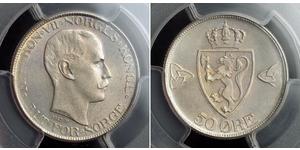
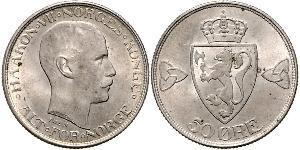
"The first major break in coinage history after independence."When Norway gained full sovereignty, the minting process shifted entirely. The first coins post-1905 carried images of Norwegian kings—Haakon VII and later Olav V—who were native-born and styled distinctly differently from their Danish predecessors.
Cultural Legacy
The art on these ancient coins offers a window into how early Norwegians perceived themselves. The designs are not merely decorative; they convey messages of survival, faith, and dominion over the natural environment.
"A coin from this region is a testament to human ingenuity in harsh climates."The symbols used—such as anchors for stability at sea or masts representing wealth—are deeply rooted in local geography. This distinct identity allowed Norwegian coins produced under foreign rule (Denmark) to maintain cultural cohesion despite political changes.
The use of Christian crosses, often combined with older runes on the obverse side, was a specific artistic choice that bridged old and new worlds. The cross represented protection during voyages into stormy waters—the very lifeblood of Norwegian trade history from the Viking Age through the medieval period.
For collectors
Why should you care about these coins? Because they are rare, tangible pieces of a nation that has navigated turbulent political tides while maintaining its own unique cultural voice. The scarcity of early silver dirhams and copper skilling issues makes them particularly valuable to serious historians.
"These artifacts speak louder than words."
The history of Norway is not just about kings or battles; it's also a story told in metal, stamped with authority and circulated across the seas. Collectors today have access to beautiful specimens that range from early medieval finds preserved by iron-rich soil corrosion (sometimes) up to high-finish modern issues commemorating nature reserves.
Care Instructions:
- Avoid Overhandling: The silver and copper used in these coins can oxidize easily. Wear cotton gloves when handling ancient specimens from the Viking or medieval period to prevent fingerprints staining the surface over time.