| View |
| preceded by | |
|
|||||||
 Turks and Caicos Islands (1783 - )
|
|||||||
| succeeded by |
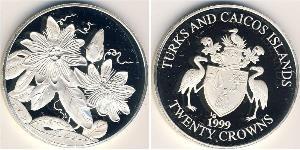
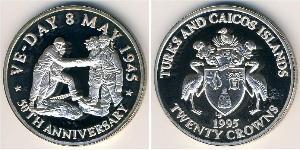
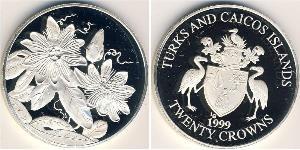
| Turks and Caicos Islands (1783 - ) | Link to Wikipedia |
Turks and Caicos Islands: History, Coinage and Collectibles
Historical Background
The narrative of the Turks and Caicos Islands is woven from threads of trade, isolation, and British governance spanning five centuries. To understand their monetary legacy one must first look at the land itself—a stark contrast between two distinct groups: the larger Caicos group with its vast flats known for salt production, and the smaller Turks islands defined by lush landscapes including the famous "Black Rock" cliffs and sea caves inhabited historically by Lucayan Taíno people. Following European arrival in 1512 and subsequent depopulation due to disease, the archipelago was re-settled by British subjects from Bermuda in the mid-1600s.
The economic engine that drove this territory for over two centuries was salt production. From the earliest days of European settlement, these were not merely islands on a map but vital stops within an Atlantic trade network reliant on saltpan operations and Bermudian laborers brought by ship or seasonally from Bermuda to the shores below Grand Turk. This economic reality shaped their relationship with money: because they depended heavily on external supply chains for both foodstuffs and currency, the archipelago rarely struck its own silver denominations for daily commerce like other Caribbean colonies did.
This dependence meant that throughout the 18th and early 20th centuries, trade was conducted using a variety of foreign currencies before standardizing into British West Indies dollars. The islands remained intimately linked to the larger economies of Jamaica and later the Bahamas within the colonial framework, acting as an extension of Bermuda's administrative sphere for much of its existence.
Currency and Coinage History
In terms of numismatic history, Turks and Caicos stands apart from independent sovereign states. For a significant portion of its documented past, there was no local minting house; rather, the islands were serviced by mints in London or Bermuda, utilizing designs that reflected British Empire iconography before transitioning to Bahamian influences as administrative control shifted.
This history evolved slowly following political changes such as the transfer from Jamaica. When Bahamas gained independence in 1973, TCI was not immediately an independent sovereign state but a separate colony under the Crown until eventually becoming fully autonomous while remaining part of Britain's territory structure. Consequently, for circulation, they relied on external mints and denominations pegged to the Pound Sterling.
The most distinct transition occurred in the modern era when tourism took center stage as an economic pillar alongside salt production. In this post-independence administrative phase (1984 onwards), it became possible to issue commemorative bullion coins, primarily produced by British and Bahamian mints under contract for local government purposes.
This numismatic path means that while a collector may find extensive records of other Caribbean nations with their own central banks issuing vast numbers of copper pennies or silver florins during the mid-century boom years (like Jamaica), TCI coinage is defined by its rarity and connection to global minting standards rather than domestic industrial output.
Mints and Coin Production
The production centers that shaped this territory's history are largely found outside the islands themselves. In early eras, coins circulated as trade goods arriving via ship from London or ports in Nassau and Bermuda. The technology available for these historical specimens was standard British craftsmanship.
In more recent decades, particularly since 1980s when limited series began to appear (often silver proof sets), the production shifted toward modern bullion strikes using specialized presses capable of high-relief designs intended specifically for collectors worldwide rather than general commerce. These were struck in London and by authorized third-party mints that partnered with TCI authorities.
This distinction is vital for understanding how these coins differ from other Commonwealth nations: they lack the industrial history of a domestic minting plant but possess unique design elements often featuring local fauna (turtles) or industry symbols derived directly from government tourism initiatives. These were not struck to pay laborers, as was common in colonial trade eras, but specifically for sale on international markets.
Notable Coins
The Salt Industry Themes:
The Bahamian and British Connection:
The Modern Commemoratives:
Cultural Legacy
The coinage produced for this territory serves as a physical archive of its identity, which straddles three worlds: Indigenous heritage (Lucayan history), British colonial legacy, and Caribbean natural beauty. For instance, designs often feature the "Melocactus intortus" cactus or sea turtles from these islands.
Coinage reflects culture by highlighting symbols that define a place where tourism is king; it acts as advertising for its environment while functioning as art. The legacy of salt production remains central to this identity, making coin designs depicting saltpans particularly historically poignant compared to other nations' tropical scenery which often lacks the specific labor-history component found here.
For Collectors
Turks and Caicos numismatics is best approached by those interested in Commonwealth history or regional Caribbean connections. While not every collector seeks standard circulation coins from this jurisdiction due to their limited external supply, the region holds significant interest for enthusiasts of British colonial currency.
The history of these islands, deeply tied to salt trade, isolation from mainland currencies for centuries during the Atlantic Slave Trade era and subsequent independence movements, gives their currency collections narrative depth. They are not merely pieces of metal; they represent a bridge between Bahamian economic spheres and UK administrative standards that have remained constant.