| preceded by | ||||
|
||||

|
|||||||||
 Belgian Congo (1908 - 1960)
|
|||||||||


| succeeded by | ||||
|

| Belgian Congo (1908 - 1960) | Link to Wikipedia |
Belgian Congo: History, Coinage and Collectibles
Historical Background
To understand the monetary legacy of this vast territory in Central Africa, one must first appreciate the profound historical journey that preceded it. Originally a private possession owned by King Leopold II from 1885 until 1908, this land known to Europeans as Belgian Congo served as an ambitious economic engine for the Kingdom and subsequently the Nation itself.
The region was characterized initially by exploration of natural resources like rubber, ivory, copper, and later cobalt. This resource-driven economy necessitated a formalized system of trade between colonial administration centers and local production sites. The establishment of railway networks connecting these economic hubs to European ports dictated where the administrative apparatus required stability for tax collection.
In 1908, the territory was transferred from private ownership to Belgian state control, which fundamentally altered its financial structure. This transition brought a more standardized approach to governance and currency management aligned with international monetary zones while maintaining local distinctiveness in terms of denominations used by administrators within the interior regions.
Culture played an essential role as well. The colonial administration sought to integrate disparate tribal groups into a cohesive economic entity, using trade goods including cash money introduced from Europe to pay wages for infrastructure development and labor contracts involving plantation agriculture or mining operations near river systems.
Currency and Coinage History
The evolution of currency in this region was as dynamic as its political shifts. Early transactions often relied on barter using local goods, but eventually the need to pay colonial taxes forced a shift toward metallic coinage issued by Brussels authorities alongside circulating foreign silver coins which were accepted due to high demand for bullion content.
The central monetary unit became established in alignment with broader French financial frameworks of the mid-20th century. This meant that over time, specific denominations like 5 cents and francs would align more closely with mainland Franc structures but retained their own distinct production identity through Belgian mints rather than Parisian facilities.
During times of global conflict such as World War II or post-war reconstruction years, coinage supply relied heavily on materials available domestically. Silver content often decreased in favor of base metals like cupronickel to preserve precious metal reserves for the home front while ensuring local trade continued smoothly despite international logistical constraints.
Mints and Coin Production
The physical creation of these coins took place primarily at Belgian state mints rather than on-site facilities. This practice was standard during early colonial periods when industrial infrastructure within the continent could not support full-scale minting operations or metallurgical quality standards required for official circulation.
Technological characteristics varied significantly based on wartime availability and peacetime abundance. Artistic styles were conservative by modern tastes but followed strict heraldic traditions representing royal authority through portrait imagery of reigning monarchs like King Albert I who symbolized stability during turbulent geopolitical times in the first half of the twentieth century.
The minting process involved careful craftsmanship to ensure legibility even after decades of circulation. Engravers utilized relief techniques that preserved details despite heavy usage patterns among laborers handling wages daily within mining settlements along river systems throughout Congo Basin regions where infrastructure development created demand for reliable currency units.
Notable Coins
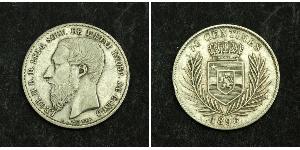
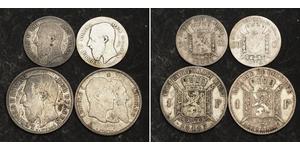
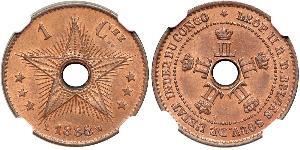
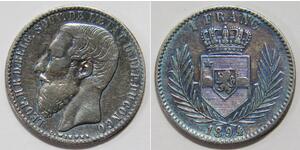
The 1 Franc and related denominations struck during the reign of King Albert I stand out as historical anchors. These pieces feature detailed busts showing royal regalia or profile portraits alongside national insignia like arms depicting elephant heads representing indigenous fauna associated with trade.
Historical Context
- Possession dates from pre-independence era where colonial administration was central to currency circulation before transition periods began in the late 1950s.
The shift toward denominations marked with specific regional identifiers occurred as administrative zones gained more autonomy. Collectors often seek these items because they bridge early colonial history directly into independence movements, providing a tangible link between state policy and local economic life.
Design Features
- Rare variants may display slightly different portraits or mint marks indicating where the coins were produced for distribution across various riverine regions like Kinshasa previously known as Leopoldville before name changes occurred later in history.
Importance to Collectors
- The scarcity of high-grade examples from these early periods combined with unique historical narrative makes them highly sought after by those interested in colonial numismatics and African heritage preservation through monetary artifacts.
Cultural Legacy
Beyond economics, coinage serves as an archive of cultural identity. The imagery on these pieces reflects the European ambition to impose order upon vast tropical environments while simultaneously showcasing exotic botanical elements native to local forests or fauna like leopards and elephants.
Religious influences also appear subtly in iconography used during missionary periods where church symbols often accompanied administrative emblems, illustrating how colonial expansion intertwined economic motives with religious conversion efforts throughout interior regions connected by rail lines built for transport purposes.
For collectors
The significance of Belgian Congo coins extends beyond their face value or metal content. For the modern enthusiast seeking a connection to history through material culture, these items offer direct access into administrative mechanisms that governed one of Europe's largest territories during the twentieth century.
Rare examples can represent pivotal moments in transition from colony to independent republic and reveal how global events like wars dictated changes in mint output. They remain vital for any collection focusing on world currency as they complete an important chapter often missing from standard numismatic collections centered solely on European nations of origin.