| View |
| preceded by | ||||||
|
||||||

 Byzantine Empire (330-1453)
|


| Byzantine Empire (330-1453) | Link to Wikipedia |
Byzantine Empire: History, Coinage and Collectibles
Welcome to our gallery of imperial history. We invite you to consider the Byzantine not merely as a distant echo of ancient Rome, but as a living civilization that held its own distinct identity for over one thousand years after the fall of its predecessor states.
Historical Background
To understand what remains in our hands today on these precious metals, we must first walk through the streets of Constantinople. As this city rose from a modest colony to become the New Rome and eventually the heart of Christendom, it became the pivot point where East met West, trade met theology, and commerce met culture. The stability afforded by a single language and legal code allowed for an economic continuity that Europe rarely saw again until the modern age.
The empire was sustained not just by military might but by sophisticated administration. Trade routes extended as far west to Rome and Britain via sea, and eastward across the Silk Road into Persia and India. This wealth flowed through a system of taxation that relied heavily on minted currency rather than barter or tribute alone. When emperors restructured borders following conquests in North Africa or Italy during the sixth century, they did not dismantle their monetary systems; instead, they adapted them to accommodate changing demographics.
The empire's longevity created a unique situation for historians and collectors alike: we are looking at coinage that bridges centuries. The transition from pagan Roman iconography to purely Christian symbolism marks one of the greatest shifts in Western visual culture yet occurred while maintaining economic stability. This historical continuity explains why specimens often remain remarkably preserved, bearing images of emperors who reigned hundreds of years apart.
Currency and Coinage History
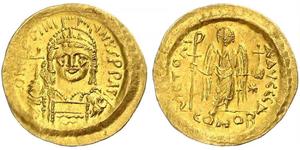
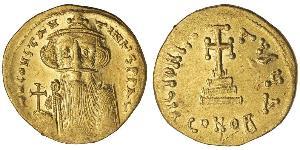
The evolution of money within this vast domain reflects a conscious effort to standardize value across an immense territory. When Constantine the Great established the solidus in the fourth century, he created the first truly durable gold currency used for international trade throughout Europe since then.
This coin did not suffer from rapid debasement or inflation as often seen during later periods of instability elsewhere on this continent. Instead, it was minted with a purity that commanded respect across borders and remained an accepted medium of exchange until the eleventh century in regions far beyond its political control. Silver denominations were used for domestic trade within provincial boundaries, while copper tokens circulated among the local peasantry.
Fiscal reforms played a critical role here. When emperors sought to restore faith or recover territory during the seventh and eighth centuries, they faced pressure from Arab caliphates in the Mediterranean. These conflicts necessitated changes in mint output and occasionally required heavy reliance on bullion reserves rather than silver coinage.
Currency policy was an instrument of statecraft. By issuing coins bearing specific portraits or crosses to certain regions during periods of political tension, leaders communicated authority without words written on parchment which might be disputed by illiterate populations everywhere in the realm.
Mints and Coin Production
The great mints were often located within the very walls that guarded Constantinople. The Great Palace served as a complex hub where gold was smelted, weighed, stamped, and sealed before entering commerce. These facilities operated with remarkable efficiency for many centuries.
Die craftsmanship reveals much about this civilization's artistic standards while preserving their legacy today. Unlike the rough hammered coins often produced in medieval Europe later on, Byzantine struck pieces feature intricate details visible even under magnification of the modern collector eye.
The artists who carved these dies created halos and crosses that transcended religious orthodoxy at times; sometimes images were removed from circulation due to theological disputes but re-carved into new issues shortly after those debates ended. You may find examples where one emperor sits in reverse on a coin compared to his successor, simply because the mint was cleared out or repurposed for another ruler.
Mint marks occasionally appear under the busts of rulers as indicators of production centers used during periods of rapid expansion and contraction across Anatolia. While less common than Roman denarii, these markings assist collectors in identifying provenance without referencing external catalogs.
Notable Coins
- The Solidus (Nomisma). This is perhaps the most iconic piece associated with this region of history.
This gold coin served as a standard for centuries across Europe, including in Germany and England. It was so stable that it effectively functioned as a universal trading currency throughout medieval commerce until paper money became feasible later on its value remained unchallenged by local monetary policy changes elsewhere in the continent.
- The Tremissis. A lower denomination made of gold or sometimes silver, often found alongside solidi. It represents internal circulation and taxation levies collected for state maintenance rather than export trade across continents. Collectors cherish these because they display clearer facial features on emperors due to less weight loss in circulation.
The Copper Follis. While rarely surviving in perfect condition compared to their gold counterparts, the copper coins carry a significant historical message regarding economic downturns and recovery. A well-preserved example from an earlier period versus one from the later era demonstrates exactly when metal reserves were strained.
- The Tetradrachm. Produced during brief periods of reform where gold was scarce, this larger denomination highlights how states adapted to crises in bullion production. Finding specimens with high relief artistry is rare but tells a story about desperate need for liquidity and the artistic effort required even under strain.
Cultural Legacy
The coinage of the Byzantine Empire serves as a visual narrative spanning over ten centuries, reflecting the evolution from Roman ideals to Christian monarchy. The artistry is distinct because it was never purely classical; rather it blended ancient imperial iconography with spiritual elements like halos and crosses.
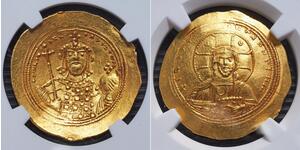
Rulers often styled themselves in ways unique to this region of history: Porphyrogenitus signifying a son born within the purple robes reserved for emperors. This concept, which means "born into royalty," is literally visible on coins bearing the image of such individuals alongside their mother's portrait or title indicating their birth rank.
The use of inscriptions was limited to Greek characters throughout most periods after Constantine established Christianity as state religion in Rome and its successors elsewhere across Europe. This linguistic continuity ensures that modern enthusiasts reading these texts understand exactly who reigned when despite the passage of time between emperors ruling over similar territories for centuries.
For collectors
We leave you with thoughts on why this legacy endures in our hands today. The Byzantine Empire represents an unbroken thread connecting antiquity to modern times, unlike other European monarchies that frequently broke continuity between Roman and Frankish realms. To hold these pieces is to possess physical proof of trade networks where Constantinople acted as the nexus.
The importance lies not only in their scarcity but also in their cultural value which transcends simple monetary worth at auction houses or dealer listings elsewhere around us today. Each specimen offers a direct connection to how one civilization defined authority and wealth long before our modern age began recording history through printed books rather than stamped metal sheets.
We recommend approaching each issue with appreciation for its context in the broader imperial narrative, recognizing that every design variation reflects shifts in government policy or artistic trends. Whether focusing on high-purity gold bullion circulated as tribute to foreign monarchs or low-denomination copper used by market vendors within city walls and rural provinces alike offers an opportunity to study history without requiring knowledge of complex dates found only in reference books online.
We encourage you to continue this journey through time, studying these artifacts not merely for their rarity but what they tell us about how ancient societies maintained stability across vast distances with limited technology. Through the lens of coinage and design we gain insight into a world that shaped our own understanding of value exchange today without needing external links or modern translations.