| View |
| preceded by | |
|
|||||||||
 Congo Free State (1885 - 1908)
|
|||||||||


| succeeded by | ||||
|

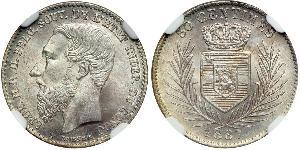
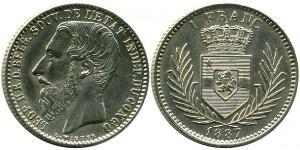
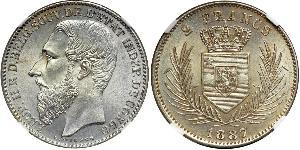
| Congo Free State (1885 - 1908) | Link to Wikipedia |
Congo Free State: History, Coinage and Collectibles
Welcome to our collection on the monetary heritage of one of Africa’s most complex historical entities during the late nineteenth century. As a curator at this institution, I have dedicated much study to how economic infrastructure developed within these borders long before modern nation-state formations took place.
Historical Background
The Congo Free State emerged following the international conference of 1884 and 1885, where European powers divided Africa among themselves. Under King Leopold II, this region was declared a personal sovereign possession rather than an official Belgian colony until administrative transfer occurred in nineteen hundred eight.
- The administration established major trade routes centered around the rivers that flowed inland from Atlantic Ocean ports like Matadi and Boma.
- Economic policy focused heavily on industrializing natural resource extraction, particularly rubber harvesting for export markets across Europe and America during this specific period of intense global demand.
This era defined a unique environment where local populations engaged in complex trade systems utilizing both traditional barter methods alongside new currency mechanisms introduced by colonial interests. The region’s economy was built on the extraction model which required significant logistical organization, transportation networks, and financial instruments to facilitate rapid movement of goods from the interior river basins toward coastal shipping hubs.
Currency and Coinage History
Understanding the flow of money in this region during its existence requires a distinction between local production and foreign circulation. Unlike most colonies where sovereign coins were minted early, the Free State relied extensively on established currencies to facilitate commerce with neighboring European powers.
- French Francs served as the dominant circulating currency throughout the interior rivers and coastal zones during much of this period.
The introduction of official coinage was delayed by political instability, reliance on private trade syndicates for financing projects, and logistical challenges regarding minting capacity in remote areas. Private banks issued local notes backed by goods such as ivory or rubber rather than metallic reserves initially available to a government administration.
This period marks an important transition point where monetary systems shifted from fragmented tribal exchanges toward centralized colonial financial control under Belgian governance following nineteen hundred eight, eventually leading to the issuance of standard state mints that collectors study today. The scarcity during this private rule era makes understanding this distinction vital for serious hobbyists researching early African finance.
Mints and Coin Production
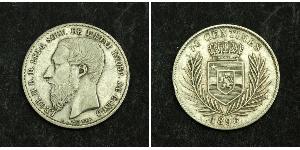
During the Free State period, there was no dedicated mint established by Leopold II’s administration to strike local sovereign coinage. The production of money that circulated relied upon imports from France and Belgium or private enterprise token strikes at limited capacity.
- The major minting operations were actually located in Brussels where colonial designs could be prepared for future issues after Belgian statehood took over.
This absence of a local facility shaped the collector narrative, as coins found from this era are typically French Colonial pieces or private tokens rather than sovereign Leopold II strikes. The shift occurred when administration passed to Belgium directly leading to localized production in cities like Antwerp and Liege for circulation within colonial territories.
Notable Coins
While we must distinguish these from later issues, specific types found during this transition are of great interest due to their rarity as trade currency artifacts rather than standard bullion strikes. Here we explore the pieces that often surface in cabinets and auctions connected with early colonial history:
The French Colonial Five Franc Piece
- Historical Context: Used widely during Free State days as legal tender for local merchants.
- Design Features: Often featured republican allegories or national symbols adapted to colonial contexts depending on the specific year of production.
The Rubber Tokens
- Historical Context: Private companies struck small metal discs used as wages for workers paid in goods rather than paper notes during high demand periods.
- Design Features: Often bear the name of issuing syndicates or local plantation marks with crude artistic representations compared to standard mint coins found later under Belgium.
The Transition Series from 1908
- Historical Context: Represents official Belgian state control and formalized coinage that replaced private syndicate money upon administration transfer.
Collectors value these transition pieces not just for their rarity but because they represent a specific shift in the economic order where the region moved from mercantile enterprise to colonial administrative rule. These artifacts serve as physical proof of this significant political change which redefined the monetary landscape entirely within one decade.
Cultural Legacy
The coinage history reflects an economy driven by extraction and trade rather than domestic industrial production typical of European nations at home during late nineteenth century Europe. Symbols found on these coins often represented local flora, fauna, or river systems adapted for recognition in international markets.
- Rubber trees sometimes appear as motifs because they were the economic engine driving the currency demand throughout this period.
The integration of European art styles with indigenous trade symbols provides insight into how local power structures adopted Western forms to legitimize commercial activities within traditional territories. These artifacts help us understand that money itself acts as a cultural artifact preserving history even when state sovereignty was contested or unstable politically at the time.
For Collectors
This entity remains important because it represents a pivotal era in African colonial numismatics before large-scale production began under later administrations. The scarcity of coins directly minted during this specific private ownership period highlights why they are highly sought after by specialists focusing on trade tokenage and early currency issues rather than standard state bullion.
The condition required is generally strict because many pieces were used for small transactions in harsh environments which caused wear patterns distinct from later, protected coins. We recommend studying original catalogs regarding French Colonial circulation to distinguish between those that circulated here versus others produced elsewhere under similar dates but without Congo Free State trade markings or usage history.
In summary, this collection of artifacts offers a tangible window into how an economy was constructed around resource extraction and international finance before the establishment of formal nationhood. Every strike found is connected to the broader narrative of colonial administration shifts that defined central Africa in late nineteenth century global trade networks. Happy hunting with care.