| View |
| preceded by | ||||
|
||||

|
|||||||
 United States of Colombia (1863 - 1886)
|
|||||||

| succeeded by | ||||
|

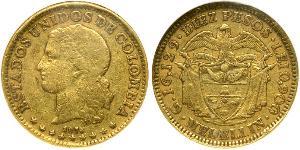
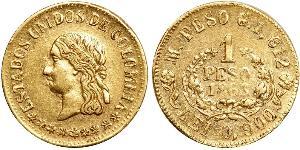
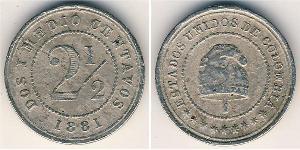
| United States of Colombia (1863 - 1886) | Link to Wikipedia |
United States of Colombia: History, Coinage and Collectibles
The story embedded within metal is often a testament to a nation's struggle for identity. In mid-nineteenth-century Latin America, coinage was not merely a medium of exchange; it served as the physical embodiment of sovereignty. The United States of Colombia stands as a fascinating period in this timeline, bridging the gap between centralist republics and federal structures that defined much of South American history during its golden age.
Historical Background
To understand the coins produced under the banner of the United States of Colombia, one must first appreciate the volatile political climate from which they emerged. Following decades of civil strife between centralists and federalists across the Andean mountains, a new constitution known as the Pacto de Rionegro established a loose federation in 1863. This regime sought to dismantle heavy taxes and foreign entanglements while promoting free trade.
The economic foundation relied heavily on agriculture, particularly coffee production emerging from the fertile slopes of Antioquia and Cundinamarca, alongside mining operations that supported European markets. The region's political philosophy prioritized state autonomy over a strong central government. This decentralization significantly impacted currency control, as different provinces often requested specific minting standards to reflect their regional contributions rather than national unification.
Culturally, this era represented a shift away from conservative Bourbon-era influences toward liberal republican ideals that emphasized liberty and individual rights over monarchical loyalty or caudillo rule. The economy was expanding through trade networks with the United States of America and European markets, but domestic instability frequently disrupted these flows. This tension is visible in every coin minted during this brief window: a metal artifact stamped to affirm national unity while acknowledging regional independence.
Currency and Coinage History
The transition from colonial Spanish currency systems to the republican decimal system was gradual but inevitable for economic modernization. Initially, trade relied heavily on silver pieces of weight similar to the old real or dollar standards still trusted by merchants abroad. However, as the United States of Colombia solidified its borders and legal framework in the 1860s, new fractional denominations were introduced.
The currency system evolved through distinct monetary reforms that sought to stabilize inflation caused by wars against foreign invasions and internal rebellions. Money production was crucial for establishing credit within a federal structure where provinces had varying degrees of economic autonomy. The government needed to standardize silver content enough to prevent fraud, while allowing flexibility in copper or brass denominations suitable for local commerce.
During this period, the role of coinage shifted from royal tribute tokens to instruments of national building authority. Government decrees mandated that new coins must reflect republican virtue rather than military hero worship alone, although portraits of leaders remained common symbols of legitimacy during times when public office was unstable and power often transferred violently through elections or coups.
Mints and Coin Production
The primary production center for this era's coinage resided within the established facilities in Bogotá. Like many regions following independence, local mints faced challenges with raw material shortages as traditional sources of silver dried up from over-extraction during earlier mining rushes.
Minting traditions were heavily influenced by classical styles imported from Europe and adapted to New World iconography rather than indigenous symbols. The technology available at the time was still based on hand-operated presses capable of striking relatively small batches, though die-cutting techniques improved quality consistency over years of use.
An artistic characteristic that distinguishes this country's coinage is its adherence to allegorical figures representing liberty and nature rather than overt religious iconography. This reflects the liberal ethos of the time where state symbols replaced cathedral domes on coins, though some designs still included crosses or eagles within wreath compositions.
The transition in production methods allowed for sharper details that would have been impossible with older manual tools, enabling the sculptor to depict intricate stars representing federal states and detailed foliage surrounding national emblems. These small technical advancements ensured that collectors of later generations could appreciate not only the value but also the craftsmanship inherent in each piece.
Notable Coins
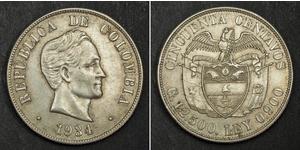
To identify a significant artifact from this era, one looks for the silver denominations known as pesos featuring stars on their reverse sides. Each star represents an autonomous state within the federation such as Cundinamarca or Antioquia. This design choice was revolutionary compared to earlier single-state coins that dominated previous regimes.
The gold escudos minted during this period represent a different tier of collector interest entirely due to their rarity and purity standards which were strictly controlled by federal decree because these pieces often financed military operations against rebellions or border disputes. The obverse portraits typically showed allegorical figures rather than direct headshots, aligning with democratic sensibilities.
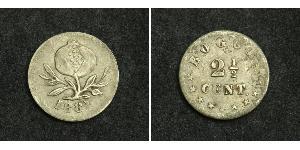
Copper denominations circulated daily in markets where merchants valued durability over fine metal content for routine transactions such as paying workers wages during harvest seasons. These lower-value coins are highly appreciated today because their existence highlights the depth of commerce that occurred outside formal banking channels which were often inaccessible to small farmers or shopkeepers.
The importance to collectors lies less in catalog numbers and more in what these objects reveal about a nation's struggle for self-definition during its formative years. A single coin can represent centuries of cultural evolution from monarchy into federal republics, making physical acquisition an act of preserving history itself rather than simply trading metal.
Cultural Legacy
The legacy visible on the obverse and reverse sides speaks to a society transitioning between old world values like religion and monarchy toward new principles based on reason and trade. The symbols used, such as eagles standing atop mountains or women holding torches of liberty, connect this short-lived republic to broader Latin American traditions that would eventually define modern nationhood.
The coins also reflect religious changes where the state began separating civil affairs from church influence through design elements like republican wreaths replacing earlier cross-and-monkey motifs typical in early Venezuelan designs. This visual shift indicates how a generation sought to create an identity distinct from imperial powers they had once served or opposed, focusing instead on internal growth and self-governance.
The cultural narrative captured within these objects remains relevant because it illustrates the importance of regional unity without enforcing total homogenization over diverse peoples. The enduring appeal comes from knowing that each coin marks a step toward modern democracy where citizens value representation above centralized authority, making these pieces educational tools beyond their monetary face values.
For Collectors
The historical significance remains robust because every piece minted carries the weight of constitutional debates and regional rivalries fought in courtrooms rather than solely on battlefields. It reminds new entrants to the hobby that collecting is often about appreciating how history shaped daily life for people who lived under such governments centuries ago.
Why these coins remain important today involves their ability to connect modern enthusiasts with stories of trade routes, coffee plantations, and mountain battles fought over economic survival. They offer insight into a nation's development through the eyes of artists and metallurgists whose work helped shape identity during turbulent decades when borders were redrawn.