Portuguese Malacca (1511- 1641)

| Portuguese Malacca (1511- 1641) | Link to Wikipedia |
Portuguese Malacca: History, Coinage and Collectibles
Welcome aboard our journey through the annals of one of history's most evocative trading posts in Asia. As we gather here on this digital gallery wall, I invite you to consider not just the metal beneath your fingers but the weight of centuries carried within every rim and inscription.
Historical Background
The story of Portuguese Malacca begins with a dramatic shift in global commerce that altered how civilization thought about trade routes. Prior to 1511, the city functioned as an independent sovereign state under the Sultanate of Malacca, serving as the primary gateway between Europe and the Spice Islands for centuries.
The arrival of Afonso de Albuquerque changed this landscape forever in a single momentous year. He did not just conquer land; he captured a vital node on the world's arteries of commerce. This Portuguese settlement became more than a military outpost; it was an imperial laboratory where European administrative methods met Asian mercantile customs.
The city served as the capital for Portugal's vast Indian Ocean domain, often referred to within their own bureaucracy simply as Goa and Malacca under the Viceroyalty of India. This arrangement created unique conditions distinct from other Portuguese holdings in Brazil or Africa. The population was a fascinating blend—Malays, Indians, Chinese merchants known collectively as the Sanyeng, and Europeans all interacting within walls built for commerce.
Cultural life evolved into something truly singular in this era. As we examine artifacts left behind by their ancestors today, one finds evidence of a society where Catholic iconography coexisted with Islamic traditions that had been present before arrival. However, it was the economy that drove these cultural developments most forcefully for our collectors to study.
The strategic importance lay in its location between China and India. This positioning meant that Malacca sat at the nexus of global exchange rates, currency standards, and political power dynamics. When Portugal lost this stronghold eventually, they were not merely losing a piece of real estate but severing their access point to the lucrative Asian markets for spices like nutmegs and cloves.
Currency and Coinage History
In ancient times before Albuquerque arrived, trade in the region relied heavily on precious metals brought by Arab traders. The local economy utilized a system of silver coins sourced from India or Southeast Asia itself, often bearing inscriptions that acknowledged various Sultans or Caliphs.
The Portuguese presence necessitated a restructuring of this monetary flow to support their imperial ambitions and military expenses in the region. While they attempted to strike coinage locally during the early period, technical constraints meant they were largely dependent on shipments arriving from mainland India for daily commercial circulation.
The evolution moved away toward centralization over time. The Viceroyalty of Goa sought to exert strict control by standardizing currency usage across their Asian territories rather than producing entirely different pieces for each port like we might expect in the modern era, yet this lack of local mints adds a layer of rarity and intrigue.
The money used within Malacca was primarily silver Reales, which circulated alongside gold coins. However, due to distance from Lisbon where these metals were refined in Europe, much relied on bullion converted into coinage upon arrival. This influx brought Spanish Real currency but also encouraged the minting of specific issues marked for Portuguese usage.
Mints and Coin Production
A significant curiosity arises here: if it was Portuguese Malacca, where were the coins actually struck? Much of our numismatic knowledge suggests that production centers lay at Fort Santiago in Goa. Yet these pieces bore explicit references to their use or intended circulation within the southern coast.
This arrangement created a distinct artistic style known for its intricate detail yet simple layout compared to contemporary French or English coinage styles then emerging elsewhere on this continent. Designs often featured religious crosses that were both symbolic and functional, signaling safe passage under Catholic protection which was also crucial during times of war with Dutch forces.
Minting traditions involved skilled craftsmen who utilized die-cutting technologies imported from Europe but adapted to the harsh environmental conditions in Asia where humidity could affect metal integrity over time. This resulted in coins often bearing unique patina profiles that differentiate them clearly from European counterparts found on our auction tables today.
Notable Coins
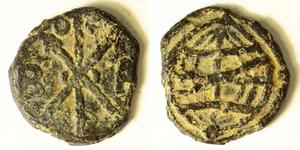
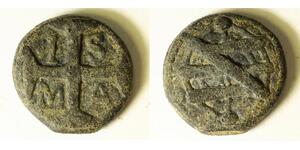
The silver Reales struck for use within Malacca are perhaps the most sought after by those seeking to display a specific historical provenance. These pieces typically carried legends such as "MALACA", serving both identification purposes and establishing sovereignty over that territory during their brief occupation.
We must also consider the gold ducats brought from Goa or imported directly which circulated widely among wealthy merchants before eventually disappearing through wear, melting down for bullion needs by traders who needed smaller denominations daily. The contrast between these larger coins used for high-value transactions and small copper pieces used in local markets creates a fascinating narrative of economic stratification within the colony.
Furthermore, certain coinage bearing the portraits of King John III or later figures like Sebastian I carries specific significance as it marks moments when new monarchs sought to impress their authority upon distant provinces. These are not just currency but documents asserting loyalty and status in a time when royal decrees had far reaching consequences on economic policy.
Cultural Legacy
The coinage from this period tells us volumes about the society that existed within those walls. Religious symbols such as crosses were prominently featured, reflecting the strong influence of Christianity upon daily life and commerce even if practiced by a majority Muslim or Buddhist population who continued their traditions alongside these new cultural impositions.
We also see evidence through imagery and legends regarding trade goods like spices referenced on currency surfaces where they attempted to identify origin regions directly in ways we might expect today but without the modern concept of branding. This demonstrates that even then, economics dictated art rather than just aesthetics dictating value alone.
For Collectors
The appeal lies beyond mere scarcity; it is about storytelling potential and historical preservation. These pieces offer direct access to a world before globalization as we know it today began shaping our modern understanding of trade networks connecting continents with unprecedented speed and forcefulness.
Coin collectors who acquire examples from this era are essentially holding fragments that once helped pay for the construction of fortresses or purchase spices needed by ships returning home across oceans spanning thousands of miles. Survival rates for these items in high grade condition have remained low because they often fell out circulation decades after issuance, buried beneath layers of dust before being rediscovered centuries later.
In conclusion, collecting from this period offers an intimate look at the intersection of empire and commerce during a defining moment world history changed forever. Each piece represents more than just metal; it is tangible proof that humanity's ambition to connect worlds once reached its highest peaks under flags waving proudly over ports now long vanished into time.