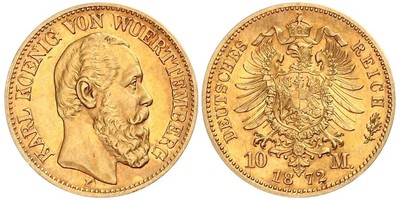
| View |
| preceded by | |
|
|||||||
 Principality of Ansbach (1398–1792)
|
|||||||

| succeeded by | ||||
|

| Principality of Ansbach (1398–1792) | Link to Wikipedia |
Principality of Ansbach: History, Coinage and Collectibles
Welcome to a journey through time, where we explore one of the smallest yet historically significant states within the Holy Roman Empire.
In the intricate tapestry of German history, few stories illustrate the complexities of medieval statehood quite like that of Ansbach. Tucked away in the heartland of Franconia, this principality served as a crucial link between larger powers throughout the centuries. While small by comparison to mighty kingdoms, its economic influence stretched far beyond its borders through trade and commerce.
Historical Background
The Principality emerged within a political landscape defined by shifting alliances and internal fragmentation of the Holy Roman Empire. Ansbach was not merely an isolated dot on a map but a strategic location for merchants, travelers, and armies moving between central Europe and Northern Germany. The region's wealth was built upon agriculture, salt trade from nearby sources like Rothenburg ob der Tauber, and its position along major road networks.
The governance of the state underwent significant evolution over several centuries. Initially part of broader territorial arrangements involving Wittelsbach and Hohenzollern influence, Ansbach eventually became a stronghold associated with Brandenburg before being absorbed into Prussia in 1792. This period was not merely about borders but reflected deep cultural shifts as Protestantism spread through the region following the Reformation. The administration required precise record-keeping and financial management to maintain stability among its diverse population of craftsmen, farmers, and merchants.
The political fragmentation meant that local laws often differed from those in imperial territories surrounding them. This autonomy allowed Ansbach to cultivate a distinct cultural identity while still acknowledging the overarching authority of the Emperor until secular reforms began in earnest during the late 18th century. The transition from feudal obligations to modern mercantilism saw rulers encouraging industries and standardizing weights, measures, and currency across their territories.
Currency and Coinage History
The financial history of Ansbach mirrors broader trends in European economics during the early modern period. Initially reliant on foreign coinage brought from Italy or Augsburg due to lack of local mints, the state gradually established its own currency infrastructure as political stability improved.
In earlier centuries, money functioned primarily as a store of value and legal tender for taxes rather than pure retail commerce where paper notes would later dominate. The primary unit was often tied to silver standards, specifically the guldin or thaler variants that circulated across Germany. As international trade expanded in the 17th century, Ansbach rulers sought stability by aligning with imperial weights and measures.
A pivotal moment occurred when local authorities decided to mint coins stamped exclusively within their borders rather than accepting foreign currency which was heavily taxed at every border checkpoint. By standardizing coinage, they reduced transaction costs for merchants passing through the principality's capital towns. Over time, this transition from diverse regional denominations toward a single silver Thaler facilitated larger trade agreements with neighboring principalities like Bamberg and Nuremberg.
The shift also marked increasing centralization of economic power within government hands. Tax collection became easier when coins bore the distinct arms of local rulers rather than just imperial eagles alone, which had become standard practice by 1702 onwards as Prussian influence grew in this area before eventual absorption into larger states.
Mints and Coin Production
The production centers for Ansbach coins were housed within the fortifications of major towns like Annsbach itself or nearby trade hubs. The technology used evolved slowly over centuries, beginning with hammer striking on flat surfaces which was labor-intensive but effective before later adopting screw presses capable of more precise detail.
Mint Traditions:
- Silver Purity: Coinage often boasted high silver content reflecting local mines or purchased bullion availability, ensuring coins held intrinsic value above face value for international traders.
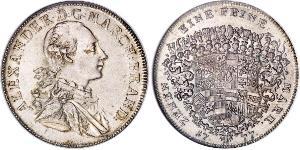
- Heraldic Artistry: The reverse sides frequently displayed complex coats of arms combining imperial eagles with regional symbols like the lion shield typical of Franconian heraldry. These required skilled engraving and attention to detail that elevated local craftsmanship standards significantly across Southern Germany.
Minting Technologies:
- Die Quality: The transition from simple designs toward intricate borders around lettering indicates higher quality dies made possible by improved industrial skills imported via trade networks with the Low Countries and England.
As technology advanced, coins became thinner yet more durable. This allowed for mass production of smaller denominations needed in daily commerce alongside high-value silver pieces kept by wealthier merchants or collectors who valued investment-grade bullion forms stored safely within vaults rather than spending them on goods.
Notable Coins
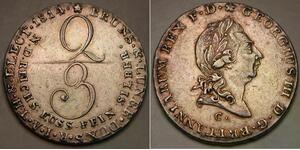
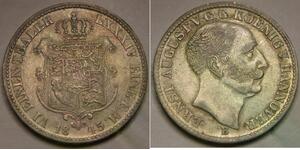
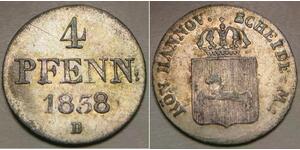
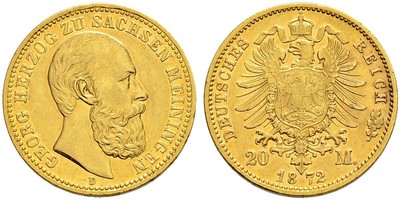
Certain types stand out as particularly prized due to their historical significance and scarcity today. These examples represent key moments in the state's existence:
Early Elector Pieces (Late 17th Century)
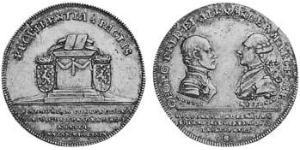
The silver pieces from this era were struck during times when Ansbach held semi-independent status within imperial structures. They often feature simplified portraits of local rulers facing right, flanked by ornamental shields representing loyalty to both Emperor and Prussia.
- Context: Minted just before the major political consolidation efforts that would lead into full Prussian control.
- Design Features: Obverse displays portrait busts with period-appropriate crowns or laurels; reverse bears double-headed eagles common in imperial usage but altered slightly to include Ansbach territorial marks.
Transition Thaler (Early 18th Century)
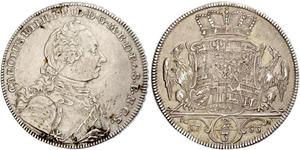
This type bridges the gap between old regional money and new national standards after Prussia exerted greater control. It is valued for its exceptional strike clarity which preserves fine hairlines on faces, indicating high die quality during peak production times.
- Context: Reflects administrative changes under Brandenburg-Ansbach rule as they aligned with larger Hohenzollern territories without losing local identity entirely in coinage design.
- Design Features: Often bears date 1709-1725 period; shows clear separation of imperial and provincial heraldry, making it vital for numismatic study regarding the evolution of German statehood symbols.
Silver Half-Gulden (Pre-Unification)
Smaller silver denominations show more localized artistic touches including grapevines or wheat sheaves symbolizing agricultural prosperity. These are essential to understanding daily life economics before the era of paper currency.
Cultural Legacy
The coinage left a lasting imprint on cultural memory and national identity development throughout modern Germany’s unification process. Each piece serves as tangible evidence not just of monetary exchange but also about who held political power in different eras.
- Religious Symbols: During periods influenced by Protestant reform movements, coin designs subtly incorporated crosses or other religious motifs appropriate to the local population rather than purely Catholic imagery seen elsewhere across Europe. This reflects theological shifts that shaped social cohesion within borders defined by faith-based divisions earlier in history.
Economic Policy:
- Social Impact: The standardization of weights and measures visible on later coins helped create a unified market culture among townspeople regardless of dialect spoken or regional origin within the Empire. It fostered cooperation across linguistic barriers in Franconia.
The symbols stamped onto metal reflect broader societal values placed upon order, loyalty to sovereign house, and stability needed for safe trade routes through mountainous terrain typical of southern Germany's geography where travelers faced weather hazards constantly year after year until infrastructure improved greatly during 19th century industrialization.
For collectors
The historical significance remains paramount because these pieces tell stories no longer recorded elsewhere today beyond archives or fragmented manuscripts. Ansbach’s contribution to numismatic history is unique for showing how medium-sized principalities navigated the turbulent waters between Imperial authority and emerging Prussian dominance without losing their distinct economic voice.
Rarity Considerations:
The most sought-after items involve those from specific dates or mints where production numbers were low due to technical difficulties like die wear causing damage before large batches could be struck successfully. Collectors value these for completeness in sets focused on German states rather than national currencies per se.
- Educational Value:
The collection provides insights into economic transitions and social dynamics not seen elsewhere across world-wide coinage histories. Completing such a set allows hobbyists to better appreciate the nuanced political structures governing fragmented Europe before national borders solidified permanently later in 19th century.
Rationale for Acquisition:
Beyond aesthetic appeal, owning these items means preserving heritage of smaller regional cultures often overshadowed by dominant empires or kingdoms during history books focusing solely on major battles or wars rather than day-to-day commerce. Their importance today lies in telling a story about ordinary citizens interacting with government officials daily through coins exchanged for bread instead of bullets.