| View |
| preceded by | ||||
|
||||
|
|||||||
| Roman province of Aegyptus (30BC – 641) | |||||||

| succeeded by |
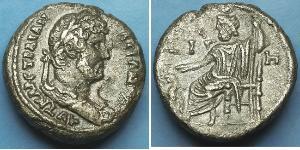
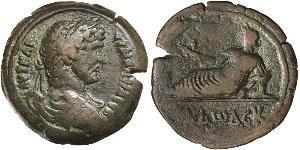
| Roman province of Aegyptus (30BC – 641) | Link to Wikipedia |
Egypt (Roman Province): History, Coinage and Collectibles
Welcome to a journey through the sands of history where commerce meets conquest.
Historical Background
The Nile Valley served as one of the most vital arteries within the vast Roman Empire. Following the final defeat of Cleopatra VII, Augustus assumed direct control over this fertile land around 30 BCE, transforming a Hellenistic kingdom into an imperial province known officially as Aegyptus. This transition was not merely political; it represented a profound shift in economic power and administrative culture. The primary motivation for Roman conquest lay in the security of grain supplies that fed Rome itself.
Rome established strict control over Egyptian agriculture, effectively turning the entire population into tax farmers to ensure a steady flow of foodstuffs across the Mediterranean known as the Annona. This system required immense logistical organization and stability. The Roman administration respected local traditions but integrated them into their own imperialist framework.
Cultural integration was unique in Rome. While other provinces were often viewed merely as sources of resources or military recruitment grounds, Egypt retained its high priestly status and complex religious syncretism under the Empire for centuries longer than most regions did after conquest. The population remained overwhelmingly Egyptian by ethnicity despite their Greek rulership prior to Roman arrival.
This stability allowed trade flourished along the Red Sea coast connecting ports in Alexandria with Arabia, India, and beyond coinage was crucial not just as currency but as a tangible proof of economic health across these vast distances. Every shipment of grain carried from Thebes or Memphis represented wealth that needed to be calculated against imperial taxes.
Currency and Coinage History
The monetary evolution in this region is fascinating because it preserved many Greek traditions even after the adoption of Roman law. Initially, Egypt continued issuing silver Drachms similar to those of Ptolemy II or III until full standardization occurred under Vespasian.
Rome standardized currency across its borders for trade and tax collection purposes. By the time of Claudius (41-54 CE), the Roman Denarius became the circulating coin in Egyptian markets alongside older local types that were gradually demonetized or replaced as a way to control inflation caused by heavy gold outflows.
The currency system reflected Rome's need for uniformity, yet Egypt retained silver production because of its proximity to trade routes where large value transactions occurred. However, the common populace relied on small copper coins minted in Alexandria at massive scale daily due to high population density and urbanization levels unmatched by other imperial cities outside Italy.
Mints and Coin Production
Alexandria served as one of the empire's premier mints under Roman occupation. Unlike Rome itself, which focused on silver coinage in smaller batches for elites or military pay at specific times during the century known as Antonine Plague years affecting population stability across provinces.
The minting practices were traditional yet efficient artisans produced copper issues that often bore high-relief portraits of emperors with distinct facial features not seen in imperial Rome itself. This suggests local dies and die-engravers crafted by masters familiar both Greek artistic traditions and Roman iconography to produce the specific style.
Copper was preferred for small change due to its durability when used as currency among merchant classes handling market transactions where silver or bronze denominations were needed in bulk quantities to handle daily commerce taxes. The production centers often reused Ptolemaic workshops which continued producing coinage with a Roman face but maintaining Greek artistic motifs until the third century.
Notable Coins
The Silver Drachm of Vespasian (69-79 CE)
- Historical Context: This coin marks a definitive end to the era where local dynastic imagery could be seen alongside Roman rule. It signals full administrative control established by Flavian reforms.
- Design Features: While showing standard portraits, they often carried Greek legends or reverse types that were previously suppressed but re-emerged due to specific regional die choices found in excavations of the city walls.
- Collector Importance: These coins are prized for their excellent strike quality and high-relief detail which was a hallmark of Alexandria's mint output. They bridge the gap between Greek heritage and new rule perfectly representing local artistry under Roman authority rather than simple propaganda pieces created by distant hands in Rome.
Copper Ases with Imperial Portraits (Second Century)
- Historical Context: These coins circulated widely among the population during a period of relative peace allowing free trade to flourish between Alexandria and local towns. Taxes were paid in copper for most lower class citizens who dealt strictly in daily goods.
- Design Features: The portrait style here often appears more stylized or simplified compared to Rome's official portraits, sometimes even omitting certain imperial titles used elsewhere but showing the emperor wearing specific Egyptian crowns like double-topped headdresses symbolizing local allegiance in a way that reinforced loyalty to both states.
- Collector Importance: High survival numbers make them common types often collected as part of hoards recovered from river banks. Their patina varies significantly depending on soil acidity and preservation environment found along the Nile delta or higher up near Upper Egypt which offers collectors different color variations within bronze surfaces over centuries.
Coinage Depicting Isis (Later Empire)
- Historical Context: During periods of persecution, the state often tried to remove pagan imagery. However in Egypt local cults like those of Serapis or Isis persisted on currency as long as Roman emperors could tolerate them for their economic value rather than theological belief.
- Design Features: Reverse types show goddesses offering crowns, holding thyrsus staff, standing before altars while wearing traditional robes reflecting dress codes of the local priesthoods that were not fully integrated into imperial bureaucracy despite political control over religious affairs.
- Collector Importance: Finding a coin bearing such imagery is rare in Roman Egypt where standardization often removed unique types. This specific type shows how culture persisted on metal when written documents might be destroyed by fire or flood along the Nile banks and buried with wealth to escape political persecution during imperial edicts.
Cultural Legacy
The coinage serves as a visual archive of cultural synthesis. You see Greek letters running alongside Roman busts on silver issues, illustrating how language transitioned from one empire's tongue to another without fully severing ties. The use of Serapis and Isis imagery demonstrates that religion in the Egyptian province operated somewhat independently because it had deep roots among local population that predated conquest by centuries.
This coinage also proves how economic stability was maintained despite political turmoil elsewhere, as grain shipments flowed uninterrupted into Rome even after civil wars broke out across Gaul or Britannia. Every silver Drachm buried in the soil tells a story of trade between ships docking at Red Sea ports and merchants paying tolls using coins minted for this purpose.
The craftsmanship remained superior because Egyptian mints were staffed by artisans who had inherited traditions from Ptolemaic workshops. Their skill level ensured that even lower-value copper issues possessed high artistic quality, making them desirable to collectors seeking examples of ancient metalwork beyond just gold or silver treasures found in tombs.
For Collectors
The province of Egypt under Roman rule remains essential for any series focused on Hellenistic artistry transitioning into Imperial times. The coinage here offers a distinct aesthetic different from Rome proper where die styles are unique, legends differ based on local usage habits rather than central decrees found in Italian archives.
You can find pieces that survived the desert sands better because of how they were buried for safekeeping against bandits or invaders who burned villages but often left metal intact. Provenance is strong and history attached to these finds spans two thousand years allowing you to hold a piece of economic power that once fed millions in Rome directly through your own holdings.