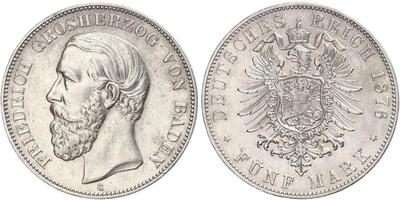
| View |
| preceded by | ||||
|
||||

|
|||||||
 Granadine Confederation (1858 - 1863)
|
|||||||

| succeeded by | ||||
|

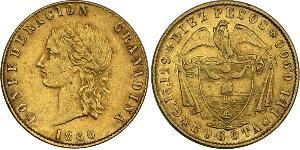
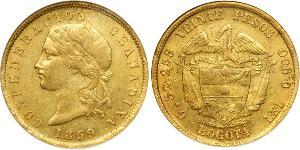
| Granadine Confederation (1858 - 1863) | Link to Wikipedia |
Granadine Confederation: History, Coinage and Collectibles
Historical Background
The historical landscape of the Granadine region serves as a fascinating chapter in South American independence history, marking the turbulent transition from Spanish imperial rule to sovereign republics. During the late 18th century, this territory was known primarily as the Viceroyalty of New Granada within the broader Spanish Empire. The political winds shifted dramatically following Napoleon Bonaparte's invasion of Spain and the subsequent abdication of Ferdinand VII in 1808.
The local criollo elites seized the opportunity to declare autonomy, leading to a period often described as "Granadine" before eventual unification under figures like Simón Bolívar. Between the early years of independence through the mid-19th century, this region was characterized by political fluidity between unitary states and federalist confederations. This era was critical for trade networks that stretched from the Caribbean coast across to the Andean highlands.
The economic infrastructure was heavily reliant on agriculture, specifically coffee production which became an export staple later in the century, as well as mining operations such as gold extraction at Cerinca and Chiquinao. These commodities dictated monetary needs, requiring a robust system of currency circulation that could support both urban commerce in cities like Bogotá (then called Santafé de Bogotá) and Cartagena.
The political discourse oscillated between centralism and federalism. The term "Confederation" often appeared during debates regarding the unification of various local provinces before they were absorbed into larger national entities like Gran Colombia or subsequent Colombian states. Understanding these historical shifts provides essential context for numismatic study, as coin designs frequently reflected changing allegiances to Spanish Crowns versus Republican Liberty.
Currency and Coinage History
The evolution of money in this region mirrors the broader colonial transition from metallic currencies issued by Castilian mints to more localized production. Initially, commerce was conducted using standard Spanish coins like the real de a ocho (Spanish Dollar) or pieces of eight minted at Seville for circulation throughout the Americas.
This currency was stable but faced challenges regarding transport security and inflation rates during periods of war. The transition period following independence saw a scramble to replace royal insignia with republican symbols while maintaining trade viability. During this transitional epoch, local mints often struck coins bearing portraits of regional leaders or generic heraldic shields rather than national emblems that were not yet established.
The introduction of the peso and its subdivisions became a significant milestone in numismatic standardization. This reform was designed to align with European standards while addressing internal fiscal deficits caused by civil war expenses. The economy required silver coinage for large transactions but gold issues existed primarily for high-value exports, often flowing into bullion forms rather than circulating coins due to scarcity.
A key period involved the gradual demonetization of certain Spanish crowns as they were deemed debased or counterfeit-laden by local assemblies. New legislation attempted to enforce currency uniformity across different provinces. This drive for standardization is what collectors find most valuable, representing the shift from a fragmented colonial monetary system to one unified under emerging state authority.
Mints and Coin Production
The production centers were primarily located within the established mints of Cuzco or Lima which had oversight over this region before independence decrees altered their jurisdiction. However, specific attempts at local minting occurred during the 1830s under various provincial authorities in Popayán and Cartagena.
Minting traditions preserved several aspects from colonial practice while adopting new technologies like steam-operated presses for higher volume production of smaller denominations such as centavos or reales. Artistic characteristics were crucial, often utilizing designs inspired by classical Greco-Roman republican ideals which became popular across Latin America during this era.
The metal composition shifted over time to include more copper alloys due to silver scarcity caused by mining disruptions from political instability. These technological adaptations affected the visual texture and weight of circulating coins, making them distinct for connoisseurs who can identify subtle differences in strike quality based on mint location and date range.
Notable Coins
The most historically significant issues represent this era's struggle to establish identity. The Real de A ocho from the early independence period is paramount, featuring portraits of local leaders like Pizarro or San Martín in earlier iterations that predate unification. These pieces feature high relief and sharp details distinguishing them from Spanish counterfeits.
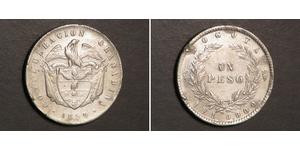
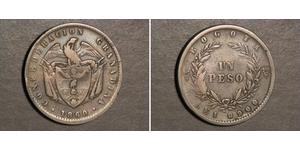
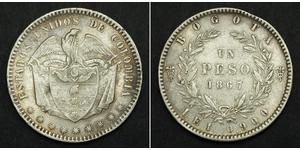
Another important type involved the transition to denominations bearing republican seals alongside traditional symbols such as Liberty caps holding fasces. Collectors value these for their design evolution, showing a gradual move away from royal crowns toward tridents or quinas representing commerce and liberty. The use of specific mint marks indicates provincial production.
Rare examples might include gold issues authorized by federalist assemblies during brief periods when provinces claimed independence before centralization efforts restored stability. These coins are prized for their historical rarity rather than condition, as many were melted down for bullion to fund military campaigns against remaining royalist forces in the borderlands.
Cultural Legacy
The coinage of this period reflects deep-seated values of independence and sovereignty embedded within the national consciousness. Religious symbols such as saints or crosses appeared on some silver issues until republican secularism gained precedence following constitutional changes during the 1830s.
Economic prosperity is immortalized through imagery celebrating agriculture, mining wealth, and maritime trade routes that connected local ports to Atlantic markets. These visual narratives helped shape a collective identity among citizens who saw themselves as part of a new republic rather than an empire's distant province.
The symbols used—often tridents or ships for Cartagena’s maritime heritage—remain relevant in modern cultural contexts regarding national pride and economic history. The enduring presence of these coins connects contemporary observers with the struggle to define independence from imperial rule, making them powerful artifacts beyond mere metal value.
For Collectors
The historical significance lies not merely in scarcity but in narrative preservation for those interested in numismatic research and regional development studies. These pieces provide tangible proof of political transitions during the turbulent early 19th century which shaped modern national boundaries.
Auction buyers often value these items based on provenance, linking a specific lot to a famous historical battle or assembly decision rather than market speculation alone. The numismatic interest extends into educational pursuits about how money functions in society undergoing rapid political change.