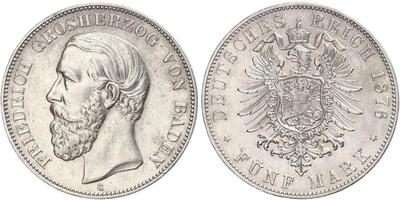
| View |
 German East Africa (1885-1919)
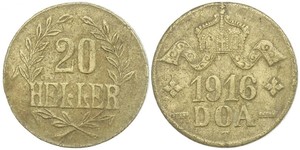
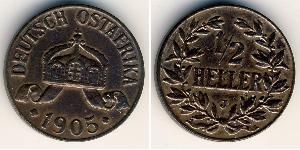
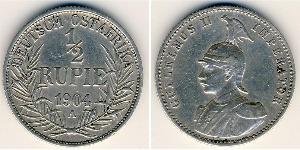
| German East Africa (1885-1919) | Link to Wikipedia |
German East Africa
The Empire in the African Great Lakes: A History of Trade, Power, and Numismatic Legacy.
Historical Background
Welcome to this exhibition dedicated to one of the most dynamic chapters of European expansion. Before a single silver coin was struck for circulation here, German eyes were fixed on the vast African Great Lakes region, drawn by rumors of riches hidden within its interior. This territory evolved rapidly from an area governed by trading companies and private adventurers into a formal protectorate under Imperial Germany.
The history begins in earnest with Carl Peters, an adventurer whose ambitions defined the era’s colonial policy. In 1885, Bismarck signed the imperial charter that officially granted authority to Peters’ company. This moment marked a transition from informal treaties and skirmishes to formal administration. It was not long before German military presence solidified control over Bagamoyo, Dar es Salaam, and Kilwa.
Economic drivers were central to this expansion. While the initial economy relied on hunting and gathering for exports like ivory and rubber, a more structured plantation system grew under European supervision. The administration began emphasizing sisal cultivation as well as coffee plantations by 1906. This massive industrial growth necessitated complex logistical networks. A booming economy requires liquidity; trade between coastal ports and interior markets demanded a reliable medium of exchange that could facilitate the movement of goods from the coast to the hinterland, where vast labor forces worked on fields.
The political landscape was volatile during this era. The colony faced rebellions such as the Hehe resistance under Chief Mkwawa and later the massive Maji Maji Rebellion in 1905. These conflicts disrupted trade routes and necessitated a stronger monetary control to fund military garrisons of Schutztruppen officers and native enlisted men across Dar es Salaam, Moshi, and Iringa.
The economic narrative shifted drastically when global markets for rubber became unstable during the early years of the colony’s formal rule. It was not until large plantations found reliable sources in sisal that a stable colonial economy emerged. The money flow here would reflect these shifting priorities—from speculative ventures to state-backed industrial exports—culminating just as Imperial Germany faced defeat in World War I.
Currency and Coinage History
In the context of this vast territory, currency was a crucial instrument of administration. In its early years, commerce along the coast often utilized local barter systems or foreign currencies before official government intervention established an imperial monetary standard.
The evolution from informal trade to structured finance mirrored the colony’s political ascent. German rule required a standardized method for collecting taxes and paying laborers who worked on plantations that suffered under poor employment conditions. While Berlin had banned forced labor officially, practical realities often meant coinage was the primary vehicle through which these economic mandates were enforced.
As commerce expanded along what is now Tanzania's mainland, German East Africa introduced currency notes alongside silver denominations to facilitate trade between coastal settlements and interior regions like those of Burundi or Rwanda. The colony served as a bridge connecting different spheres of influence established in treaties with Britain over time. Before the partition following World War I, this region maintained its own distinct monetary character separate from neighboring British protectorates.
This history is deeply rooted in how money facilitated the movement of wealth extracted from local populations toward global markets for sisal and coffee, though often leaving those who labored behind them with little to show. The currency system was essentially a mechanism to extract value while maintaining order.
Mints and Coin Production
The production of numismatic items during this era primarily occurred at the Central Mint in Berlin rather than locally within African soil, though small-scale local striking or casting may have existed for specific military purposes.
This centralization is typical for German colonial issues. The coins were minted with precision to maintain the reputation of the Empire and reflect its industrial capabilities back home. These mints operated under strict imperial standards, ensuring that every mark piece was uniform in weight and composition across different territories like Togoland or South West Africa.
The design aesthetic favored classicism mixed with realism, featuring eagles and shields common to German iconography at the time. The artistry aimed to depict strength and authority rather than local cultural symbols initially found on indigenous coinage systems which were often discarded for more European standards of trade.
Notable Coins
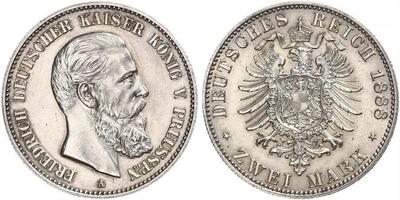
- **The Imperial Silver Mark Pieces**: Amongst the most significant types are silver denominations struck during the reigns of various German emperors. The designs typically feature intricate heraldry, showcasing coats-of-arms or imperial eagles flanked by wheat ears symbolizing agricultural success in sisal and coffee production.
These coins reflect a period when German administration was attempting to assert order over vast distances. Collectors appreciate these for their condition-dependent artistry rather than raw rarity alone.
- **The 10 Mark Silver Eagle**: Perhaps the most iconic type associated with this region, these issues were often struck in Berlin and intended for high-value transactions on plantations or export markets. The reverse sides usually display a shield representing German dominion over diverse territories.
This coin is highly sought after by collectors seeking to represent the peak of colonial administration before 1914.
Cultural Legacy
The coins from this era offer a tangible link between Berlin and East Africa, serving as symbols of German ambitions. However, it must be understood that while they were issued with dignity on the metal plate, their usage often coincided with harsh realities mentioned in historical accounts regarding labor ordinances.
Collectors should view these items not just as trade tokens but as documents of empire-building and exploitation where currency was used to pay wages for forced or coerced work. The designs themselves—often featuring military motifs such as swords (Waffenschild) on the reverse—are direct references to the Schutztruppe mentioned in historical records who enforced colonial boundaries.
The legacy remains visible today through artifacts found across East Africa that were once instruments of economic control.
For Collectors
This collection is a unique window into how currency was weaponized during imperial expansion. Unlike many colonies in Asia or America, German East Africa retained its monetary distinctiveness until partition at the very end of World War I.
The scarcity and historical weight make these pieces exceptionally desirable for enthusiasts interested in pre-WWI colonial numismatics.
We hope this exhibition offers a glimpse into how metal tokens once flowed through the trade routes established by caravans like those led by Emin Pasha, facilitating commerce that would eventually reshape modern East Africa's borders and economy.