| View |
| preceded by | ||||
|
||||

|
|||||||
 Argentine Confederation (1831 - 1861)
|
|||||||
| succeeded by | ||||
|

| Argentine Confederation (1831 - 1861) | Link to Wikipedia |
Argentine Confederation: History, Coinage and Collectibles
Historical Background
The formation of a sovereign nation in South America following the Napoleonic Wars was not merely a change of government; it represented a complete transformation of social structures and economic lifelines. The Argentine territory evolved from Spanish colonial dependencies into a loose confederation where regional interests clashed with central authority until a more stable federal republic emerged later in the nineteenth century. For a long time, Buenos Aires acted as both a commercial port and political hub, yet internal divisions often hindered unified trade policy.
The struggle for independence shaped every aspect of daily life from agriculture to finance. Trade routes were initially dictated by geography rather than government borders, leading merchants across the Pampas who relied on silver bullion more than paper currency during unstable periods. Culture emerged in a climate where distinct regional identities coexisted with shared colonial roots. This tension between local autonomy and national unity became embedded into public symbols, most visibly manifesting in how money was used to pay soldiers, buy livestock, or fund the state treasury.
Currency and Coinage History
In the early stages of self-governance, there were no unified currency laws. The economy relied heavily on silver dollars inherited from Spanish America that continued to circulate for decades under new flags. These foreign coins held intrinsic value because they contained precious metal rather than fiat promise. As trade flourished along the Rio de la Plata and Atlantic coastlines, the government attempted to standardize denominations.
Monetary policy was closely tied to national sovereignty; a stable coin meant stability in commerce. The state sought to mint its own silver dollars that matched international standards so goods could move freely between Argentina and Europe or other nations on the continent. This transition from colonial currency to sovereign issues took time, requiring the establishment of confidence among merchants who often preferred familiar coins over new ones printed by young governments.
Economic shifts dictated changes in what money was available for daily use during this era. Inflation caused periods where paper notes became worthless quickly while silver remained king as store of value. This reality meant that collectors today can find a deep narrative in simple metal pieces, representing the financial anxieties and triumphs of a young state building its wealth.
Mints and Coin Production
The primary center for producing this historic coinage was located in Buenos Aires, where technology transferred from colonial presses to new national machinery. The Casa de Moneda operated under varying political regimes that influenced design priorities and output quantities. Early mintage methods included hand-struck dies which showed the hammer marks of earlier centuries until steam-powered press mechanisms improved consistency.
The artistry evolved significantly between decades, moving away from strictly colonial imagery toward symbols of liberty like stars representing provinces. While production quality fluctuated depending on government funding and political stability, certain periods featured exquisite detail in portraits and heraldry found on the coin faces. The metal composition mostly remained silver during these foundational years as gold reserves were too scarce to issue high denomination pieces frequently.
Notable Coins
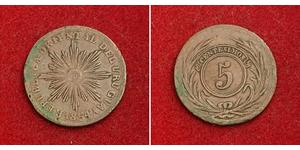
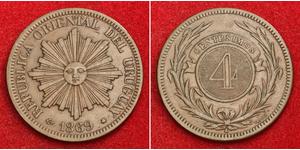
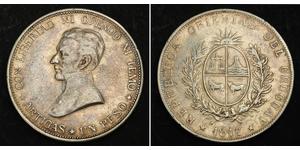
The Federal Dollar issues from this period remain highly sought after by specialists seeking transitional numismatic specimens. These coins often feature the bust of national figures surrounded by stars denoting the constituent provinces of the Confederation. Collectors value them not just for condition but because they mark the moment when a distinct economic identity was being forged separate from Spain.
Silver dollars minted during this era typically bear legends that reference freedom or liberty, though phrasing varies based on local administration at specific times. Their reverse designs often display allegorical representations of commerce or nature rather than royal arms found in Europe. For investors and historians alike, these pieces represent a rare snapshot of the economic reality before standardized paper banking became reliable.
Later issues brought more modern engraving techniques to metal surfaces that captured facial expressions with increased realism. This progression mirrors how Argentina integrated into global markets while retaining national pride through its symbols. A coin found in worn condition tells the story of a bustling market, while an uncirculated example reflects storage within government vaults or bank reserves.
Cultural Legacy
The coins produced during this foundational era serve as physical artifacts that preserve cultural identity for future generations. The imagery chosen by designers reflected values held most dear to citizens at the time, including agriculture and trade rather than war monuments often seen in European coinage. Religious symbols were generally subtle compared to earlier colonial issues which displayed Catholic motifs explicitly.
Symbols of sovereignty such as the sun appeared on various denominations, signaling that light was spreading over new lands freed from foreign rule. These designs helped unify different regional populations who might otherwise have remained divided politically through visual communication found in currency circulating across diverse landscapes. The evolution of these images tracks how national self-image matured and became more complex.
For Collectors
This nation offers a compelling chapter for any series focused on independence or Latin American history due to its role in shaping economic thought during the nineteenth century. Coins from this period connect directly with historical accounts of expansion into interior territories, allowing holders to understand how wealth was generated through livestock and farming rather than gold mines.
The scarcity arises not just from rarity but often because surviving examples show wear consistent with heavy circulation use before banking systems improved trust in paper money. A well-preserved piece provides a tangible link between the past political climate of regionalism versus centralization that defined South America for decades to come. These items offer an opportunity to study design history and see how artistic trends traveled across oceans through maritime trade routes.