| View |
| preceded by | ||||
|
||||
| Abbasid Caliphate (750-1258) |
| succeeded by | ||||
|

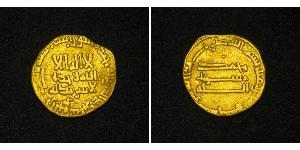
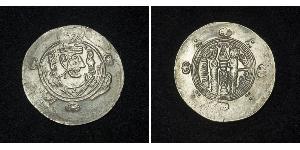
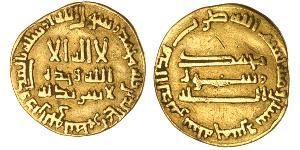
| Abbasid Caliphate (750-1258) | Link to Wikipedia |
The Abbasid Caliphate: History, Coinage and Collectibles
Welcome to a journey through one of history's most transformative civilizations. Today, we stand within the historical footprint of the great Arab world that flourished across centuries under what is known as the "Round City", Baghdad itself. Our focus lies on the Abbasid Caliphate (c. 750–1258), an empire that bridged the ancient and medieval worlds, fostering a renaissance in science, art, and trade.
This period marks one of humanity's great intellectual awakenings, often called the Islamic Golden Age. For collectors, these coins represent more than just metal; they are tangible artifacts from the era where mathematics was perfected by astronomers who built observatories to map stars for navigation and calendar construction. The coinage produced during this dynasty reveals a fascinating evolution in artistry, epigraphy (the study of inscriptions), and economic philosophy that continues to captivate numismatists worldwide.
Historical Background
The story begins not with swords alone, but with the shift in political gravity. The early Abbasids arose as a counterweight to Umayyad dominance by leveraging support from non-Arab Muslims (mawali) and Persians who felt oppressed by the centralization of power in Damascus. This revolution began in Khurasan before sweeping west into Iraq.
The true heart of this new state was established when Caliph al-Mansur founded Baghdad in 762. For nearly a century, this city became the capital and center for scientific exchange between civilizations like Greece, India, and Persia. This era coincided with massive trade networks connecting China to the Mediterranean.
Economic stability is crucial for any currency system. The empire's wealth was derived from agriculture in Iraq (specifically irrigation systems) as well as taxes on merchants traveling along ancient Silk Road routes that bypassed Byzantine controls and entered through Basra or Kufa before flowing into Baghdad itself. This robust trade required a secure, standardized medium of exchange to facilitate commerce across the sprawling empire.
The political structure was hierarchical but dynamic. While early caliphs held absolute authority, later in history during 10th century, local dynasties often minted their own coins while using Abbasid iconography (names and titles), which is a common feature collectors must identify to date pieces correctly.
Currency and Coinage History
To understand the value of these objects in our hands today, we must look at how money evolved. In ancient times, currency often reflected local standards or foreign influences (such as Sasanian Persian coins). However, under al-Mansur and his successors, a centralized attempt was made to issue coinage that declared absolute Caliphal authority over the entire empire.
The earliest significant reforms occurred when new caliphates needed to assert themselves against rival rulers like those who took control of Iraq later or the Umayyads in Spain (Cordoba). Initially, they relied on gold dinars and silver dirhams modeled after Byzantine standards. But unlike foreign coinage which often lacked religious text, Abbasid coins eventually bore Quranic verses.
A critical moment for collectors is understanding the shift from simple commemorative issues to standard monetary policy. The first major reform involved declaring independence or local authority over minting rights—often granted by a central decree in Baghdad—to support state finance during military campaigns against rivals like the Byzantine Empire, who also controlled key trade goods.
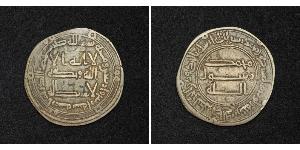
The role of coinage was strictly governmental but deeply religious; every silver dirham struck bore verses from the Quran. This ensured that money served as daily reinforcement for Islamic teachings while circulating in markets and caravanserais across Persia (modern Iran) and Arabia.
Mints and Coin Production
The physical production of these artifacts is a marvel of technological engineering available at the time, utilizing water-powered mills to grind metal into fine sheets before striking them. The famous mint in Baghdad was known for its artistic consistency but also faced challenges from regional governors.
During periods when provincial rulers like Saffarids and Tahirids gained autonomy (around 9th century), they set up their own mints, though these often remained dependent on the Caliphal center. Collectors must recognize that many coins minted in Samarra or Kufa carry specific local marks but share common iconographic themes established by the central administration.
The artistic evolution from crude metal work to sophisticated calligraphy is evident when studying the transition of script styles known as "Kufic." In later periods, coinage design became more complex. For example, in Samarra (capital under al-Ma'mun), coins often displayed intricate patterns reflecting Persian architectural influences or even depictions that were historically unusual for religious texts.
Mint control was strictly maintained because a bad issue of metal could devalue trade credit quickly if the Caliphate failed to keep standards rigid. A standard set by al-Mansur allowed silver dirhams (sometimes called "Fulus") to hold their value across vast distances, enabling merchants from Baghdad to buy silk in China and sell spices in Egypt with confidence.
Notable Coins
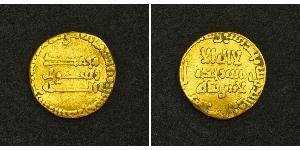
The Dinar of al-Mansur: This is often considered the crowning jewel for early Abbasid numismatics. It marks a decisive move away from Umayyad-style coinage to reflect Abbasid power. These are gold coins minted shortly after 765 AD (ruling era). They feature high weight standards, often weighing around 4 grams of fine gold per unit.
The Early Silver Dirham: Unlike modern currencies which vary wildly in size and composition based on location, these silver pieces were struck at strict weights. The most famous issue comes from the reign of Caliph Harun al-Rashid (late 8th/early 9th century). This was during the Golden Age, so coinage quality skyrocketed.
The Samarra Issue: Produced between 836 and 842 AD when Baghdad became less important than the new capital of Samarra. These coins have a unique artistic style with different calligraphy styles often attributed to regional artists or specialized scribes rather than generic mass-production, making them highly desirable for specialists.
The Copper Fulus: While not always as sought after as gold/silver in ancient times (due to low intrinsic metal value), these copper cash coins are important because they served the working poor. Collectors today pay increasing attention to their intricate Kufic lettering, which often bore unique prayers or names of the caliphs ruling during that specific era.
Cultural Legacy
The legacy of this dynasty is visible in every inscription on a silver coin from Baghdad found centuries later. The art style evolved to reflect Islamic culture, moving away from figurative human representation (forbidden religious tradition) toward abstract geometric patterns and intricate script design.
This aesthetic evolution mirrors the broader intellectual shift where philosophy, medicine, astronomy were patronized by rulers who believed these sciences could better govern society through knowledge rather than superstition. It is fascinating to imagine that coins used in medieval times as currency for buying bread or paying taxes might have been produced within workshops staffed by scholars who wrote books on algebra and geometry just a few miles away.
The coinage serves as a mirror of the state's changing political fortunes; when central power waned, local governors printed more coins with simplified text to cover costs quickly. Conversely, during times of prosperity like under Harun al-Rashid or in Kufa (the revolutionary base), high-quality minting was used to assert prestige over rivals who sought control of trade routes.
For collectors
The Abbasids represent a foundational era for understanding the development of Islamic coinage. For enthusiasts, acquiring specimens from early caliphates like al-Mansur or those issued during Samarra is key because these pieces carry distinct historical context often lost in later periods.
Why are they important? Because unlike many modern currencies which rely purely on government fiat without intrinsic value (value of gold/silver), Abbasid coins were backed by precious metals that had a tangible worth, making them valuable assets. Their rarity is due to the high quality required for trade use; merchants would reject poor metal or poorly struck pieces.
In conclusion, studying this coinage reveals how economic power was consolidated around Baghdad as the capital and allowed it to become one of history's great intellectual hubs until the Mongol invasions in 1258. For collectors today, owning a piece from this dynasty is akin to holding a page from the world's first encyclopedia.
The coins are not merely financial instruments; they represent an era where artistry and religion merged with practical governance on copper or gold plates. Understanding their design helps us appreciate how complex systems were managed in antiquity long before printing press technology allowed for mass dissemination of knowledge, relying instead on skilled artisans to strike the face of empire.