| View |
 Brandenburg-Prussia (1618-1701)

| Brandenburg-Prussia (1618-1701) | Link to Wikipedia |
Brandenburg-Prussia: History, Coinage and Collectibles
Historical Background
The story of Brandenburg-Prussia is one of consolidation, ambition, and the slow emergence of a unified state in Central Europe. Beginning with the Union of Prussia and Mark Brandenburg under the House of Hohenzollern in 1618, this region evolved from a collection of scattered territories into a formidable political power. For coin collectors, understanding the rise of this entity is essential to appreciating why their silver pieces carry such weight today.
The narrative begins with Elector John Sigismund and continues through Frederick William, known as The Great Elector. It was during his reign that Brandenburg-Prussia transitioned from a feudal agrarian society into an industrializing state focused on grain exports to the West. This economic shift demanded reliable monetary systems capable of handling vast quantities of silver bullion moving across Europe.
Culturally, this period laid the groundwork for Berlin’s reputation as Prussia's intellectual capital. The Great Elector issued decrees encouraging religious tolerance and attracting skilled artisans from across Europe. These immigrants brought metallurgical expertise to new mints in Berlin and beyond. As Brandenburg-Prussia expanded its borders through diplomacy rather than solely conquest during the Thirty Years War, a need for internal stability grew. A stable currency was required to pay soldiers, tax farmers, and fund infrastructure projects that connected the scattered lands of this growing nation-state.
The consolidation process culminated in 1701 when Frederick I assumed the title King in Prussia, transforming the Electorate into a Kingdom. This elevation changed numismatic output drastically. Coinage shifted from local mint issues representing various territorial lords to standardized royal coinage that proclaimed sovereignty over all subjects of Berlin.
Currency and Coinage History
In early Brandenburg-Prussia, money was fragmented. Local towns issued coins based on their own specific weights and standards, often leading to confusion in trade across borders. Merchants moving grain from the east of Germany needed a reliable standard. The Great Elector recognized that economic growth required monetary unity.
The primary reform came with the establishment of an exclusive royal mint in Berlin. Before this, silver currency varied significantly between towns and duchies within the state's jurisdiction. Under Frederick III (the Great), the Prussian Thaler became a dominant standard for Northern Europe trade routes connecting Hamburg to Russia. This period marked a distinct era where coinage was less about religious iconography on one side and more about asserting political authority through portraiture.
Copper currency, often called Grolsch or Kreuzer coins, circulated widely among the common populace. These were crucial for daily markets but were prone to debasement during times of war. The government had to exercise strict control over copper minting because inflation could easily destabilize wages in a society transitioning from feudalism to capitalism.
Silver continued to be king as it was used for foreign trade and high-value domestic transactions. Gold florins existed but were more common earlier or later periods, often serving international treaties rather than internal commerce. The shift toward the Berlin standard ensured that Brandenburg-Prussia could act independently in European financial politics.
Mints and Coin Production
Berlin became the undisputed center of monetary authority within this state by 1701, though earlier electors utilized local ducal mints. The transition to a royal mint introduced new artistic standards. Previously, coins were often produced quickly for immediate liquidity needs with rough finishes.
The Berlin Mint adopted high-pressure stamping and improved die-cutting techniques that allowed for sharper details on portraits of the monarchs. This was not merely aesthetic; it ensured authenticity in an era where counterfeiters could easily degrade a silver mark. The mint operated under strict supervision, ensuring that gold content matched official standards.
- The Berlin Mint remained operational throughout the state's golden age up to 1806.
- Copper production occurred at satellite facilities during wartime shortages when precious metal was reserved for army and treasury needs.
A crucial advancement in numismatic technology involved the use of alloy metals like copper-nickel or silver-alloy brass. While not always official currency, these were often used as trial pieces to gauge market demand before issuing full royal coins. The artistic style evolved from intricate Baroque religious scenes on early town pieces to Neoclassical portraits showing kings in military dress later under Frederick the Great.
The mintmaster held significant power and influence over regional economics. Their ability to control production speed directly impacted how well a local army was paid or whether taxes could be collected efficiently from grain merchants.
Notable Coins
Collectors often prioritize the narrative behind specific pieces rather than just their market value today.
- The Great Elector Thaler: This silver piece marks the transition period where Berlin began issuing standard currency under royal influence. It features early portraits of Frederick William and represents a key moment in state-building history, showing how power shifted from local lords to the crown.
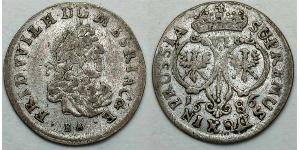
- The Silver Groshen: Perhaps most common for everyday use during the 18th century. These small silver coins circulated widely within markets as grain was traded across Prussian borders. Collectors appreciate these because they represent daily life rather than grand ceremony.
- The Gold Florin of Frederick II: During his reign, the king focused on intellectualism and military strength but also maintained high standards in coinage artistry. Pieces with his profile or horsemen are highly sought after for their refined details compared to earlier rougher issues.
Equestrian Portraits:
In the late period of Brandenburg-Prussia, coins often featured equestrian statues on one side representing military power. This became a signature design trait that distinguishes these pieces from other German states. The reverse usually carried imperial symbols or mottos emphasizing loyalty and law.
Cultural Legacy
The coinage of Brandenburg-Prussia serves as a mirror for its civilization's development during the Enlightenment era and preceding it.
Symbols:
- Early coins featured religious imagery to signify divine right rule, which slowly gave way to portraits symbolizing personal authority under the monarchs. This shift reflects broader cultural moves away from strict church doctrine toward secular governance in Berlin.
Economy:
- The prominence of silver coins aligns with Prussia's agricultural strength and trade reliance on grain exports, linking money directly to the land. This focus distinguishes Brandenburg-Prussia from other regions that might have minted mostly copper or brass for internal circulation.
Rulers:
- The evolution of monarch portraits—from religious symbols on early Elector pieces to stern, military profiles under the Hohenzollern kings—illustrates how personal rule replaced feudal obligation. Collectors see this visual story etched in metal.
For collectors
This territory remains significant today because its coins often possess a unique blend of rarity and historical narrative found elsewhere only rarely. Early Brandenburg pieces were made for local town economies, making them rare compared to later Berlin unifications that flooded markets after the 17th century reforms.
The condition in which many silver pieces are preserved reflects their status as currency rather than ceremonial tokens. For auction buyers and hobbyists alike, finding high-grade examples of early mint standards provides access to tangible artifacts from one of Europe's most transformative political periods.