| View |
| preceded by | ||||
|
||||

|
|||||||
 Republic of Zaire (1971 - 1997)
|
|||||||

| succeeded by | ||||
|

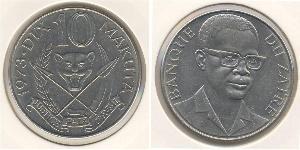
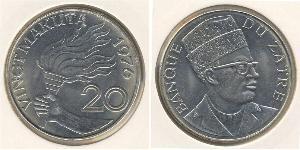
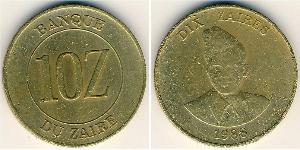
| Republic of Zaire (1971 - 1997) | Link to Wikipedia |
Zaire: History, Coinage and Collectibles
Welcome, fellow historian and collector. Today we turn our gaze to a nation defined by dramatic political shifts and profound identity changes, Zaire. For collectors seeking to understand the story of Central African metalwork through its numismatic artifacts, this period offers some of the most compelling narratives in world history.
Historical Background
The journey begins with independence from Belgium, a process that left the new state navigating complex economic ties. By 1960, following decolonization, Mobutu Sese Seko emerged as a dominant political figure, eventually seizing power in a coup d'état during turbulent times marked by the Congo Crisis. This era of instability and reconstruction set the stage for one-man rule.
Central to understanding Zairian history is the concept known as "Authenticité." Beginning around 1970 and intensifying under Mobutu's direction, this was a campaign designed to strip away colonial influences—both architectural and cultural. This shift had immediate repercussions for coinage; symbols of Europe were purged in favor of indigenous imagery. The state sought to create a unified national identity that celebrated African heritage while enforcing strict authoritarian control. As the Cold War shifted alliances after 1989, external support evaporated, leaving Zaire's economy and currency struggling against hyperinflation before the regime collapsed entirely in the mid-1990s.
Currency and Coinage History
In terms of monetary evolution, we see a clear transition from a Francophone system to a localized one. While early issues utilized names similar to Belgian Congolese currency (like "Congo" in legends), the shift toward independence saw new mints establish themselves with designs reflecting sovereignty.
The introduction of Mobutu's name and title onto coinage began as he consolidated power. The legend on coins was not static; it changed whenever his official titles were altered, a feature that distinguishes this series from others where legends remain consistent over decades. This created distinct collecting categories based purely on the changing political decrees rather than just production dates.
The economic trajectory of the era tells its own story in metal value. Inflation eventually eroded trust in small denominations like cents or "mobumbas," leading to a devaluation where higher values were needed for daily transactions. The currency evolved from standard silver and copper-nickel coins issued by state mints into various forms that, later on, served as propaganda tools rather than pure mediums of commerce.
Mints and Coin Production
The minting infrastructure was strictly controlled by the government in Kinshasa. During this period, there were no private coiners or independent workshops; every piece of metal produced carried a seal of state approval used to project authority. The mints themselves served as factories for political messaging rather than commercial necessity.
The artistic characteristics changed significantly under Authenticité policies. We see the removal of Latin script in favor of local phonetic scripts on coins, though usually French legends persisted due to trade ties until later dates. Designs focused heavily on flora and fauna unique to the region—elephants, gorillas—and portraits that emphasized military prowess or traditional dress rather than European tailoring.
Notable Coins
The 1967 series marked an early step in state-building under Mobutu's direct control. These issues are significant for collectors because they represent the stabilization of power shortly after the coup and feature transitional elements before the strict "Zaire" branding was fully applied.
- Early Transition Issues: These coins often display a blend of colonial legacy with new national emblems. Collectors look for subtle variations in legends where the country's name transitions between different names used before 1971 and after renaming to Zaire.
The "Authenticité" period yielded some visually striking issues, including those depicting Mobutu wearing traditional clothing or bearing titles that emphasized his role as a warrior. These designs are highly prized for their boldness in rejecting Western aesthetics entirely during the 1970s and early 80s.
As inflation rose sharply after the collapse of U.S. support, we enter an era where larger denominations became more common on circulation coins rather than notes alone. The final pre-collapse issues are historically important as they capture a nation in economic distress but still attempting to project power through grand designs until that very end.
Cultural Legacy
The legacy of Zairian coinage is one of cultural identity reassertion and political consolidation through art. The coins serve today not just as historical artifacts, but as documents showing how a state attempted to reinvent itself completely from the ground up. They tell us about Mobutu's personality—his rejection of his Western given name in favor of "Mobumba"—and how that personal transformation mirrored the national one.
The shift away from European-style designs toward local wildlife and indigenous dress marks an important historical milestone for African numismatics. Before this era, few countries fully embraced a design program so aggressively centered on specific cultural symbols to reject colonial heritage. These coins remain educational tools showing how governments use art to build ideology.
For Collectors
If you are building a collection of Zairian numismatics, understand that the condition and historical narrative are paramount rather than catalog numbers alone. You are collecting physical proof of a regime's attempt at total control over its populace through currency reform.
The focus should be on specimens from different periods: early stabilization coins, high-quality proofs showing Mobutu in traditional dress during his mid-reign campaigns for Authenticity, and later issues that reflect the economic strain before final collapse. Avoid focusing solely on market values; instead consider how each coin fits into a timeline of political change.
This is an area where historical context enriches every piece you hold. Understanding why names were changed from Congolese to Zairean helps explain the rarity and interest in certain varieties. The stories behind these coins offer a window into the struggle for post-colonial identity, making them far more than just metal discs—they are pieces of African history.