| View |
 Cayman Islands (1670 - )
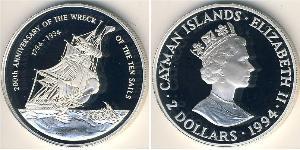
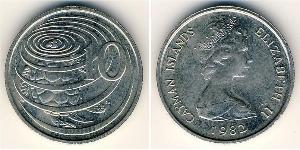
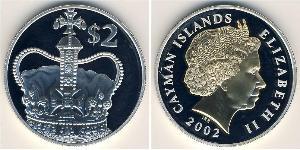
| Cayman Islands (1670 - ) | Link to Wikipedia |
Cayman Islands: History, Coinage and Collectibles
Historical Background
Welcome to the storied narrative of an archipelago that once served as a hidden harbor for history's most famous outlaws before blossoming into one of the world's greatest offshore financial centers. The Cayman Islands, comprising Grand Cayman, Cayman Brac, and Little Cayman, possess a geographical location that has dictated their entire economic existence—situated in the western Caribbean Sea between Mexico and Cuba.
The islands' story begins with Christopher Columbus’s voyage to the New World in 1503. Although initially named "Las Tortugas" by the admiral due to an abundance of sea turtles, subsequent decades transformed this name as pirates established their presence here during a time when no immediate formal colonization followed his sighting.
The narrative shifts significantly with the Treaty of Madrid in 1670 and later settlements that introduced permanent English-speaking populations from Jamaica starting in the 18th century. For centuries, George Town served as a vital stopover for maritime traffic between North America and the Caribbean colonies. This strategic positioning meant that early commerce relied heavily on trade goods rather than local currency production.
The political timeline of colonization is crucial to understanding how the islands managed their autonomy while remaining British Overseas Territories after Jamaica gained independence in 1962. The Caymans reverted directly under British rule but maintained a high degree of internal self-governance that continues today. This unique status, combined with its location near Miami and the Florida Keys, fostered an economy deeply tied to international finance.
The historical landscape is one where trade was king before taxes were levied on wealth in this region. The legacy of slavery ending in 1834 paved the way for a modern labor force that contributed to the islands' development from pirate haven to tax-free port, creating an economic environment characterized by stability and lack of local government debt.
Currency and Coinage History
The evolution of money on this archipelago followed the trajectory common to British Caribbean territories until recently. In early centuries, trade utilized Spanish dollars (pieces-of-eight) brought from Mexico via ships that docked for provisioning or respite. As commerce grew with tourism in the 1950s following the opening of Owen Roberts International Airport and banking sectors established shortly thereafter, formal monetary standards became necessary.
The official currency transition period was marked by a move toward pegging local value to the US Dollar given its proximity and trade relationships. The Cayman Islands dollar (KYD) emerged as the primary unit, though it is important for collectors to note that because of this financial orientation, the islands frequently accept other major currencies like the United States Dollar in legal tender due to their close economic ties with North America.
The monetary policy has historically been distinct from many Caribbean neighbors. Unlike most nations that require local minting capacity or complex banking systems for sovereign currency issuance, Cayman Islands currency was pegged at parity (C$1 = $US1) to ensure the stability required by wealthy international investors and tourists who frequent this low-tax zone.
Mints and Coin Production
The production of coinage in The Cayman Islands reflects a pragmatic approach often adopted by modern offshore territories. While the nation possesses no historic local minting infrastructure comparable to London or Paris, it relies on premier facilities such as those operated by private manufacturers like Canadian Mint companies.
This outsourcing ensures high-quality production standards that appeal to collectors globally. The coins produced for general circulation are struck at these international centers but feature distinct designs commissioned locally in George Town. This arrangement allows the territory to maintain control over its brand identity while utilizing global precision manufacturing.
Coinage design has evolved to reflect a shift from colonial symbols toward nature-focused imagery. Early issues featured traditional British motifs consistent with Commonwealth territories, such as images of King Victoria or Elizabeth II alongside floral wreaths typical of Caribbean colonies.
Notable Coins
- The First Modern KYD Set (1970s/80s):
- The Turtles Series:
- The Sea Bird Series:
- The "Pirate Penny":
- The Independence Commemorative Coins:
Historically significant as the era where distinct currency notes and coins began circulating exclusively to support local banking independence. The reverse designs typically depict Grand Cayman’s coastline or agricultural scenes, marking a divergence from strict British patterns.
Turtles are an integral part of the islands' natural history and cultural identity as "Las Tortugas." Coins struck in precious metals during commemorative issues often feature highly detailed engravings of sea turtles, showcasing the craftsmanship involved. These coins serve not just as currency but as edible or collectible tokens that celebrate biodiversity.
In more recent decades (1980s-2000s), coinage programs began highlighting local marine and avian life. The Great Egret, the Magnificent Frigatebird, or other endemic species are featured prominently on reverse faces.
While rare in standard collections of coins specifically minted for circulation before independence, numismatic historians often trace back to early tokens representing the pirate era. Silver dollars found from this period hold significant value as artifacts rather than circulating currency.
In celebration of full self-governance and financial milestones (such as 50 years), special editions were released often in gold or platinum, featuring designs that highlight the island’s geography like The Bluff on Cayman Brac.
Cultural Legacy
The coinage of The Cayman Islands acts as a tangible record of its transition from an outpost used by shipwrecked sailors to a high-end financial capital. When collectors examine these coins, they encounter a cultural identity that is unapologetically Caribbean yet distinctively British in heritage.
Unlike many colonies where currency became a vehicle for colonial suppression or overt political messaging, The Cayman Islands often use its coinage as a form of environmental education and tourism promotion. By depicting local flora and fauna—the limestone reefs, the tropical forests, and unique birds—every denomination serves an almost conservationist purpose.
The stability provided by the currency reflects the islands' economic model: it has no income tax on earnings or stored wealth for businesses and individuals seeking residency there. This lack of direct taxation translates into a robust monetary history that does not suffer from inflationary issues common in developing economies, making its coins reliable artifacts.
For collectors
The Cayman Islands currency market offers significant value to numismatists who prefer high-quality production standards and unique designs found only within British Commonwealth territories. The key collecting strategies involve focusing on early circulation sets from the post-independence era (late 1960s through late 70s), where coins were transitioning between colonial designs.
The "Pirate Haven" Appeal:
Collectors should be aware that due to their historical reputation as a haven for privateers, artifacts of this period are incredibly rare and valuable. While standard circulating change often features US Dollars in everyday use alongside local units, the distinction allows collectors to hunt down older versions.The Geographic Advantage:
Because these coins share design elements with neighboring territories but maintain distinct legal status as a British Overseas Territory, they possess intrinsic historical value representing a specific era of global trade. For those interested in history enthusiasts and auction buyers looking for high-quality currency rather than speculative metal bullion, The Cayman Islands offers a fascinating window into how geography shapes financial systems.Summary:
The islands' numismatic legacy is defined by quality craftsmanship often attributed to top-tier mints. While their economy relies on tourism and finance—both of which mushroomed in the 1970s—the coins produced represent that wealth without imposing debt, a unique concept for monetary history today.