| preceded by | ||||
|
||||

|
|||||||||
 Grand Duchy of Oldenburg (1814 - 1918)
|
|||||||||


| succeeded by |

| Grand Duchy of Oldenburg (1814 - 1918) | Link to Wikipedia |
The Grand Duchy of Oldenburg: History, Coinage and Collectibles
Historical Background
Welcome to a journey through one of Germany's most fascinating yet often overlooked microstates within the German Confederation. To understand the numismatic story of the Grand Duchy of Oldenburg—or what was affectionately known as Holstein-Oldenburg—one must first appreciate its unique geography and political standing. Unlike many centralized European powers, this grand duchey possessed a fragmented nature at birth in 1815, comprising three widely separated territories: Oldenburg itself near the Jade Bay, Eutin further inland, and Birkenfeld nestled high in the Hunsrück mountains.
This geographical sprawl was as much of an identity crisis for its rulers as it was a logistical challenge. However, through political maneuvering at Vienna's Congress, this disparate collection became a distinct sovereign entity within the North German Confederation before eventually integrating into the Empire itself. The narrative is one of steady evolution from enlightened absolutism to constitutional monarchy.
The cultural fabric was unique; it had no large aristocracy and few feudal privileges compared to its neighbors. This lack of a powerful noble class meant that trade grew rapidly along the North Sea coast, connecting Oldenburg merchants directly with Britain and Scandinavia rather than through an intermediary nobility. The arrival of constitutionalism in 1849 was not merely political theater; it signaled an economic shift toward greater transparency and standardized commercial law.
This era marked a turning point where the state began to view coinage as a tool of public service, moving away from purely royal prerogatives toward serving the daily needs of its liberalized citizenry. By 1870, Oldenburg had settled firmly into the Prussian sphere, aligning its administrative and economic structures with the Kingdoms to the east.
Currency and Coinage History
The story of money in Oldenburg is a testament to the broader evolution of commerce across Northern Europe. For much of its early existence as an independent entity within German politics, currency usage was fluid and pragmatic. In many ways, these territories functioned less like modern nations with strict borders on banknotes or coins and more like distinct economic zones.
The transition from external coinage to a sovereign monetary system began seriously during the 19th century as trade volumes increased between Oldenburg's bustling ports of Bremerhaven (leased) and its own coastal enclaves. While smaller copper issues existed for local petty commerce, it was silver that defined statehood.
A pivotal moment occurred in the latter half of the century when gold standards were reformed across the continent. As Germany unified under imperial banners around 1871, Oldenburg abandoned its unique sovereign status and adopted the Imperial German Mark standard. However, collectors should not view this as an end to interest, but rather a new chapter where state identity was transferred onto national currency designs.
Mints and Coin Production
The mechanics of how these coins were born are crucial for understanding their rarity and condition today. The primary minting operations for the Grand Duchy did not rely solely on centralized government buildings but utilized a tradition where contracts with private workshops or specialized facilities were common.
A key location in this production chain was often linked to Steinbeck, a town that served as a significant hub for coin striking technology before its absorption into Prussia. Here, skilled artisans and engravers applied their craft using the latest pressing technologies of the Industrial Revolution while maintaining artistic traditions rooted in Northern European design.
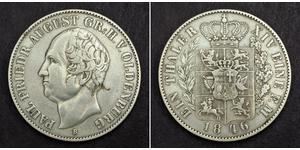
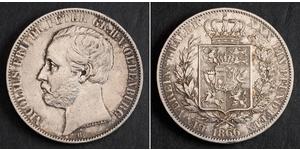
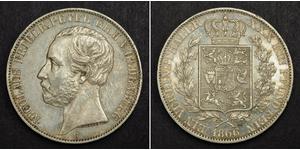
The mints were responsible for issuing copper coins essential for daily wages—market prices, bread costs—and silver thalers (later gulden) for significant transactions. The striking process often required a delicate balance between high-relief designs that depicted royal grandeur and shallow engravings meant to withstand the wear of commerce.
Notable Coins
- The Transition Ducat: One of the earliest symbols of sovereignty following 1849. While specific catalog details can vary, coins issued around this period often bore dual inscriptions or transitional designs reflecting a shift from Dukatener to Thaler standards.
- Copper Small Change for Local Trade: The everyday coinage found in Eutin and Oldenburg city centers tells the story of the local economy. These pieces are highly sought after by specialists looking at regional trade history, showing how far one could buy with a single copper piece in markets selling Baltic timber or textiles.
- The Imperial Integration Issues (1870s): Following unification, coins struck under Oldenburg auspices but featuring the new Mark denomination serve as physical proof of this state's political realignment. They are significant because they bear both imperial and local heraldic marks during a time when states were losing their fiscal autonomy.
Cultural Legacy
The visual language on Oldenburg coins offers deep insights into the culture of its inhabitants. The House of Oldenburg, having ruled over Denmark and Norway alongside Germany, often introduced artistic elements reminiscent of Scandinavian motifs—specifically in their use of heraldry and crown profiles.
This cross-cultural pollination is evident when one examines how they depicted their coat of arms: a shield displaying the distinctive black eagle or ducal crest. Unlike neighboring Bavaria which favored complex floral wreaths, Oldenburg coinage often maintained simpler lines with heavy emphasis on naval motifs (anchors, ships) due to its status as an important Free Port city.
The religion also left marks; early designs frequently showed a cross or bishop's hat before the state shifted strictly toward Protestantism. This evolution in iconography mirrors how religious freedom and liberalization were enshrined into German law during this period, making these coins small canvases for political history as much as numismatic art.
For collectors
The Grand Duchy of Oldenburg remains a vital component of any comprehensive collection on German regionalism. For those focusing on early 19th-century European history, it represents the delicate balance between monarchy and democracy—the era when statesmen like Augustus II introduced constitutions while still wearing royal crowns.
Collecting these pieces allows you to hold a piece of that specific historical moment: the transformation from rigid feudalism to liberal statecraft. While some may focus on rareness, others find value in their condition as evidence of local trade routes stretching into France and Britain. The Grand Duchy's coinage serves not just as money, but as an open textbook on a region that played a surprisingly important role in the geopolitical landscape between Berlin and Copenhagen.