| preceded by | ||||
|
||||

|
|||||||
 Dutch East India (1800 - 1942)
|
|||||||

| succeeded by | ||||
|
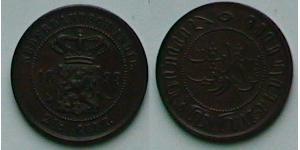
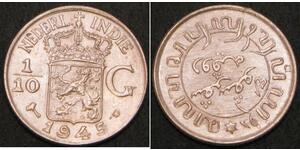
| Dutch East India (1800 - 1942) | Link to Wikipedia |
Dutch East Indies: History, Coinage and Collectibles
Welcome to the gallery of colonial history where economics meet artistry across the archipelago once known as the Dutch East Indies. Today, we explore a region that served as one of the world's most prosperous emporiums for over two centuries, from the early seventeenth century until the dawn of modern independence movements in 1945.
Historical Background
The story begins with the arrival of the Dutch East India Company, or VOC (Verenigde Oostindische Compagnie), at the mouth of the Citarum River. This corporate power was granted sovereign rights to wage war and mint coinage, establishing Batavia—the modern Jakarta—as its imperial capital in 1619. For nearly two hundred years, this city became a global nexus for commerce, connecting Europe directly with East Asian markets.
The historical trajectory of the region is defined by an intense focus on trade monopolies and cultural exchange rather than conquest for land's sake initially. The economy was driven entirely by high-value commodities such as nutmegs, cloves, coffee, tea, timber, rubber, and oil. This economic engine necessitated a robust financial system that often operated parallel to European banking standards but adapted quickly to local realities.
Culturally, the era witnessed a fascinating fusion of Dutch discipline with Javanese aesthetics. Batavia developed into a cosmopolitan port city where merchants from Indonesia, China, Japan, and Europe interacted constantly. By 1806, following the fall of Napoleon in Europe, King William I declared direct Crown rule over East Indies possessions to replace the waning corporate power of the VOC. While this political shift eventually paved the way for modern Indonesian nationalism after World War II, we focus our attention on the numismatic legacy left by a period where trade routes spanned half the globe.
Currency and Coinage History
The evolution of currency in these islands was not born from necessity alone but also from prestige. Initially, no money existed locally other than local barter items like cloth shells or copper beads brought by indigenous merchants. When coinage arrived, it began with Spanish silver dollars and Portuguese rupees circulating freely throughout the archipelago due to their established trade links in Southeast Asia.
The pivotal moment for official monetary policy came when King William I ordered a new minting authorization. The goal was not merely convenience but political sovereignty—issuing coinage bearing Dutch monarchical portraits reinforced authority over foreign territories where Spanish silver held sway. This transition marked the introduction of standardized denominations like the Gulden and copper coins to facilitate daily transactions in markets, ports, and military garrisons.
The standardization process was complex because local currency had to compete with global bullion standards set by Amsterdam or London. As trade expanded during the nineteenth century, gold became increasingly common for high-denomination exchanges required between major trading houses, while silver remained essential for government salaries. Copper and brass issues handled small change transactions at markets in Sumatra, Java, and Sulawesi.
Mints and Coin Production
Production facilities were established specifically to service the tropical economy's unique demands. While Amsterdam minted coinage intended for European distribution or export usage, a primary authority center existed on the island of Java itself in Batavia. The logistical challenge of moving heavy bullion across oceans meant that many coins found their way into local circulation from neighboring colonial territories.
Minting technology reflected classical traditions but adapted to harsh environmental conditions. Silver was prone to oxidation if not properly managed, requiring careful alloy compositions or immediate distribution once struck. Copper and brass issues were often produced in higher quantities for daily commerce among the general population. Artistic characteristics distinguish this era from mainland Dutch coinage; where central portraits might be simple and classical styles used on reverse sides, motifs occasionally incorporated local fauna such as elephants, tigers, or exotic flowers.
The minting traditions evolved to reflect colonial administrative structures. Early pieces often lacked the precision found in Western Europe until improved engraving tools were adopted post-1840s quality reforms. Artistic direction sometimes shifted during regencies when different monarch portraits were authorized for circulation after royal decrees or death.
Notable Coins
- The Early Silver Dollar:
- Copper Half-Cent Issues:
- Late Colonial Gold Issues:
- The Batavian Gulden:
This type of coin represents one of the foundational numismatic issues. Though it often bears foreign inscriptions initially due to currency standardization practices, these silver pieces became the backbone of wealth storage for merchants and colonial administrators alike.
These small denominations were struck in Batavia specifically to solve daily exchange problems among local communities using traditional barter items previously. Their survival rates are lower due to rapid wear from use as change, making examples with good tone particularly sought after.
Towards the end of Crown rule before independence wars began in 1945, high-value gold pieces were struck for diplomatic gifting and trade between major powers. These coins feature refined artistic finishes intended to convey imperial prestige across borders.
Minted during the transition from VOC rule to Crown administration, this silver coin marks a specific administrative era of Dutch history in Southeast Asia and serves as a tangible marker for collectors analyzing colonial transitions.
Cultural Legacy
The numismatic artifacts recovered from these regions offer an insight into how culture was exported across the ocean. The images on coins often reflected Western classical ideals of rule, yet they were used in daily life within a profoundly non-Western society. This duality created unique aesthetic values that collectors today appreciate beyond mere historical curiosity.
The materials themselves tell stories: silver preserved wealth and stability for merchant houses like the Charoen Pokphand or older trading families from Penang who transacted business through these islands, while gold signaled state power during times of crisis or celebration. Even modern numismatists today use early pieces to understand trade dynamics that influenced globalization patterns before they were fully understood in economic history books.
The artistic designs also reflect a changing society where local craftsmanship began influencing Western tastes. For instance, certain copper issues utilized molds produced with attention paid to Javanese floral aesthetics rather than strictly Dutch heraldry after the mid-nineteenth century reforms. These subtle shifts help researchers understand how cultural influences moved back and forth between Europe and Asia.
For collectors
The numismatic legacy of this former colony remains highly significant for modern hobbyists who value rarity alongside historical narrative. The scarcity of early copper issues is a primary factor in market interest, as they circulated widely among local populations before being hoarded by colonial officials.
Condition remains paramount; examples showing heavy wear from circulation are often considered common to the field but less valuable than high-grade strikes with clear legends and original patina. Collectors should focus on specimens that preserve minted details rather than those heavily cleaned or restored, which can significantly diminish provenance value.
This collection of artifacts preserves a unique story where money served as both economic tool and political statement across vast distances. Whether you are examining early silver dollars from the VOC era or Crown period gold pieces, each specimen connects us to an ancient web of trade routes that shaped modern economics in Southeast Asia. The historical depth found within these coins offers more than financial value; it provides a tangible window into how empires negotiated power and commerce across centuries.