| View |
| preceded by | ||||
|
||||

|
|||||||
 Republic of Afghanistan (1973 - 1978)
|
|||||||

| succeeded by | ||||
|

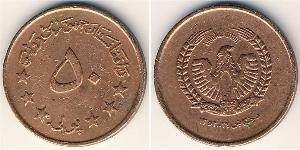
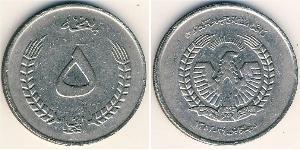
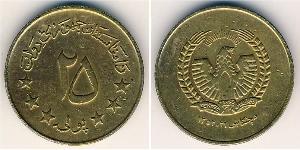
| Republic of Afghanistan (1973 - 1978) | Link to Wikipedia |
Republic of Afghanistan (Daoud Era): History, Coinage and Collectibles
Welcome patrons and scholars alike to this curated exploration of the brief but vibrant era known as the Daoud Republic. In 1973, a historic shift in governance transformed the political landscape of Central Asia, moving from centuries-old monarchical rule toward modern republican ideals. For numismatists, history enthusiasts, and those seeking pieces with profound historical narrative weight, this period offers a fascinating look into statecraft during one of Afghanistan's most turbulent transitions.
Historical Background
The narrative begins in the heat of July 1973. General Mohammad Daoud Khan staged a decisive coup d'état against his cousin and reigning monarch, King Zahir Shah, capitalizing on royal travel abroad for medical treatment. This sudden upheaval established the Republic of Afghanistan with the aim to modernize society while navigating delicate Cold War geopolitics. The new regime sought a balanced foreign policy known as bi-tarafi, engaging simultaneously with Western powers and socialist bloc nations without committing exclusively to either side.
Economic ambition drove much of this era's political drive. President Daoud attempted rapid industrialization, initiating economic planning commissions and establishing military training programs abroad while seeking oil-rich financial allies across the Middle East. However, these modernist goals clashed with traditional social norms. As secular reforms were pushed forward to improve women’s access to education and limit conservative dress codes within certain contexts, resistance mounted from various religious factions.
This internal tension contributed heavily to a volatile economic climate by 1978. Despite infrastructure projects like the development of trade routes through neighboring Iran and India, widespread stagnation emerged in rural areas where poverty persisted despite urban growth. The suppression of opposition parties during single-party rule further strained social contracts. It was within this charged atmosphere that political factions reorganized themselves behind more rigid ideologies, leading to a decisive break with Daoud Khan in early 1978.
The brief tenure under the Republic remains critical for understanding how currency reflects societal upheaval. The state needed to project legitimacy and continuity while managing foreign aid expectations. Trade remained active during these years due to strategic diplomatic balancing acts, such as normalizing borders with Pakistan which impacted regional commerce significantly before shifting political winds in Islamabad would later alter relations.
Currency and Coinage History
In the months immediately following the 1973 coup, there was no immediate cessation of coin production. The newly established republic inherited an existing monetary infrastructure based on silver Pulus and gold Afghani units that circulated under the monarch. Unlike other post-colonial states where a new currency is often minted immediately upon independence or regime change, Afghanistan retained continuity in its legal tender to ensure commercial stability.
The transition of coinage design was not always immediate for administrative reasons but rather evolved over time as political authority solidified and died down quickly due to the Saur Revolution. During this initial period of republicanism, coins often carried inscriptions referencing the "Republic" or the President's title while maintaining older iconography like seated eagles which had been prominent during Zahir Shah.
Monetary policy was strictly tied to economic reality; with inflation rising in the later years due to government spending on infrastructure and security operations, high-grade coins became rarer not just because of low mintage but also rapid removal from circulation. The 1976 seven-year economic plan highlighted a desire for development funding which required stable currency exchange rates against major trading partners like India.
The numismatic record is particularly interesting during this brief window where coinage was transitioning. As Daoud faced internal dissent and the rise of communist factions within his own government, confidence in hard currencies fluctuated. Collectors value these transitional issues because they represent a unique moment before Afghanistan adopted Soviet-style designs used later by Democratic Republic leadership.
Mints and Coin Production
The primary center for coin production remained the Kabul Mint (also known as Darb-e Sazeh-i Naqshab), where skilled artisans operated under strict oversight. The facilities were modernized to accommodate international standards during Daoud's tenure, allowing for higher quality silver output despite political chaos.
- Darb-e Sazeh (Kabul Mint): This facility served as the central hub where dies were engraved and pressed. It maintained traditions of hand-beating or minting that merged with Western industrial stamping techniques introduced by consultants from India and Egypt.
The artistic characteristics during this period are defined by a blend of classical Islamic patterns and modernist realism. Unlike the later, starkly Soviet-inspired designs, early Republican coins often retained floral motifs reminiscent of traditional Persian art used in previous centuries, though text was updated to declare statehood explicitly.
Techonological limitations meant that while high denominations were struck with reasonable care for circulation durability, lower denomination Pulus could show more wear. The metal content remained stable (silver and gold) until the collapse of order later led to hoarding and removal from circulation.
Notable Coins
For collectors seeking historically significant items, several categories stand out for this specific regime's brief existence.
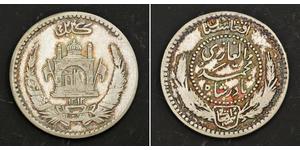
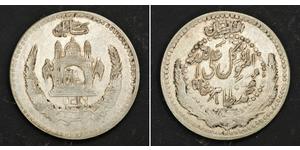
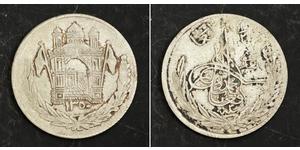
- The Transitional Pul (Silver): These low-denomination coins serve as proof of the early transition period. They feature minimal changes to legends and often bear dates that mark the very beginning of Daoud’s rule in Gregorian correspondence. The obverse usually showed a seal or national emblem representing unity, while denominations varied across different years.
- The Gold Afghani Series: High value coins struck before inflation took hold are prized for their condition rather than face value alone. These were used to settle larger commercial debts in Kabul and Kandahar markets prior to the 1978 coup. Their rarity comes from the short time window during which gold bullion was available without restrictions.
The significance of these items extends beyond their material worth; they are tangible evidence that Afghanistan attempted a modern state identity within three years before losing stability entirely to political violence and external intervention.
Cultural Legacy
The coinage from this era mirrors the complex cultural landscape where tradition battled with aspiration. The eagles featured on early Republican issues symbolized strength in defense against perceived Soviet encroachment, reflecting Daoud's efforts to pivot away from Eastern dependency toward Western ties.
Despite secular reforms aimed at integrating women into public life without erasing traditional values entirely, coin designs avoided overtly controversial imagery while acknowledging a desire for gender equality. Islamic crescents remained present in the iconography, ensuring that religious identity was not discarded despite modernizing efforts by leadership figures who believed democracy required separation of state and mosque operations.
The brevity of this regime means few coins entered heavy circulation before 1978 ended Daoud's government abruptly. However, those preserved today represent a singular chapter in Central Asian history where coinage bridged the gap between an ancient empire’s final echoes under monarchy toward modern statehood attempts that were ultimately unsuccessful.
For Collectors
The legacy of this Republic remains compelling for several reasons. The scarcity is intrinsic; few coins survived intact through decades of war and neglect because much currency was melted down or buried when political order collapsed entirely in 1978-2001.
- Rarity due to duration: Short regime means limited dates. Each year offers a distinct numismatic opportunity that may not have existed if the republic lasted longer with standard issues.
The historical significance is amplified because these coins predate Soviet heavy influence, marking Afghanistan before it became fully dominated by geopolitical interests in Central Asia. For auction buyers and museum curators alike, acquiring such pieces involves preserving a narrative where history was interrupted early rather than allowed to evolve slowly under established governance.