Historical Background
To understand the value of Sardinian numismatics one must first grasp its turbulent origins. While early history saw independent Judges ruling the island's regions, political stability arrived in 1324 when James II of Aragon brought order to a fragmented society. Under this new regime, however, sovereignty was not absolute; the crown operated as a fief from the Papacy and later functioned within the complex matrix of the Crown of Castile.
This relationship shifted dramatically in 1720, when the island became an asset for Victor Amadeus II, Duke of Savoy. Unlike previous rulers who viewed Sardinia merely as a pawn or fortress against maritime enemies, the Savoyards began to view it seriously as part of their dynastic heritage. Yet, they faced significant challenges in administration because power was concentrated far away on the Italian mainland at Turin.
The island served a vital function: it anchored the House of Savoy's presence in central and southern Europe without requiring immediate military conquest. However, for collectors, this period is often misunderstood as being merely "Spanish." While Aragonese coins circulated from earlier centuries due to political proximity, under Spanish rule (1720), Sardinia became a possession rather than just an economic partner of the mainland.
Currency and Coinage History
The monetary evolution in this kingdom is a testament to how power dictates currency. In its early Aragonese phase, money struck there served local commerce within a maritime republic network that relied heavily on trade with Venice and Genoa. These coins were often silver denominations designed for quick transaction value.
Once the crown passed to Spain following Habsburg victories in 1720, the monetary landscape changed significantly but paradoxically retained its own identity longer than expected under foreign rule. The Savoyard state needed a reliable financial backbone for its wars and alliances with Austria against France during this era (such as post-1847 reforms). Consequently, these mints produced silver pieces that were distinct from their mainland counterparts until the unification.The transition to an Italian identity was gradual. Until 1796, Sardinia stood apart as a kingdom where local coins bore titles of rulers who might also rule Naples or Sicily on paper but often lacked actual control over those territories due to Napoleonic influence in Italy.
Coinage became the primary tool for maintaining state identity when administrative power was centralized at Turin. The unification of legal systems and administration by 1847 created a single currency system, effectively ending Sardinia's dual existence before its name change in 1861 to simply The Kingdom or Italy.
Mints and Coin Production
Sardinian numismatics are defined by the dichotomy between its two production centers: Cagliari on the island itself, and Turin/Piedmont on the mainland. This distinction is critical for collectors seeking authentic regional issues rather than generic Savoyard money.
The Mint in Cagliari was a product of necessity—governed from afar but serving local commerce where bullion flowed through Genoese or Pisan merchants. These mints were active during times when islanders needed small change, distinct coins struck specifically for use within the archipelago rather than on mainland markets. Conversely, Turin served as the administrative capital and housed massive state-controlled workshops capable of producing high-quality gold crowns that represented dynastic power. Savoyard coinage was typically characterized by classical iconography emphasizing lineage over mere utility. However, during periods when Sardinia was administered directly from Spain (or while acting in alliance), coins would bear imperial titles or Spanish coats-of-arms alongside local names.The shift toward Turin as the sole official mint following unification meant that post-Napoleonic gold coinage became significantly scarcer, driving collector interest. This is also true for silver pieces used to pay soldiers and sailors stationed in Mediterranean ports—where these coins are frequently found today due to trade routes.
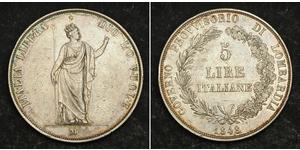
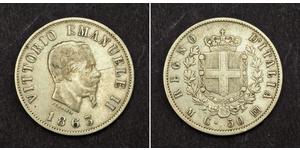
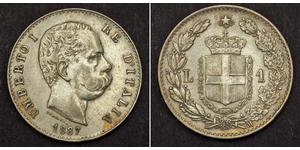
Notable Coins
A few specific issues stand out as the "stars" of this kingdom's catalog, often sought after by those with deep historical interests:
- The Aragonese Crown Issues:
- Context: These early coins date from before 1720 when Sardinia served as a fief of the Holy Roman Empire under James II.
- Design Features: The silver coins were known for their striking simplicity but high mintage relative to later issues. Early designs often show crowned busts with titles indicating both "King" and "Sicily."
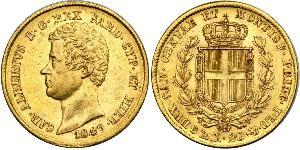
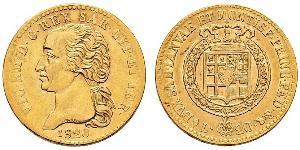
- Context: Following the cession to Victor Amadeus II, mints resumed gold production. These coins were vital for funding wars against Austria and France.
- Design Features: High-relief portraits of kings often show the king in armor or regalia. This style evolved from Spanish influence back into a distinctly Northern European Savoyard aesthetic, blending local Sardinian symbols like dolphins with mainland crowns.
- Context: Before 1720, coins were just Aragonese. Afterward and even into the early 19th century, coinage often combined titles for King of Sicily, Sardinia, Naples (or Spain). The transition to Turin-only minting is a fascinating example of numismatic consolidation.
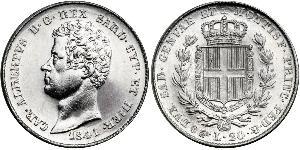
- Design Features: These coins feature crowns that represent both territories. Collectors prize those where the reverse design explicitly mentions "Sardaigne" or "Piemonte-Sardegna," reflecting the state's unique geography during its expansion in 1860.
Often called Sardinian dollars, these were major trade coins. Their rarity depends heavily on whether they are island or mainland struck versions. The latter usually bear the title of Turin's mintmaster and a local depiction that differs from standard Spanish dollars.
Cultural Legacy
The coinage of this kingdom reflects its struggle for identity between two worlds: it was an island nation surrounded by Mediterranean trade powers like Spain, yet culturally connected to French-speaking Savoy. The coins reveal how a small Italian state managed to survive in the shadow of larger empires (Spanish then Napoleonic).
The shift from using foreign Spanish-style crowns and crosses on silver pieces toward more distinct national symbolism during late 19th-century reforms demonstrates growing nationalism among islanders who saw their coinage reflect regional unity rather than just dynastic titles.
For collectors
The Kingdom of Sardinia remains a vital area for European numismatics because its coins provide a window into the transition from feudal monarchy to constitutional nationhood. Its silver is distinctively fine, and gold was scarce during much of this era.
Collectors should seek out pieces that show regional mints rather than those produced in mainland centers like Turin or Milan where local identity might be subsumed by larger Savoyard designs. The history here offers a bridge from the medieval Aragonese period all through to the creation of Italy in 1860, making these coins essential additions for understanding how Mediterranean geopolitics shaped modern Europe.