| View |
| preceded by | |
|
|||||||
 Emirate of Afghanistan (1823 - 1926)
|
|||||||

| succeeded by | ||||
|

| Emirate of Afghanistan (1823 - 1926) | Link to Wikipedia |
Emirate of Afghanistan: History, Coinage and Collectibles
Historical Background
The narrative of modern numismatics in this region begins with unification. Following centuries of tribal autonomy and fragmented governance under various dynasties, the Durrani Empire emerged as a centralized force capable of projecting authority over vast territories spanning from Central Asia to the Indian subcontinent. This consolidation was not merely political but economic; establishing order required a stable medium of exchange that could facilitate trade across diverse borders.
The rise of this state transformed local economies previously reliant on barter and disparate regional currencies into integrated markets connected by land routes traversing mountain ranges and high deserts. Merchants traveling between South Asia, Persia, China, and Central Europe required a trusted standard for gold and silver to navigate their journeys safely. This historical necessity drove the development of standardized weights and measures that would eventually define the nation's monetary identity.
The transition from local warlords to hereditary rulers established administrative centers where law and order were maintained through written statutes and coin inscriptions. Under the Barakzai dynasty, which emerged in the nineteenth century following a power struggle, the central government sought to unify these economic networks further. This era saw infrastructure projects that facilitated commerce while simultaneously reinforcing state sovereignty through monetary authority.
Currency and Coinage History
The evolution of currency during this period reflects the region's strategic position as a crossroads for international trade. Money evolved from local tokens to standardized silver rupees used in high-value transactions, alongside copper coins known locally by names varying with dialects but functionally serving everyday market needs.
Initially, coinage standards varied widely between mints located at Kandahar and Kabul. Over time, authorities recognized that inconsistent weights hindered commerce with neighbors like Iran or India. Significant monetary reforms were enacted to align the domestic currency weight closer to established British sterling units as trade shifted in favor of those economic powers.
During the late nineteenth century, a decisive shift occurred towards strict standardization. A new silver coin was introduced that bore specific denominations and purity standards consistent with international expectations while maintaining distinct visual characteristics for regional recognition. This period marked the transition from loosely controlled minting practices to industrial-grade production methods utilizing mechanical presses imported or acquired through trade.
Mints and Coin Production
The heart of this monetary system lay in major urban centers where skilled artisans worked alongside modern technology introduced during that era. The primary mints operated out of the capital cities, functioning much like industrial workshops rather than simple craft stations.
- Kabul Mint: Served as the central production hub for standard denominations used throughout the territory.
- Kandahar Mint: Produced significant quantities of earlier issues and retained specific stylistic traditions distinct from northern regions.
Coinage technologies advanced significantly during this era, moving away from hand-struck hammered coins to press-striking methods. This innovation ensured that every coin struck in the capital or regional mints shared a consistent design quality. Artistic characteristics were dictated by strict religious guidelines which prohibited human likenesses on currency for much of its existence.
The minting traditions reflected Islamic principles, with surah verses often engraved along the rim using elegant calligraphy. Calligraphers worked alongside engravers to ensure that script flowed seamlessly without interrupting the border designs or structural integrity required by machinery.
Notable Coins
Coin collectors value items from this period primarily for their historical significance and scarcity derived from short reigns of specific emirs. Several types stand out as particularly significant to those studying the monetary evolution:
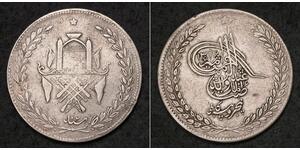
- The Standard Silver Rupee (Late 19th Century): Introduced under reformist administrations, this coin features intricate borders with floral motifs surrounding central calligraphy. Its importance lies in establishing a standardized weight that survived subsequent economic changes.
- Copper Pul Denominations: These low-value coins served the local populace and offer insight into daily market prices of commodities like grain or livestock during specific eras. They were often struck on copper planchets recycled from earlier British Indian issues before being standardized by the national government.
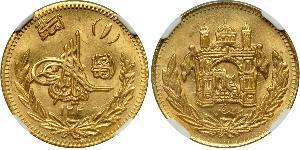
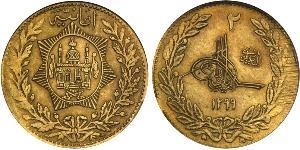
- The Transitional Gold Mohur: While gold usage declined in favor of silver and paper notes, these high-value pieces reflect wealth storage methods for the elite class. They are rare today due to their material value often driving private melting over history rather than circulation attrition.
Design features on each coin tell a story about stability or transition within governance. For example, coins struck during periods of political uncertainty might carry different legends or show signs of hurried minting processes reflected in edge details.
Cultural Legacy
The coinage reflects the culture and identity deeply rooted in Islamic traditions which defined public life at that time. Religious symbols such as crescents often appeared alongside verses from holy scripture, emphasizing unity among diverse communities within the borders of this large mountainous state.
National pride is evident even before modern iconography became commonplace on currency, through depictions of architectural landmarks like historic domes or geometric patterns inspired by local tilework traditions. These motifs ensured that money carried a piece of national heritage wherever it was spent across trade routes connecting the East and West.
For Collectors
Affinity for collecting items from this era remains strong among hobbyists seeking to understand Central Asian history through its economic artifacts. The importance extends beyond mere aesthetics; these pieces document a state formation process vital to understanding modern geopolitical boundaries of the region today.
Rarity is driven by historical events such as regime changes or regional conflicts that interrupted regular minting operations for years at specific times, preserving many issues from circulation and allowing them to remain intact in private hands. The cultural legacy embedded within these objects invites researchers to explore how artistic expression through calligraphy influenced global numismatic standards.
A well-curated collection offers a window into the daily lives of people who navigated complex trade networks relying on trust established by government seals. Whether analyzing edge reeding or studying variations in metal composition, each piece contributes knowledge regarding economic policy and stability during pivotal moments of regional development history. This enduring interest underscores why maintaining such numismatic artifacts matters to scholars today.