| View |
 Cook Islands (1965 - )
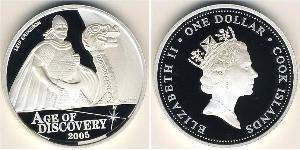
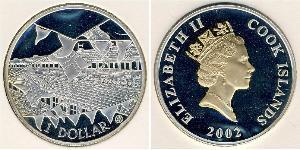
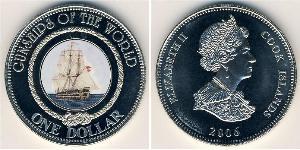
| Cook Islands (1965 - ) | Link to Wikipedia |
Cook Islands: History, Coinage and Collectibles
Welcome to our gallery of Pacific treasures. Today we stand at the edge of the South Pacific Ocean, looking out toward the Cook Island archipelago—a collection of fifteen scattered jewels nestled within a massive Exclusive Economic Zone spanning nearly two million square kilometers. While these islands are small in land area, their history is vast and rich with maritime stories that have been preserved not just in oral tradition but also in the metal we hold today.
In this session, we will explore how an archipelago of Polynesian heritage evolved into a self-governing state while maintaining a close spiritual and administrative bond with New Zealand. We shall examine the coins issued from these islands to understand not merely their face value, but the cultural narrative they carry for collectors around the world.
Historical Background
The story of the Cook Islands begins long before European ships appeared on the horizon. Around the year 1000 AD, Polynesian voyagers navigated from Tahiti to settle these remote islands, bringing with them a culture that has adapted and thrived for centuries.
In our collector's narrative, we must understand why money changed hands here in the first place. By the mid-19th century, Rarotonga had become an important destination for whaling ships. These vessels stopped to replenish water and supplies but often relied on their own currencies—dollars from the US or pounds sterling from Britain—to facilitate trade.
This era was a precursor to the colonial period established in 1888, when the islands became British protectorates due to fears of French expansion into the region. Following petitions by local leaders concerned with maintaining autonomy while securing protection, these islands were formally annexed as British territory between October and November 1900.
The relationship evolved over decades; in 1948, Cook Islanders became New Zealand citizens under specific acts of parliament. This political history is crucial for our numismatic journey: the island was not immediately an independent sovereign state but a self-governing associated territory with its own distinct identity within the realm.
Currency and Coinage History
The evolution of currency here mirrors the islands' unique geopolitical status. Before 1967, coins circulating through this region were standard New Zealand cents issued by their neighbor to the west. These early issues featured designs that were identical to those used across New Zealand.
In a significant turn for collectors during the late 1960s and into the 1970s, Cook Islanders took steps toward distinct monetary identity while remaining financially linked with their associate state. The decimal system was established here in 1967, introducing denominations such as the cent.
This period marks a significant chapter for our community of collectors: the separation and assertion of unique national symbols. As the islands moved from colonial administration toward self-government by association (gaining full independence status in recent decades), their coinage reflected this growing assertiveness in foreign policy and cultural confidence.
Mints and Coin Production
The production of these coins is a story of scale and craftsmanship. Because the land area of the country is approximately 236 square kilometers, demand for coinage has historically been smaller than that of continental powers or Australia.
During earlier periods of distinct minting in this region, physical mints operated by New Zealand were utilized to produce these coins due to volume requirements. However, over time and following the passage of acts defining their territory as including all currently included islands (such as Aitutaki), specific local arrangements have been made.
Today's designs often bear marks from renowned international private mints that specialize in low-volume runs for small island nations. The coins are typically struck on modern dies, allowing for intricate relief work necessary to depict Polynesian art styles without sacrificing the durability required of everyday currency metal.
- Metal Composition: Common denominations were introduced using silver or copper-nickel alloys appropriate for circulation and commemorative purposes.
- Rarity Factors: As with any small territory, the number of coins minted in early issues is significantly lower than modern mass-produced currency. This often correlates to higher collector interest when preservation grades are high.
Notable Coins
A few specific types hold particular historical weight for our collectors:
The 1967 Decimal Cent Set
- Historical Context: Coinciding with the introduction of decimal currency, these coins marked a significant shift in how trade was conducted across the Pacific.
- Design Features: These early issues often utilized designs that blended traditional Polynesian aesthetics—such as intricate geometric patterns used by local craftsmen—with modern typography. Early versions were notable for utilizing silver content, distinguishing them visually from copper and bronze counterparts elsewhere in the region.
The Mount Te Aua Series (1970s)
- Historical Context: This series coincided with a period of growing local identity. The design shifted away from generic Commonwealth motifs to specific imagery found in the islands' landscape.
- Design Features: These coins prominently feature Mount Te Aua, an extinct volcano that dominates the skyline of Rarotonga—the main island population centre and location for the international airport. The depiction is often stylized in a manner reminiscent of Pacific tattooing (tatau).
- Importance: These coins symbolize the transition toward cultural recognition within their coinage.
The "Guardian" Class Coin Issues and Later Years
- Historical Context: Even as they established a distinct foreign policy, often serving in international forums such as the Pacific Islands Forum (and where Cook Islanders held significant leadership roles), these coins retained their status as currency of an associated state.
- Design Features: More recent issues continue to feature unique landscapes and maritime themes. The "Guardian Class Patrol Boat" imagery, provided by Australia for policing waters, occasionally appears in commemorative contexts or has influenced thematic choices regarding safety and sovereignty on later coinage designs (though often represented more subtly through maps of the Exclusive Economic Zone).
Cultural Legacy
To a collector holding these pieces today, one must understand that every design choice is an act of cultural preservation. Unlike mainland nations where coins are issued centrally and impersonally, the Cook Islands' coinage often reflects specific aspects of its history: from Spanish contact (like Mendaña's 1595 sighting) to British annexation, to the independence era.
The artistic heritage is distinctively Pacific. Designs utilize motifs found in traditional weaving patterns or tattoo work rather than European heraldry alone. This creates a collection that serves as an art gallery of their own nationhood—specifically, how they navigate being both independent and associated with New Zealand without full political union.
Cook Islanders hold not just citizenship but the status of Cook Islands nationals; this dual identity is often reflected in how they present themselves to the world. In a coin collection context, these coins represent that distinct voice—speaking through metal rather than words, maintaining their own customs regulations and policies while sharing a borderless ocean with neighbors.
For Collectors
The Cook Islands remains an important stop for numismatists specializing in Pacific Island territories. While the total population was recorded at around 15,000 within national boundaries (excluding those living abroad), their cultural footprint extends far beyond these shores.
- Rarity and Interest: The combination of low mint volumes for early decimal issues (post-1967) makes them highly sought after. Condition is paramount as collectors seek to own a piece that bridges the gap between colonial currency usage and modern sovereign identity.
- Historical Significance: Coins from Cook Islands are more than just small metal discs; they represent one of New Zealand's earliest associated states with their own passports, police service (the CIPPB), and assertive foreign policy. Holding a coin is owning a slice of this unique geopolitical history.
- The "Associated" Narrative: A key selling point for collectors today is the story itself: an independent-looking nation that chose to maintain free association, rather than sever ties or merge fully. This political nuance offers rich storytelling potential for any auction catalog regarding these coins.
In conclusion, whether you are a history enthusiast interested in the 1820s contact period of Captain Cook and Russian Admiral Krusenstern's naming conventions, or a collector seeking silver cent issues that mark their own path to global recognition, the Cook Islands offer a unique window into Pacific identity. Their coins serve as enduring reminders of resilience against disease from abroad (such as the influenza epidemic mentioned in historical records) and adaptation by land-sea people who have navigated empires for centuries.