| View |
| preceded by | ||||
|
||||

|
|||||||
| Seleucid Empire (312BC-63 BC) | |||||||
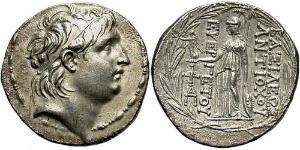
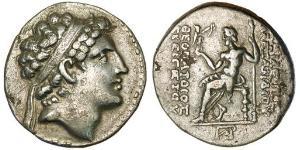
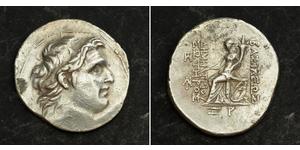
| Seleucid Empire (312BC-63 BC) | Link to Wikipedia |
The Seleucid Empire: History, Coinage and Collectibles
Welcome to a journey through time that bridges the gap between the ancient past of Babylonian kingdoms and the Hellenistic age of Rome. This empire was not just a political entity but an economic powerhouse whose currency defined trade routes from Egypt all the way into India.
Historical Background
The Seleucid Empire rose in 312 BC as one of three successor states to Alexander the Great, established by his general Seleucus I Nicator. To understand their coinage fully, you must appreciate how they inherited a complex economy from the Persian satrapal system and reformed it for Hellenistic trade demands.
Selecting Babylon as its heartland, Seleucus I faced an immediate challenge: maintaining control over cities that remembered Persepolis or Cyrus. His administration was unique because he integrated local elites into Greek administrative structures while attempting to keep the economy stable against his neighbors, notably Ptolemy of Egypt and the emerging Parthian kingdoms.
The economic landscape shifted dramatically when Seleucus secured trade dominance on routes connecting Alexandria with Bactria and India. This stability encouraged standardized weights across vast distances that were previously governed by local satrap standards. The empire was eventually weakened by dynastic struggles, but its currency remained a symbol of the Hellenistic world order until Pompey dissolved it in 64 BC.
Currency and Coinage History
Money evolution began with silver tetradrachms that mirrored Alexander's coin type while adapting to local economic reality. Early issues were heavy, adhering strictly to the Attic standard inherited from Macedonia. However, as Seleucus moved eastward into Babylonian territories where gold was highly valued but less liquid for commerce than in Athens, they standardized on large silver units.
The early years under Antiochus I marked a significant reform period that saw the establishment of weight standards closer to local Babylonian usage while retaining Greek artistic style. This shift reflects how the empire had to compete with Ptolemaic coinage which often used Attic weights in Egypt and Seleucid silver was calibrated accordingly.
Much of this early money production served not just domestic trade but international commerce, carrying bullion along caravan routes that stretched through Anatolia. By the time Antiochus III came to power decades later, his mint output represented a peak of state-sponsored coinage that competed with Rome for influence in western Syria.
Mints and Coin Production
The Seleucid Empire operated from numerous mints rather than just one centralized workshop. While Babylon remained the spiritual economic capital early on, later production moved significantly to Seleucia ad Euphrates. This was a newly founded city that functioned as a modern industrial hub for their money-making operations.
Cities such as Antioch and Laodicea also operated independent branches of state mints which produced coins bearing specific regional symbols or portraits of the ruling monarchs at different times. Die-cutting technology transferred from Greece to these cities brought precision to what was once artisanal local production, ensuring consistency for merchants travelling between Syria and Mesopotamia.
The artistic characteristics shifted as they moved further east, incorporating iconography that appealed to both Greek soldiers stationed in the army and Eastern populations who might buy goods with it. This adaptability ensured that a coin minted at Antioch would be accepted by locals near Babylon or Parthians on trade routes.
Notable Coins
- The Early Seleucus I Tetradrachm:
These coins are highly sought after for their rarity and historical connection to the founder. They typically feature Zeus as a primary deity but also sometimes bear portraits of Alexander, highlighting political legitimacy derived from him. - Antiochus IV Epiphanes Silver Issues:
Minted in the late second century BC near Jerusalem or Antioch during periods of Jewish revolt. These issues often use distinct Tyrian silver standards which collectors prize for their high purity and cultural significance as symbols of resistance against Seleucid rule. - The Bronze Series from Laodicea:
These small coins illustrate the transition to local currencies used by the lower classes who did not deal in large metal pieces. They serve as evidence that the empire monetized even daily commerce for artisans and farmers across its vast territories.
Cultural Legacy
The coinage serves as an archaeological witness to a civilization where Greek culture co-existed with Persian traditions without fully erasing local heritage. The obverse portrait of the king always wore Macedonian military attire, signaling his legitimacy in Greece. However, reverse designs often showed animals native to the Seleucid lands like lions or bulls that symbolized strength and were understood by both Greeks and Easterners.
This artistic fusion is visible when one compares coins from western Anatolia which use purely Greek imagery against those minted for trade in India where motifs might include Indian flora. The empire used these symbols to assert a new cultural identity while respecting old economic realities that required trust among diverse populations who spoke Aramaic, Sanskrit, or Koine.
The Seleucids left behind an economic infrastructure that would influence the Roman period and Parthian successor states for centuries after their political demise. Their coins demonstrate how ancient economies managed to function across cultures using standardized metals like silver which remained consistent even as political boundaries dissolved in later years of antiquity.
For collectors
The Seleucid Empire remains a critical missing link between Alexander's conquests and the establishment of Roman peace. While some issues are common, early tetradrachms with die errors or specific regional mints offer significant potential for serious collections focusing on Hellenistic trade routes.
Collectors should focus on how coins reflect economic policies rather than merely chasing high-grade strikes of rare varieties like the late Antiochus I. A well-preserved example from Seleucia ad Euphrates tells a better story about state power and regional autonomy than a generic issue does alone.
This collection focus provides insight into how ancient governments used currency to assert legitimacy in times of crisis, offering unique historical data beyond standard textual sources which are scarce for the eastern empire after Seleucus I's death. By analyzing these metal artifacts you gain access to stories of trade caravans and military campaigns that rarely appear in written history.