| preceded by | |
|
|||||||
 Portuguese Angola (1575-1975)
|
|||||||

| succeeded by | ||||
|

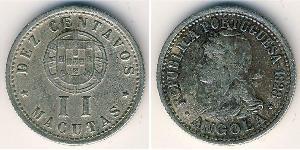
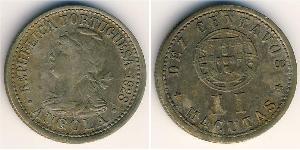

| Portuguese Angola (1575-1975) | Link to Wikipedia |
Portuguese Angola: History, Coinage and Collectibles
Historical Background
Welcome to the narrative of a land where the Atlantic Ocean once connected Lisbon with Luanda through currents stronger than any ocean current. To understand Portuguese Angola is to look beyond maps marked with borders; one must visualize it as a bridge between continents, forged in stone and gold during an era when Europe looked West for resources.
The establishment of this presence was not immediate but rather the result of centuries of maritime exploration that sought the sea routes around Africa's southern horn. When these explorers first reached the coast, they encountered kingdoms whose wealth was tied closely to copper mining in the interior regions and gold found further inland at Loanda and Moxico.
The primary economic driver for Portuguese rule was trade with Brazil. Gold extracted from Angolan mines flowed toward Rio de Janeiro while Brazilian sugar moved back northward through Luanda, establishing a triangular economy that sustained Portugal during its maritime ascendancy. This wealth required stability, which led to the construction of massive fortifications like São Pedro da Barra.
The region was often called the "Portuguese Gold Coast" before being administratively unified with other colonial territories in 1950s. For a century and a half, the local economy relied heavily on copper production for currency standards set by European banks rather than purely indigenous metalwork from African artisans.
Currency and Coinage History
In the early days of settlement, money was largely foreign barter or heavy silver coins imported directly from Portugal. It was not until the establishment of administrative control over a vast region that Portuguese coinage became standardized for daily commerce within these territories.
The standardization process followed broader Portuguese currency reforms across its empire. Initially, Spanish and French silver pieces circulated alongside Portuguese denominations because merchants found them convenient in trade with Europe or other Atlantic islands like São Tomé.
By the mid-20th century, distinct local monetary systems were implemented to replace these imported coins entirely. The transition occurred during a period when Portugal sought tighter control over its economic zones and wanted currency bearing Portuguese emblems rather than foreign crowns.
Mints and Coin Production
The heavy production of coinage for this territory rarely happened on the continent itself in modern times, due to logistical constraints. Most coins were struck at Lisbon Mint facilities before being shipped overseas as part of naval supplies or commercial shipments arriving along trade routes.
This centralized control meant that designs remained consistent with imperial standards but incorporated local artistic touches such as palm trees and fortresses representing the specific colony’s geography and defensive capabilities during construction phases. The quality was generally high when new, yet these coins faced immediate environmental challenges upon arrival in tropical heat zones.
Notable Coins
A collector looking for historical significance should examine issues produced around the time of administrative changes or independence periods where distinct minting styles were introduced to celebrate sovereignty while maintaining traditional iconography.
- The Fortress Denominations: Early colonial pieces often featured a prominent depiction of São Pedro da Barra. This fortress stood as an enduring symbol of Portuguese power in the region and is frequently found on bronze issues meant for local transactions among merchants working along trade routes connected to goldfields.
- Copper Centavos from Transition Periods: During times when political shifts occurred, copper coins were issued at lower denominations. These pieces typically showed simple designs of ships or palm trees with minimal relief work. Their simplicity is why they are so common in circulation but rare in perfect condition; the tropical environment took their luster quickly.
- The Independence Era Pieces: When full sovereignty changed hands, new metal standards were introduced featuring African fauna such as antelopes and buffaloes representing local wildlife reserves. These specific coins mark a moment of cultural integration into coin design that was unique compared to other regions where European imagery dominated the currency entirely.
Cultural Legacy
The artifacts left behind in metal tell us more than just economic value; they reveal how Portuguese identity intersected with local culture. The choice of palm trees or forts reflected an artistic desire to capture the landscape while asserting imperial presence through state-sanctioned symbols.
In many ways, coinage served as a tool for education among travelers and merchants who might not speak African languages but could read the faces placed upon these denominations. Saints were frequently depicted alongside maps of Africa showing trade routes connecting Lisbon directly to major inland mining hubs like Moxico or Huambo.
The metal used shifted from silver and gold initially—reflecting the high wealth found in mines—to copper and bronze as inflation increased costs for raw materials shipped across oceans over time. This economic evolution is physically preserved within the thickness of these coins available today to those willing to look beyond their monetary value on modern trading floors.
For Collectors
This collection history remains vital because it documents a specific chapter in Atlantic trade routes that shaped global commerce centuries ago. The condition of each piece tells its story; copper pieces from the colonial era are particularly sought after for their scarcity in high grades, having been subjected to decades of heavy wear during local markets.
The artistry on these denominations is remarkable considering they were often mass-produced overseas. Collectors appreciate how specific colonies within Portugal received unique designs that distinguish them clearly as belonging to Luanda rather than the mainland capital or other territories like Mozambique which shared similar imagery.